ODAC Newsletter - 20 March 2009
Welcome to the ODAC Newsletter, a weekly roundup from the Oil Depletion Analysis Centre, the UK registered charity dedicated to raising awareness of peak oil.
As expected OPEC leaders meeting on Sunday agreed to hold off making further production cuts. Instead they will work on enforcing current commitments before reconvening in May to review the situation. The decision reflects concern that raising prices now could further damage the global economy, as well as the fact that existing cuts appear to have put a floor under the price for the time being.
The impact of the economic crisis on investment in oil production was a strong theme in reports from the 4th International OPEC Forum, which took place this week in Vienna. IEA Executive Director Nobuo Tanaka said that slowdowns and cancellations would reduce supply capacity by roughly 1.1 million barrels per day in 2009, while Dave O’Reilly, CEO of Chevron, reportedly stated that current spare capacity was still lower than in previous downturns despite falling demand. There is clearly a strong prospect of rising oil prices as soon signs of an economic recovery emerge.
The oil price received a boost on Wednesday as the US Federal Reserve entered into its version of ‘quantative easing’ raising hopes that economic recovery will come earlier than expected. Meanwhile doubts over the WTI benchmark contract were underscored as Platts unveiled an alternative, the ‘Americas Crude Marker’, which they hope will more accurately reflect the realities of US crude market.
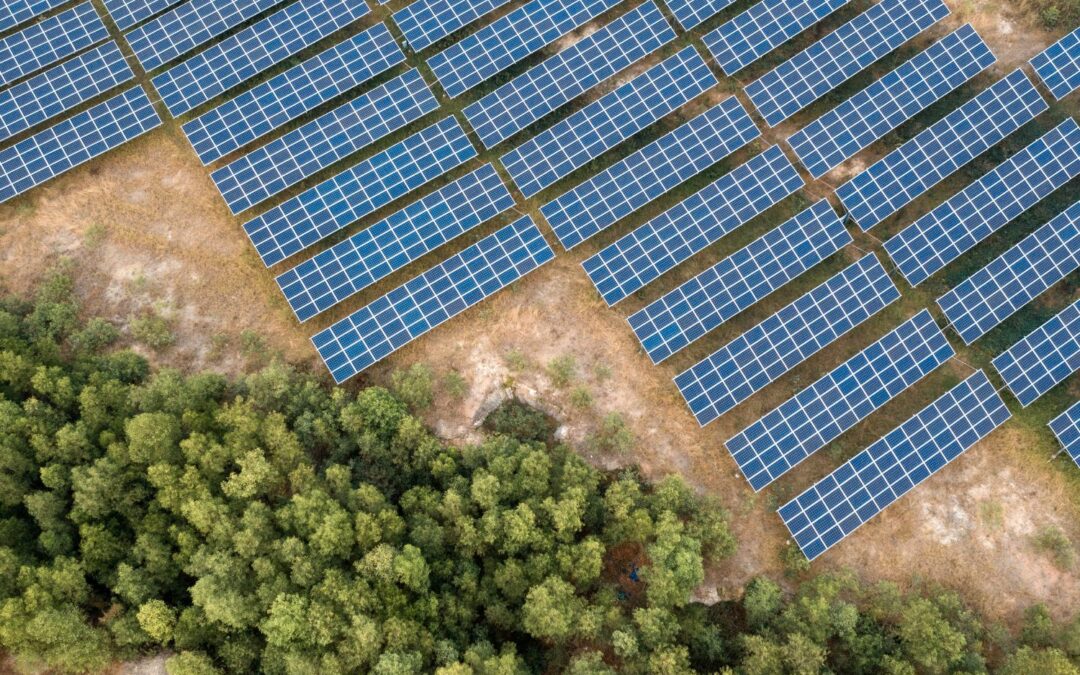
Shell caused outrage this week by announcing that it would stop investing in renewables. In a statement Linda Cook, head of Shell's gas and power business, said that renewables “struggle to compete with the other investment opportunities we have in our portfolio”. In the meantime E.on and EDF reportedly warned the government about its 35% renewables goal, claiming that the target could undermine investment in new nuclear and CCS.
The government’s Chief Scientific Advisor, Professor John Beddington, was busy sending mixed messages this week. On the one hand he warned of an impending “perfect storm”, with global shortages of water, food and energy by 2030. On the other, he said "We're relatively fortunate in the UK; there may not be shortages here, but we can expect prices of food and energy to rise." Oh, that’s alright then.
Join us! Become a member of the ODAC Newsgathering Network. Can you regularly commit to checking a news source for stories related to peak oil, energy depletion, their implications and responses to the issues? If you are checking either a daily or weekly news source and would have time to add articles to our database, please contact us for more details.
Disclaimers
Oil
OPEC Decides Against Fourth Output Cut on Economy
OPEC agreed to maintain current production quotas, concerned that a fourth cut since September risked increasing energy costs during the worst global economy in six decades.
The Organization of Petroleum Exporting Countries, supplier of about 40 percent of the world’s crude oil, will aim to complete existing production cutbacks agreed to late last year and meet again on May 28 to review policy, Secretary-General Abdalla el-Badri said after yesterday’s meeting in Vienna.
OPEC members still need to trim about 800,000 barrels a day to comply with the record output reductions decided in December after oil slumped more than $100 a barrel from July’s record. Global inventories have started to fall, indicating the policy is working. A new cut threatened a price increase that could harm the economy, Saudi Arabian Oil Minister Ali al-Naimi said.
“They’ve decided that, in the medium term, the danger to the global economy was greater than the danger of high inventories,” David Kirsch, an analyst with Washington-based consultant PFC Energy, said in an interview in Vienna. “A rollover should be sufficient to draw down inventories to acceptable levels by the third quarter.”
The collapse in oil prices has cut costs for consumers and business, one of the few bright spots in a bleak economic picture. Finance chiefs from the 20 biggest developed and emerging economies pledged a “sustained effort” to end the recession after a weekend meeting. The International Monetary Fund predicts the first global economic contraction in six decades.
Demand Drops
Higher prices could further erode global oil demand, already forecast to fall by 1 million barrels a day in 2009. Oil futures fell after the OPEC meeting, dropping as much as $2.40 a barrel, or 5.2 percent, to $43.85 a barrel in New York. Prior to OPEC’s decision, oil prices had gained 3.7 percent this year.
“A lot of people would have been surprised by OPEC’s lack of action,” said Toby Hassall, research analyst at Commodity Warrants Australia Pty in Sydney. “It’s quite bearish.”
Algerian Oil Minister Chakib Khelil, who had argued for another cutback prior to the meeting, said afterwards that all OPEC members will make an “extra effort” to comply with the existing cutbacks. Oil prices will not rise a lot after yesterday’s decision, he added.
The crude oil production target for 11 OPEC members bound by quotas is 24.85 million barrels a day, while actual output from those countries averaged 25.715 million barrels a day in February, according to an OPEC report published on March 13 that cited data from secondary sources including analysts. That means the group had completed 79 percent of its promised reduction.
‘Fully Adhere’
“Now it is time to fully adhere to the cuts we agreed upon,” Qatari Oil Minister Abdullah Bin Hamad Al-Attiyah said after the meeting.
Saudi Arabia, which pumps more than twice as much oil as Iran, OPEC’s second-largest producer, is the only member to cut more output than agreed last year. Iran and Nigeria have made good on only about half of their promised reductions, according to figures OPEC released March 13. The group agreed to three cutbacks late last year totaling 4.2 million barrels a day.
The 12-nation producer group doesn’t expect a rapid recovery in prices to $75 a barrel, the level that several ministers and Saudi King Abdullah have previously said is appropriate to encourage investment in the industry.
‘Find Balance’
“The situation creates a lot of uncertainties, but we believe that by the end of the year we will find a balanced oil price,” OPEC President Jose Maria Botelho de Vasconcelos, who is also Angola’s oil minister, said at a press conference after the meeting. “We need to adhere and then in May we can look if other measures can be taken.”
OPEC’s el-Badri criticized Russia and other non-OPEC producers for failing to restrict their own output to support oil prices.
“I have not seen any action as far as production reduction is concerned,” he said in an interview. “I don’t see anything form Norway, I don’t see anything from Mexico. It’s not a free ride or a free lunch.”
The group already faces a 61 percent plunge in net oil revenue this year amid declining production and prices, according to the U.S. Energy Department, which estimates OPEC will earn $383 billion in 2009 from crude exports. Global oil demand is set to decline for a second consecutive year, the first back-to-back drop since 1983.
IEA Forecast
The Paris-based International Energy Agency last week cut its 2009 forecast for oil demand for a seventh month, and reduced supply estimates, as the global economic slump saps consumption as well as investment in new fields. Both the IEA and OPEC see demand slumping more than 1 million barrels a day this year, to about 84.5 million barrels a day.
“By meeting again in May, they can adjust targets should economic conditions deteriorate,” PFC’s Kirsch said. “The steps they’ve already taken are starting to have some effect, we’ve started to see crude inventories in the U.S. come down.”
OPEC’s May 28 meeting and an already scheduled Sept. 9 summit will both take place in Vienna, where the group’s secretariat is based. El-Badri’s term of office was extended for another three years from 2010.
Oil Rises Above $50 on Speculation Fed Plan Will Spur Growth
Crude oil rose above $50 a barrel, reaching a three-month high, after the U.S. Federal Reserve announced plans to spend $1 trillion buying back debt.
The Fed is seeking to purchase U.S. Treasuries, mortgage- backed bonds and other debt, raising expectations that moves to end the global recession will increase fuel demand. The dollar traded near a two-month low against the euro, prompting investors to purchase oil as a hedge against inflation.
“The action of the Fed yesterday put the U.S. dollar under strong pressure and revived hopes of a quick turnaround in oil demand,” said Carsten Fritsch, a commodity analyst at Commerzbank AG in Frankfurt. If prices rise above $50 a barrel, the “bottoming out period can be considered over,” he said.
Crude oil for April delivery rose as much as $3.51, or 7.3 percent, to $51.65 a barrel on the New York Mercantile Exchange, the highest since Dec. 1. It was at $51 a barrel at 12:33 p.m. London time.
Futures have risen 12 percent this year as record production cuts by the Organization of Petroleum Exporting Countries started to drain the crude glut caused by the worst economic crisis since World War II. Even at $50, prices remain 64 percent below July’s record of $147.27 a barrel.
The April contract expires tomorrow. The more-actively traded May contract was at $51.73 a barrel, up 5.8 percent, at 12:34 p.m. London time.
Dollar Slump
The Dollar Index may fall for an eighth day, the longest stretch in a year, against its major trading partners after falling yesterday by the most in 23 years as the Fed prepared to flood the market with dollars as part of the debt buyback.
The U.S. currency traded at $1.3642 against the euro at 11:43 a.m. in London, from a close of $1.3474.
“Today, we could see more financial flows coming into oil and commodities in general,” helping support prices, said Olivier Jakob, managing director of Zug, Switzerland-based Petromatrix Gmbh.
The decline in the value of the dollar, which helped push oil to a record $147.27 a barrel in July, will not “be on the agenda” at OPEC’s next meeting, the group’s president, Jose Maria Botelho de Vasconcelos, said today.
The May 28 meeting will focus instead on how the oil market is reacting to OPEC’s March 15 decision to hold targets steady and concentrate on complying with earlier cuts, he said in an interview in Vienna today. Botelho de Vasconcelos is also the oil minister for Angola.
Brent crude oil for May settlement rose as much as $3.45, or 7.2 percent, to $51.11 a barrel on London’s ICE Futures Europe exchange. It was at $50.42 at 12:34 p.m. local time.
Stockpiles Gain
Oil prices settled lower yesterday after a government report showed that supplies of crude oil, gasoline and distillate fuel rose last week in the U.S., the world’s largest energy consuming nation.
Crude stockpiles climbed 1.94 million barrels to 353.3 million last week, the Energy Department said yesterday. Inventories were forecast to rise by 1.5 million barrels, according to the median of estimates in a Bloomberg News survey.
Fuel consumption in the U.S. dropped 0.6 percent last week to 18.8 million barrels a day, the lowest since the week ended Jan. 9. Total daily fuel demand averaged over the past four weeks was 19.1 million barrels, down 3.2 percent from a year earlier.
Stockpiles at Cushing, Oklahoma, where New York-traded West Texas Intermediate crude oil is delivered, increased 368,000 barrels to 33.9 million barrels last week, the Energy Department said. Supplies in the week ended Feb. 6 were the highest since at least April 2004, when the department began reporting on inventories at the location.
U.S. refineries operated at 82.1 percent of capacity, down 0.6 percentage point from the prior week, the report showed.
Crude truth behind numbers that govern our lives
I magine that your neighbourhood has been chosen as a benchmark for house prices. Sales are recorded and an index is constructed. Soon, investors begin to trade the index, anticipating its value as a way of managing exposure to property prices.
Trading increases and news begins to affect investor behaviour. A local school achieves high scores in an Ofsted inspection, investors rush to buy futures and the index rises. It surges again when the local authority cuts the council tax. Investors rush to buy and soon index futures become not just a local, but a national, benchmark. Trading volumes grow and the price becomes volatile, dipping sharply as reports emerge that a care home for juvenile offenders has opened in the neighbourhood, only to rise again when a TV programme describes your neighbourhood as “most desirable for young families”.
It sounds absurd, that a tiny market, buffeted by local news, should become a proxy for values across a nation, not to mention the world, but that is roughly what has happened in the global oil market. Consider the benchmark US crude blend, West Texas Intermediate. It is the foundation of the US Light Sweet Crude Oil contract, traded on the New York Mercantile Exchange. Nymex WTI is the most widely traded oil futures contract. Every 24 hours, the volume in barrels traded exceeds by three times the 85 million barrels of crude consumed daily round the world. The all-time “peak” oil price of $147 per barrel recorded in July was a US Light Sweet Crude price.
Then consider this: the daily output of WTI is less than 300,000 barrels. The Nymex contract is based on dwindling deliveries of WTI crude at a pipeline hub in Cushing, Oklahoma. It is a landlocked market serving Midwestern American refineries without access to the ocean. The WTI price is buffeted by refinery shutdowns, hurricanes and local bumps and wrinkles.
However, the world is agog over WTI. Under normal circumstances (“normal” being increasingly abnormal), WTI is priced at a small premium to Brent, the North Sea benchmark, because of its proximity to US refineries, but in January this year, the oil storage tanks in Cushing were full to bursting, local refineries had ample stocks and WTI began to tumble. By the middle of February, WTI was trading at $33, a discount of $10 per barrel to Brent futures, traded on the ICE exchange in London.
Consumer organisations, such as the AA in Britain, were livid. If crude was almost $30, why was the petrol price not falling? The answer: it’s the wrong crude, stupid.
The pinstripes and market spivs fuss about Nymex futures, but the dirty world of real oil deals in Dated Brent. This is the price benchmark against which two thirds of the world’s oil is priced. Whether it’s Bonny Light from the Niger Delta, Urals from Western Siberia or Azeri from the Caspian, the price quoted will be a discount from Dated Brent, assessed at 4pm by Platts on the basis of cargoes sold that day.
Brent is no longer merely the output of the Brent field, which has declined to a mere 120,000 barrels per day; it includes Forties, Oseberg and Ekofisk, similar light, low-sulphur crudes that add up to almost 1.5 million bpd. Brent is preferred to WTI because it is bigger, more liquid and offshore – and, therefore, less prone to disruption. During February, oil industry wags suggested that WTI was so cheap that it was worth shipping it from Oklahoma to Saudi Arabia to be refined into petrol.
However, exporting US crude oil is illegal, even if there were a pipe to the coast. As a benchmark, WTI is widely condemned, dismissed as “broken” by oil analysts and derided as insular and irrelevant to the physical market of cargoes of oil bought and sold from Rotterdam to Ras Tanura.
So concerned is Platts that this week it launched a rival – Americas Crude Marker – a price assessment of four high-sulphur (“sour”) Gulf of Mexico crudes, which it hopes will better reflect the US market. Light, low-sulphur (“sweet”) crudes, such as WTI or Brent, are becoming rare and the global oil market is shifting to the sour, heavier Russian and Middle Eastern grades.
Meanwhile, the world carries on using WTI futures to construct insurance against all sorts of energy risks, oblivious to its dubious provenance. You might think this is just nit-picking about which number is better. It is more than that because the oil price rules our lives. Moreover, what has happened in oil happens everywhere that people make markets in order to bet on the future. Think of the trade in collateralised debt obligations, markets worth hundreds of billions and fabricated out of the illiquid, fragmented and intensely local business of mortgage lending.
Against all common sense, a local, landlocked market in a shrinking commodity vulnerable to price manipulation has become a global benchmark for energy. It is shocking, and more so because, in the hue and cry last year over speculation in oil markets, the focus was on regulation and naming guilty speculators. No one bothered to even consider the thimbleful of oil beneath the towering pile of US Light Sweet Crude Oil contracts. No one asked whether a commodity barred from international trade was a sensible measure of the global cost of energy.
No one asks because as long as someone is winning, the losers will continue to chase the paper trail.
Consumers, producers agree oil projects at risk
No sooner has the world recovered from a deep economic downturn than it could face a major set-back from surging oil prices, energy leaders said on Wednesday, citing a sharp drop in investment in the sector.
The risk is this cycle of energy boom and bust could be more exaggerated than previous swings as spare production capacity remains limited even though shrinking economic output has destroyed fuel demand.
Saudi Arabian Oil Minister Ali al-Naimi said his country would continue investing through the downturn, but, as others cut back, he warned of a potentially catastrophic supply crunch.
"The painful result would be felt sooner rather than later. It would effectively take the wheels off an already derailed economy," he told an OPEC seminar in Vienna's former imperial palace.
Representatives of consumers, producers and national and international oil companies attending the event all agreed current economics would hobble production, although they failed to agree what was an acceptable price for everyone.
Naimi has repeatedly said around $75 a barrel was needed to ensure all parties spent enough on ensuring future supplies. That compares with roughly $45 a barrel now.
HARD TIMES
Chevron chief executive David O'Reilly said the industry needed to continue investing in both "hard assets" and "human assets", but that could be difficult given the industry faced one of its "most challenging times".
Compared with a previous downturn in the 1980s, excess oil capacity was now much lower, raising the possibility of a steeper rebound in oil prices.
"We're nowhere near those levels (of spare capacity) despite the significant slowdown," he said.
Analysts have estimated the disappearance of credit lines and a $100 collapse in the oil price since a record hit last July have resulted in a 12 percent drop in energy infrastructure investment world-wide.
"My feeling is it may be even higher," Royal Dutch Shell's chief executive Jeroen van der Veer said.
He said fossil fuels were generally still competitive with oil at around $45, but more expensive projects, such as Canadian oil sands, have been put on hold and alternative energy forms, notably solar and wind, have become much less viable.
The International Energy Agency, which represents oil consuming nations, has forecast falling oil demand as economic output shrinks, but also that supply would fall just as fast.
The agency's Executive Director Nobuo Tanaka said slowdowns and cancellations would reduce supply capacity by roughly 1.1 million barrels per day in 2009. Of this, around 700,000 bpd was from postponed OPEC projects he said.
OPEC Secretary General Abdullah al-Badri reiterated comments made earlier this year that 35 of OPEC's 150 new production projects have been delayed.
Like Naimi and other OPEC ministers, Badri has also said oil needed to be around $75 to guarantee investment.
The Organization of the Petroleum Exporting Countries neverthess decided against a further production cut to support prices at a meeting at its Vienna headquarters on Sunday.
It cited the weakness of the global economy and said it was helping an economic recovery, with a view to preventing further destruction of energy demand.
OPEC's moderation was warmly welcomed by consumers for whom it provides a financial fillip.
The International Monetary Fund's No. 2 John Lipsky said lower oil prices, compared with last year's average of around $100 were providing an economic stimulus equivalent to some 1.5 percent of world GDP.
"The decline in oil prices from the 2008 peak is providing an important element of support for the purchasing power of energy importing countries and economies and that's certainly helpful in the current context," he told Reuters on the sidelines of the forum.
The flipside is that the quicker the economy recovers, the sooner oil demand rises and, with it the risk of another oil price surge unless the energy industry has looked beyond its short-term cash flows.
"If we place a low priority on preparing for the future, that lack of action can come back to haunt us through supply shortages and another round of high prices," Saudi's Naimi said.
Additional reporting by Sarah Marsh and Karin Strohecker, editing by William Hardy
Fossil fuel vital for decades: Saudi oil minister
GENEVA - Fossil fuels will be vital for the world's energy for decades to come and must be made cleaner and more efficient, Saudi Arabian Oil Minister Ali al-Naimi said on Monday.
"Given their massive scale, non-renewables will remain the world's energy workhorse for many decades to come," he told an energy and environment conference.
"While the days of easy oil may be over, the days of oil as a primary fuel source for the people of the world are far form over," said Naimi, speaking for the world's top oil exporter.
"... there is no excuse to pin our hopes only on alternatives which today are just supplemental energies," he said. "Our immediate focus, then, must be to make fossil fuels cleaner and more efficient."
He said Saudi Arabia was investing in solar power and hoped to become the world's leading supplier.
"The world's largest oil exporter also hopes to be the world's leading solar power provider someday," he said, suggesting the solar sector would broaden the kingdom's economic base.
"All energy sources will have a role to play in meeting future demand," Naimi said.
The minister had attended OPEC's Sunday meeting in Vienna which had agreed to hold oil output steady. Naimi reiterated the group's view that investment in future energy projects was under threat due to the world economic downturn and low oil prices.
Energy minister to urge Opec to invest for recovery
He is also expected to urge members not to cut production at its next meeting in May and to use their sovereign wealth funds to invest in sectors other than energy.
On Sunday, Opec decided to maintain its current production quotas and meet again on May 28 to review this policy, according to a statement by Secretary-General Abdalla el-Badri.
Following the London Energy Meeting in December, which emphasised the need for better dialogue and co-operation between consuming and developing countries, Mr O'Brien is expected to highlight the important role that Opec will play in helping accelerate the global economic recovery.
In order to prevent another oil-price spike, Mr O'Brien is expected to argue that Opec should exploit the competitive advantage caused by its low cost of production and meet an increasing proportion of global oil demand. Currently Opec supplies around 40pc of the world's oil.
He is expected to say that stable oil prices are good for global growth and highlight the role Opec can play in the economic recovery.
Analysis carried out by Oxford Economics for the London Energy Meeting in December last year concluded the oil-price spike lead to a significant cost to the global economy.
It estimated that if the price of oil had averaged $80 per barrel throughout 2008, rather than $100 per barrel, global GDP growth would have been $150bn (£107bn) higher.
Chevron Confirms Loss of 11,500bpd to Attack
United States oil major, Chevron, has confirmed that it is losing 11,500 barrels of oil per day to Friday’s attack on its oil pipeline by suspected militants in the Niger Delta.
Chevron Nigeria Limited said in a statement yesterday, that the attack on its 16-inch Makaraba-Utonana pipeline on Friday, forced it to shut in 11,500 bpd from its Makaraba Platform in Delta State.
This is coming as suspected armed militants in gunboats yesterday attacked an oil flow station in Nembe, Bayelsa State.
The statement read: “Chevron Nigeria Limited confirms that there was a breach on its 16-inch Makaraba-Utonana pipeline at about 0115 hours on Friday, March 13, which has led to the shut in of 11,500 bpd from its Makaraba Platform in Delta State.
“The company is currently assessing the situation and the incident has been reported to relevant government agencies.”
The militants who carried out the attack were believed to have defected from the camp of Government Tompolo, a Delta State based- militant leader, who was believed to have since suspended militant activities.
Spokesman of the Joint Task Force (J.T.F.), Colonel Rabe Abubakar, said the Nembe facility was attacked by gunmen in five speedboats.“The facilities remain intact, there were no casualties to our troops,” he said in a statement.
The identity of the ownership of the facility was not immediately known, but this was the second attack on an oil facility in the last four days.Suspected loyalists of Kitikata, a militant leader, was believed to have been responsible for another recent invasion of the Nembe Creek flowstation.
Nembe invasion occurred barely one month after heavily armed militants stormed the crude oil loading platform in Bonny, Rivers State, and shot at several vessels, which were carrying out legitimate businesses in the area.
Upsurge in violence in the Niger Delta region has already reduced the country's production to about 1.9 million barrels from 2.5 million barrels per day.
Invasion of the multi-billion dollar Nembe Creek flowstation was said to have been repelled by soldiers on guard duties aboard the facility.It was, however, not clear whether there were casualties, but THISDAY gathered that the gun battle lasted several hours before the men escaped in their boats.
Investment squeeze 'will cut North Sea oil exploration'
THE head of the North Sea's main trade organisation will today warn an influential group of MPs that investment in Britain's oil and gas fields could be cut in half in less than two years unless urgent action is taken by the government to counter the impact of the global credit crunch.
Malcolm Webb, the chief executive of Oil & Gas UK, claimed last month that at least 50,000 jobs in Britain's wider oil and gas industry could be at risk as oil companies struggle to access the funding to develop new and existing fields.
Today, giving evidence to Westminster's energy and climate change committee in Aberdeen, Webb will warn that the competitiveness of the North Sea is already under threat as sources of credit dry up.
And "half measures" to help the industry weather the economic storm will not be enough to avert a dramatic fall in exploration and investment.
Webb is one of a number of leading oil industry figures who have been called to give evidence to the committee as part of its inquiry into the future of Britain's offshore oil and gas industry.
Speaking ahead of the evidence session, Webb said: "The industry is of strategic economic importance, satisfying 70 per cent of our primary energy demand, saving on imports worth £40 billion a year, supporting almost half a million jobs and contributing over a third of the UK's corporation tax.
"Importantly, up to 25 billion barrels of oil and gas still remain to be extracted, which have the potential to meet 65 per cent of our oil and a quarter of our gas demand in 2020."
But he warned: "To attract the capital to develop these reserves, UK oil and gas projects must remain competitive. It is therefore very concerning that since 2004, costs have doubled and the rate of tax charged on new developments has risen to 50 per cent.
"With sources of credit drying up, the amount of capital available has drastically reduced and the falling competitiveness of UK projects means investment could halve in two years.
"Falling activity levels in the short term is not restricted to new developments. Worryingly, exploration for and appraisal of new reserves, the 'lifeblood' of the industry, could fall in 2009 to a third of that last year."
Webb declared: "The UK oil and gas industry is not asking for a 'bailout' or handout. We have purposely constructed our proposals so there will be no cost to the taxpayer. However, the government does need to send out a clear and unambiguous message that the UK is a competitive place for investment.
"Half measures simply will not be enough if we are to avert a dramatic fall in exploration and a halving of investment over the next two years."
A call for action will also be delivered by leaders of the Scottish Council for Development and Industry, which warns that falling investment threatens the UK's energy security and the increasingly important economic, employment and taxation benefits of the industry.
Shell Lagged Behind BP in Replacing Reserves in 2008
March 17 (Bloomberg) -- Royal Dutch Shell Plc, Europe’s biggest oil company by market value, failed to match all of last year’s oil and gas production with new discoveries, in contrast to smaller rival BP Plc.
Shell’s reserve replacement ratio, including oil sands, fell to 95 percent in 2008 from 124 percent the previous year, the Hague-based company said today in a strategy update. That excludes acquisitions, divestments and year-end price effects.
Earlier this month, BP said it replaced 121 percent of reserves. Shell’s Chief Financial Officer Peter Voser pledged to pay out around $10 billion in dividends this year, even as the company funds the biggest spending program among its peers to revive production growth against a backdrop of falling oil prices and the global recession.
“They came out with a commitment to invest in growth and with the capacity to support cash returns,” Jason Kenney, an Edinburgh-based analyst at ING Wholesale Banking, said in a telephone interview. “I would have liked to have seen an increase in reserves although that is on the horizon with Shell’s projects.” He has a “hold” rating on the stock.
Including year-end price effects, Shell’s reserve replacement ratio was 97 percent last year. The reserve ratio reported to the U.S. Securities and Exchange Commission standards was 98 percent.
‘Good Enough’
“It is not 100 percent, but it is good enough,” Aymeric de Villaret, a Paris-based analyst at Societe Generale SA, said in a telephone interview. He has a “buy” rating on Shell stock.
Shell dropped 21 pence, or 1.3 percent, to 1,619 pence in London. The shares have fallen 10 percent this year, compared with a 13 percent drop for BP.
The company added 1.2 billion barrels of oil equivalent to its non-proven resources last year at a cost of $2 to $3 a barrel. Total net reserves were unchanged at 11.9 billion barrels of oil equivalent at the end of last year.
The reserve replacement ratio of 126 percent from 2006 to 2008 was described as “satisfactory” by Chief Executive Officer Jeroen Van der Veer, who’s due to be replaced by Voser in July.
Shell will increase dividend payments in line with inflation, while the company’s “likely gearing level” is comfortable, according to Voser.
Dividend Growth
Its quarterly dividends are “normally” similar to the first-quarter payout, Voser said on a conference call with reporters. The company has already said it will raise its dividend for the first three months of 2009 by 5 percent to 42 cents.
Shell has “huge scope” to drive costs in exploration and production lower, according to Malcolm Brinded, executive director for the upstream business. Costs may be reduced by as much as 30 percent to 50 percent, he told analysts on a Web cast.
The Perdido prospect in the Gulf of Mexico and the BC-10 project in Brazil are on schedule to meet output forecasts. Perdido is now likely to start up in “early 2010,” Brinded said.
Nigeria remains an “extremely important” resource base for Shell’s long-term growth even though militant attacks have curbed output since 2006, Brinded added. The oil major plans to start up its Bonga NW and Forcados Yokri Ip projects in Nigeria from 2012 onwards.
Iraq Agreement
Shell hopes to sign a definitive agreement to develop natural gas projects in Iraq before long, according to Linda Cook, who heads up the gas and power division.
Shell will maintain project investment between $31 billion and $32 billion this year after cutting spending in 2008.
The company reiterated plans to invest in new fields with a capacity of about 1 million barrels of oil and gas equivalent a day. It forecasts annual production growth of 2 percent to 3 percent in the early years of the next decade to 2012.
Shell will invest about $3 billion on exploration this year, less than originally expected, van der Veer said.
Output fell for a sixth consecutive year in 2008 and Shell plans to “rejuvenate” production through so-called unconventional projects including a gas-to-liquids venture in Qatar and oil sands fields in Canada.
‘Small Part’
Renewable sources of energy will form a ‘small part” of the equation in respect of worldwide fuel supplies in coming years, the CEO said. Instead, the company will focus on biofuels.
Total oil and gas production may drop for a seventh year in 2009 before rebounding in 2010, Shell said.
In an annual report, Shell said it’s under investigation by the SEC and the Department of Justice for violations of the U.S. Foreign Corrupt Practices Act.
Last year, Shell said its U.S. subsidiary, Shell Oil, was contacted by the Justice Department with regard to using freight forwarding company Panalpina Inc. in a way that may have violated the act.
Renewables
Anger as Shell reduces renewables investment
Royal Dutch Shell provoked a furious backlash from campaigners yesterday when it announced plans to scale back its renewable energy business and focus purely on oil, gas and biofuels.
Jeroen van der Veer, the chief executive, said that Shell, the world's second-largest non-state-controlled oil company, was planning to drop all new investment in wind, solar and hydrogen energy.
“I don't expect them to grow much at Shell from here, due to portfolio fit and the returns outlook compared to other opportunities,” he said, speaking at the Anglo-Dutch group's annual strategy briefing.
He said that instead Shell would focus its remaining renewable energy investments on biofuels, where it is conducting research into “second generation” fuels, so far with little commercial success.
Linda Cook, who heads Shell's gas and power business, said that wind and solar power “struggle to compete with the other investment opportunities we have in our portfolio”.
The announcement, which comes as Shell is fighting to maintain its commitments on dividends (which it will increase by 5 per cent this year) and its core oil and gas business in the face of a more than $100 slide in the price of crude since last summer, triggered a furious response from green groups.
John Sauven, the executive director of Greenpeace UK, said that Shell had “rejoined the ranks of the dirtiest, most regressive corporations in the world ... After years of proclaiming their commitment to clean power, they're now pulling out of the technologies we need to see scaled up if we're to slash emissions.”
A spokesman for the Department for Energy and Climate Change said: “We believe renewables have a strong future as part of the UK and global energy mix in the fight against climate change.”
Shell has invested $1.7billion on alternative energy in the past five years, compared with total capital expenditure of $32billion this year. It holds stakes in 11 wind power projects, mostly in the United States, with the capacity to generate 1,100 megawatts of electricity. It also operates research programmes into thin-film solar and hydrogen technology.
Shell also said that it will maintain its spending on carbon capture and storage projects in Germany, Netherlands, Norway, Canada, Australia and America - most of which also receive state support.
Anger after government halts solar energy grant programme
The government has run into a storm of criticism after quietly closing its grant programme for solar energy last week, which campaigners said made a mockery of its commitment to build a low-carbon economy.
The controversial low-carbon buildings programme is a grant system aimed at boosting renewable energies including wind, biomass and solar. It was due to close this summer but last week the Department of Energy and Climate Change (DECC) put an announcement on its website saying that applications for solar photovoltaic (PV) projects on public buildings such as schools and hospitals were running at such high levels that they had used up their allocated share of half of the £50m grant pot ahead of time.
PV has proved to be the most popular renewable technology under phase two of the grants programme and the industry argues that the unspent money available for other technologies should be thrown open to PV because otherwise it simply will not get spent. They also want the grant money recycled to other projects if some are cancelled.
But environmental campaigners are furious that the solar industry will undergo a gap in support for well over a year at a time when Gordon Brown and other ministers are talking of creating 400,000 green jobs as a way of boosting the economy and combating climate change.
Paul King, head of the UK Green Building Council, said: "The prime minister has talked of the need to both invest in low-carbon infrastructure and to stimulate the economy. [This grant system] did just that, so it seems absurd that government has now suspended grant applications for solar PV. This emerging industry needs to be confident of government's commitment – which this decision seriously calls into question."
A DECC spokesperson said: "We recognise that the popularity of the low-carbon buildings programme has led to an over-subscription in solar PV applications. We are discussing with industry what options are open to us to address this." But Friends of the Earth accused DECC officials of standing in the way of progress towards a low-carbon economy by remaining too sympathetic to fossil fuel energy companies.
"DECC needs root-and-branch reform to cull these people who are trying to destroy our best efforts to move to a low-carbon, green energy system without which we have no hope of meeting our carbon-reduction commitments," said FoE campaigner Ed Matthew.
A coalition of MPs, businesses and charities known as the Aldersgate group has written an open letter to the chancellor, Alistair Darling, urging him to match the green stimulus of the United States in the budget next month.
The letter said this would create UK jobs and competitive advantage in lucrative environmental markets, reduce fuel bills and improve energy security.
Peter Young, chairman of the group, said: "The government's aspirations for a low-carbon industrial strategy will only be credible if they are matched with genuine ambition in the upcoming budget. We have heard the rhetoric, we now need to see action. If not, the UK will fall further behind in the race to establish jobs, expertise and growth in the industries of the future."
Green lobby and nuclear groups clash over role of renewable energy
EDF and E.ON have warned the government they may be forced to drop plans to build a new generation of nuclear power plants unless the government scales back its targets for wind power.
The demands – contained in submissions to the government's renewable energy consultation – reinforces the worries of wind developers that the two sectors cannot thrive simultaneously.
EDF of France and E.ON of Germany, two of the most high-profile nuclear supporters, said attempts to reach 35% of electricity generated by renewables is not only unrealistic but also damaging to alternative schemes such as nuclear plants.
"The deployment of high levels of intermittent renewables for electricity generation will require the construction of additional carbon-emitting plant as back-up for when renewables are not available to meet demand," EDF argued. "This is likely to be predominantly gas-fired and will therefore undermine efforts to reduce dependence on non-domestic fuel sources."
"A 25% electricity target will provide the best platform for further decarbonisation of electricity generation in the period beyond 2020, through a combination of further renewables, new nuclear and coal and gas with carbon capture and storage."
The attempt to dilute the contribution from renewables has infuriated the environmental lobby. "We've always said that nuclear power will undermine renewable energy and will damage the UK's efforts to tackle climate change – now EDF agrees," said Nathan Argent, head of Greenpeace's energy solutions unit.
"The National Grid shows that there is capacity to take well over 30% percent of our electricity from renewables. EDF are trying to block efforts to deliver on the most important technology to the UK to tackle climate change and keeps the light on in order to protect their own vested nuclear interests."
Friends of the Earth agreed. "The UK is the windiest country in Europe with the best wave and tidal resources," said Andy Atkins, the group's executive director. "We should be maximising renewables and harnessing as much of that clean, safe energy as we possibly can – not propping up the French nuclear industry.
"Nuclear power is no green alternative – it leaves a legacy of deadly radioactive waste that remains dangerous for tens of thousands of years. And nuclear power plants simply cannot be built in time to deliver the cuts in carbon dioxide emissions that science says are needed."
E.ON said it was wrong to interpret the submission as an attempt to dismiss wind power completely.
A spokesman said the company had already built a raft of wind farms in Britain and had plans for more. "We believe in a mix of power sources, including nuclear and renewables, but we know that during the cold spell in January that some of wind farms were operating at less than 10% of capacity."
Climate
Plan B: scientists get radical in bid to halt global warming ‘catastrophe’
THE director of a Nasa space laboratory will this week lead thousands of climate change campaigners through Coventry in an extraordinary intervention in British politics.
James Hansen plans to use Thursday’s Climate Change Day of Action to put pressure on Gordon Brown to wake up to the threat of climate change - by halting the construction of new power stations and the expansion of airports, with schemes such as the third runway at Heathrow.
The move by a leading American researcher is the highest-profile example to date of the way climate change is politicising scientists.
It follows last week’s climate science summit in Copenhagen where 2,500 leading climate scientists issued a stark warning to politicians that unless they took drastic action to cut carbon emissions, the world would face “irreversible shifts in climate”.
They warned that global temperature increases averaging more than 4C were now possible and that human-generated CO2 could also acidify the world’s oceans, wiping out life-forms ranging from tiny plankton to coral reefs.
Hansen, director of Nasa’s Goddard Institute for Space Studies, said he believed scientists, the people who knew most about climate change, now had a moral obligation to become politically active. He has chosen Coventry to stage Thursday’s protest because it is home to E.ON, the power company that is planning a giant new coal-fired power station at Kingsnorth in Kent.
He will lead the demonstrators to a final protest on its doorstep. The protest, being organised by Christian Aid, will involve a New Orleans-style funeral march by “mourners” for future lost generations.
“We can no longer allow politicians and business to twist and ignore science,” said Hansen.
“The scientists can connect the dots and define the implications of different policy choices and we should make clear those implications.”
Hansen also launched a direct attack on the Labour government, criticising its decision to approve a new runway at Heathrow and calling the Kingsnorth proposal a “terrible idea”.
“One power plant with a lifetime of several decades will destroy the efforts of millions of citizens to reduce their emissions,” he said.
Hansen is just one of a number of leading researchers who believe that scientists must get out of their laboratories and campaign on climate change.
They say researchers have spent nearly two decades producing high-quality research demonstrating that the world risks dangerous warming - yet political inaction means CO2 emissions are rising faster than ever. Many also believe the United Nations talks aimed at a global treaty on cutting emissions are likely to fail.
They compare the anger and concern among climate researchers to that felt by physicists as they watched the massive growth in nuclear weapons in the 1950s and 1960s.
Back then, such concerns prompted many leading scientists to become politically active in movements such as the Campaign for Nuclear Disarmament.
The leaders of that movement even included Professor Peter Higgs, the theoretical physicist now best known for describing the Higgs Boson particle, which is thought to give matter its mass.
His modern counterparts include scientists such as Dr Simon Lewis, a Royal Society research fellow, at the Earth and Biosphere Institute at Leeds University, whose recent research on the impact of climate change on tropical forests has been published in leading journals such as Nature and Science.
Lewis believes his understanding of climate change means he is morally obliged to become a climate activist. He took part in the recent Climate Camp protests at both Kingsnorth and Heathrow.
He has also joined with other protesters to buy land outside Sipson, the village near Heathrow that would be destroyed by construction of the runway.
“If the government permits the building of new infrastruc-ture which locks us into a future of high CO2 emissions, there is a moral obligation to try to stop them,” he said.
Even the Met Office, which traditionally has been one of the government’s most conservative research institutions, has become quietly radical over climate.
It sent a team of its top climate scientists to the Copenhagen meeting - backing them with a team of publicists who lobbied journalists intensively to maximise coverage of their research.
Others have used scientific publications to make overtly political points. Professor Kevin Anderson, director of the Tyndall Centre, the government’s leading global warming research centre, recently used the Philosophical Transactions of the Royal Society, one of the world’s most respected academic journals, to call for a “planned global recession” to cut carbon emissions.
“Emissions are rising so fast that we are heading for a world that will be 4C-5C warmer than now by 2100. That would be catastrophic,” he wrote.
“Unless economic growth can be reconciled with unprecedented rates of decarbonisa-tion, it is difficult to foresee anything other than a planned economic recession being compatible with stabilising the climate.”
Even other climate researchers were shocked by such overtly political comments in a pure research paper but Anderson is unrepentant.
Speaking in Copenhagen last week, a meeting he attended by train and ferry to maintain his personal boycott of flights, he said: “Scientists have lost patience with carefully constructed messages being lost in the political noise. We must stand up for what we know.”
Others believe many more scientists will feel obliged to take a similar stand.
Marcus du Sautoy, professor for the public understanding of science and professor of mathematics at Oxford University, said climate change was “galvanising” the scientific community.
“The evidence and data is all there but politicians don’t seem to understand what the science is telling them, so the scientists feel they have to respond,” he said.
John Harris, professor of bioethics at Manchester University, said scientists had become more willing to get politically active after mounting successful campaigns against proposals to put legal restrictions on embryo and stem cell research.
“Scientists are increasingly aware of their public responsibilities and realise there is not much point in doing science unless your findings will be uti-lised. They now realise that if they make themselves heard on climate change then policy makers will react,” he said.
Kathy Sykes, professor of sciences and society at Bristol University, said scientists were increasingly aware that they had a duty to convey their knowledge more effectively - and that meant becoming political.
“Every now and again, when things become absolutely desperate, as it has with climate change, scientists have to become advocates,” she said.
The threat
Copenhagen climate summit - the scientist’s key findings and recommendations:
Humanity is releasing 50 billion tons of CO2 into the air each year - and this is rising by 2%-3% a year, far faster than scientists had predicted
Such emissions are already changing the climate, including an increase in the Earth’s temperature, rising sea levels and a rapid melting of the world’s glaciers
About 40% of humanity’s CO2 emissions are absorbed by the oceans - but these are now acidifying, threatening marine life Global temperature rises could exceed 2C by mid-century, which would cause widespread water shortages and potentially famine
Every year of delay in cutting greenhouse gas emissions makes it much harder to keep the global temperature rise below 2C
Delays also raise the risk of crossing tipping points - changes in the Earth’s dynamics that accelerate the warming effects
Developing countries are least able to cope with climate change, so millions of the world’s poorest people will suffer the worst deprivation as temperatures rise
Humanity would gain many extra benefits from cutting emissions, including new jobs, improved health and preservation of wildlife
Inaction is “inexcusable”. The world has the technology and tools needed to tackle greenhouse gas emissions and rising temperatures
Economy
Federal Reserve plan stuns investors
The Federal Reserve on Wednesday stunned investors by announcing plans to buy $300bn of US government debt, triggering a plunge in bond yields and the dollar.
In a further display of aggression, the US central bank also said it was more than doubling its purchases of securities issued by housing giants Fannie Mae and Freddie Mac to $1,450bn.
It said it now expected to keep interest rates near zero for an “extended period” of time.
The yield on 10-year US Treasuries plummeted 50 basis points to 2.50 per cent, while private borrowing rates fell by roughly half as much. Equities bounced with big gains in troubled banks such as Citigroup and Bank of America. But the dollar fell 3.2 per cent against the euro and 2.3 per cent against the yen.
Goldman Sachs said the Fed was throwing the “kitchen sink” at the problem. The plan to buy Treasuries caught investors off guard. “It appears that they wanted to give the market a jolt,” said Peter Hooper, an economist at Deutsche Bank.
The last time the central bank attempted to bring down yields on long-term securities through direct intervention came during the ill-fated Operation Twist in the 1960s. Recent comments by Ben Bernanke, Federal Reserve chairman, and William Dudley, New York Fed president, did not suggest that Treasury purchases were imminent.
But the deterioration in the US outlook, problems rolling out the US financial rescue plan and the Bank of England’s success in buying UK government gilts seem to have persuaded the Fed to act.
Alan Ruskin, a strategist at RBS, said it was a “flip-flop” that “could be cast as a sign of desperation” but “confirmed that Bernanke will do whatever it takes to get some hold of the problem”.
The Fed said it would concentrate on Treasuries with maturities of two to 10 years. It said its objective was to “improve conditions in private credit markets” – not to help the government finance its mounting deficits. The Bank of Japan said it was stepping up its purchases of Japanese government debt by about a third to Y1,800bn a month.
Wednesday’s Fed announcement will increase the size of its balance sheet by another $1,150bn to about $3,000bn even before the roll-out of a $1,000bn scheme to finance credit markets.
Once this scheme is fully implemented, its balance sheet could approach $4,000bn – nearly a third the size of the US economy.
A swollen Fed balance sheet runs the risk that the US central bank may find it difficult to manage down the money supply when the economy turns, raising the possibility of inflation.
Gold surged in response to the Fed’s announcement, rocketing from a session low of $884.10 a troy ounce to a high of $942.90, a jump of 6.6 per cent.
Additional reporting by Michael Mackenzie, Kiran Stacey and Anuj Gangahar in New York
IMF says Britain faces long recession
Britain’s recession could be deeper and longer than in most other parts of the world, according to draft International Monetary Fund forecasts that cast a shadow over Gordon Brown’s election hopes for next year.
The IMF will on Thursday tear up forecasts it made for the world economy only weeks ago and predict a more severe slump, including a deeper recession in the UK that continues into 2010.
The fund’s economists have responded to the pace and severity of the downturn to cut further gloomy forecasts for growth in 2009 that it made in January.
Teresa Ter-Minassian, an adviser to Dominique Strauss-Kahn, IMF managing director, on Tuesday dropped a strong hint of what to expect on Thursday when new figures are released.
Citing internal draft forecasts drawn up in late February, she said in Lisbon that the IMF expected the world economy would shrink by 0.6 per cent this year, instead of growing 0.5 per cent as it had predicted. “The scenario will be worse but the managing director has already said this,” Ms Ter-Minassian said. “This is a true global crisis, impacting all parts of the world and countries at different levels of development.”
The figures she provided showed UK output was forecast to fall 3.8 per cent this year, when only Japan would fare worse. The IMF expected a further 0.2 per cent contraction in 2010.
The draft projections for the UK are in line with the Bank of England’s risk-adjusted forecast and far worse than Treasury numbers. The IMF figures are provisional and the Treasury is expected to lobby to change them. An IMF spokesman in Washington said they were “unofficial and already out of date”.
The Conservatives seized on the figures as evidence that the recession could be longer than that suffered by other leading economies and a sign that “Gordon Brown’s economic model is fundamentally broken”.
The IMF data suggest Britain could still be in recession at the time of the next general election – which must be held by June 2010 at the latest.
Some Treasury officials hope the economy could be entering a recovery by the end of this year, but George Osborne, shadow chancellor, said: “These IMF forecasts show that Britain is set to have the longest recession of all the major economies.”
The eurozone economy was forecast to contract 3.2 per cent in 2009, Ms Ter-Minassian said, compared with the IMF’s earlier forecast of a 2 per cent decline.
The US would shrink by 2.6 per cent this year (1.6 per cent) and Japan was forecast to shrink 5 per cent (2.6 per cent), making it the worst hit leading economy in 2009.
World Bank lowers China forecast
The World Bank has cut its prediction for China's economic growth in 2009 to 6.5% from 7.5%, saying it could not "escape the impact of global weakness".
Falling demand for Chinese goods abroad - which the bank said could cost up to 25 million jobs - is the main reason for the projected slowdown.
The growth forecast is well below the minimum of 8% that many analysts argue is required to keep China stable.
Beijing has spoken of a threat of social unrest if the economy stalls.
Exports exposure
China is heavily dependent on the global economy which buys its imports. But as recession grips the US and Europe - among its largest customers - demand has fallen, resulting in factories closing and millions of people losing their jobs.
"As the global crisis has intensified, China's exports have been hit badly, affecting market-based investment and sentiment, notably in the manufacturing sector," the World Bank said.
The bank also warned Beijing that it would be thwarting its own medium-term goals if it tried to offset the slowdown by further boosting investment.
It said China's fundamentals remained strong, but warned against focusing too much on capital-intensive projects.
The global economic downturn is hitting China's growth
"The fundamentals for China are strong enough to ride out this storm, and it may be just as appropriate to shift the focus as much as possible to the medium and long-term challenges instead of a very narrow focus on short-term growth objectives," said Louis Kuijs, the senior economist in the bank's Beijing office.
Mr Kuijs described the outlook for exports this year as "grim" and "sombre".
But he said weakening the currency in the short term would not help to revive exports, because global demand was so weak, and the move would slow China's switch to consumption-led growth.
Party worries
The drop in trade will hurt investment and job creation, the bank said.
It expects between 16 million and 17 million non-farm jobs to disappear this year, but said the key to avoiding instability was an effective social welfare system.
"Somewhat lower overall growth is not likely to jeopardise China's economy or social stability, especially if the adverse consequences of dislocation and layoffs are alleviated by using and expanding the social safety net," the report said.
China's communist rulers have said they are prepared to offer more stimulus spending in order to achieve the 8% growth target.
But the bank said this may not be the right approach and the government should nurture reserves in case growth falls further.
"China's economy cannot escape the impact of the global weakness," the report said.
"Government-influenced activity makes up a modest share of the total: it cannot and should not offset fully the downward pressures on market-based activity."
However, China would still do better than other economies, and its stimulus plans were beginning to inspire confidence, the bank said.
According to the latest World Bank global forecasts, published in December, the world economy is set to expand at a weak annual rate of 0.9% in 2009, with a 0.1% contraction in developed economies offset by growth in developing countries of 4.5%.
A Chinese government think tank this month forecast first-quarter growth would slow to 6.5%, from a 6.8% pace in the fourth quarter last year.
Geopolitics
A New Washington Team and a Fresh Game in Russia, Iran and the Caspian
After much gnawing over the notion, the Bush administration decided last year to issue a White House invitation to Turkmenistan President Gurbanguly Berdymukhamedov. That was wise — this trained dentist is one of a handful of indispensable players in Eurasian energy.
Alas, the invitation was also late — geopolitical rival Vladimir Putin had marked up a several-year-long head start of mutual state visits between Moscow and Ashgabat. And it was clumsy: the Turkmen leader was asked to come after the November presidential election. In other words, after Bush was officially a lame duck.
Understandably, Berdymukhamedov declined.
Today, the Obama administration is trying to lower the temperature in U.S. relations with Russia, what it calls a “reset.” In two weeks, President Obama will meet with President Medvedev in London. As part of the warming-up exercise, Secretary of State Hillary Clinton is cobbling together a basic agreement for the presidents’ perusal on replacing the Strategic Arms Reduction Treaty, which expires in December.
At the same time, the administration is forming its foreign policy team for Eurasia, the former Soviet Union, and energy. Russia has largely regained the upper hand in Central Asia and the Caucasus, which Washington had treated as a region of U.S. strategic interest since it backed construction of the Baku-Ceyhan oil pipeline connecting the Caspian and Mediterranean seas in the 1990s. Washington called it the East-West Energy Corridor.
Will the Obama administration get its timing better in terms of inviting Berdymukhamedov to the White House? If so, he might become friendlier toward the parade of U.S. diplomats and oil company executives who call and email me and others regularly with tales of woe regarding their reception in Ashgabat.
Members of the new team include Mike McFaul, the long-time Russia hand who co-wrote a prescient analysis of the Russian economy in Foreign Affairs a year ago. McFaul is running the Russian and Eurasian Affairs desk at the National Security Council. Also at the NSC is Liz Sherwood-Randall, a key architect of the U.S. embrace of Uzbekistan dictator Islam Karimov in a stint at the Pentagon during the Clinton administration, who will watch the rest of the former Soviet Union. The talk is that NSC chief James Jones will also establish a new NSC slot for global oil, but I've heard the names of no firm candidates. At the State Department, the administration is losing Steven Mann, the ultra-experienced Coordinator for Eurasian Energy Diplomacy, who was offered various posts, but instead is leaving to go into the private sector. Stepping back into Eurasian energy is Dick Morningstar, who served as Caspian czar during the 1990s before leaving to teach law at Harvard and Stanford.
In addition, there's talk in Washington of deputizing Vice President Joe Biden as a direct, regular interlocutor with Putin, along the lines of the Al Gore-Viktor Chernomyrdin Commission of the 1990s, which scored numerous successes on political and commercial issues.
In terms of energy itself, the Obama administration has signaled a break with previous administrations by naming a team focused on climate change and alternative fuels. But, in the case of Eurasia, policy can't be one-size-fits-all. Fossil fuels are king there, and Putin has recently handily bested U.S. diplomacy in that sphere. The final act of his triumph was the five-day Russian-Georgian war last August, which revived Russia's premier great power status throughout the former Soviet Union.
Recently, the U.S. has struck back with an West-East corridor. Turning the trans-regional corridor into a two-way route, West-East is a railroad route to supply U.S. troops in Afghanistan with non-lethal commercial supplies -- food, toilet paper and the like. Want to sell something that the troops can use? This is the way to get it there.
The context is the apparent U.S. loss of the Manas Air Base in Kyrgyzstan, and the uncertainty of the overland supply route from Pakistan through the Khyber Pass.
After Russia helped to persuade the Kyrgyz to eject Manas, it told Washington that it was willing to pick up some of the slack. (One alternative overland route starts in the Baltics, runs through Russia, and on through Kazakhstan and Uzbekistan to Afghanistan; traffic on this route could be expanded, Russia points out).
But the last 16 years in the region have been all about the uncanny power of alternative routes on geopolitics. So the U.S. appears to have politely declined and, in addition to the trans-Russia route, begun to run the West-East corridor through Georgia and Azerbaijan, across the Caspian to the Kazakhstan port of Aktau, then on to the Uzbekistan city of Termez and Afghanistan.
The ultimate game-changer in the region would be a U.S. diplomatic breakthrough with Iran. Clinton has tried to set the stage by inviting Iran to a March 31 conference in The Hague on Afghanistan to be attended by her and ministerial-level officials from some 75 countries.
As part of the attempted thaw with Moscow, Clinton is also trying to get Russia to help forge a breakthrough with Iran. There's talk of an Obama trip to Moscow in July.
Though Clinton is focused on other benefits to be gained by normalized relations with Iran -- mainly a better chance for Middle East peace -- such a change would also open up a new source of oil and natural gas. And that would change the geopolitics of Europe by diversifying its natural gas supply. That makes the Iran policy in part a new Russian policy.
Food and energy shortages will create 'perfect storm', says Prof John Beddington
The demand for resources will create a crisis with dire consequences, Prof Beddington predicts.
Demand for food and energy will jump 50 per cent by 2030 and for fresh water by 30 per cent, as the global population tops 8.3 billion, he is due to tell a conference in London.
Climate change will exacerbate matters in unpredictable ways, he will add.
"It's a perfect storm," Prof Beddington will tell the Sustainable Development UK 09 conference.
"There's not going to be a complete collapse, but things will start getting really worrying if we don't tackle these problems.
"My main concern is what will happen internationally, there will be food and water shortages," he said.
"We're relatively fortunate in the UK. There may not be shortages here, but we can expect prices of food and energy to rise."
He said we need more disease-resistant and pest-resistant plants and better practices, better harvesting procedures.
Prof Beddington said the "storm" would create war, unrest and mass migration.
Growing populations and success in alleviating poverty in the Third World will create huge demand for food and water in the next two decades with climate change depleting resources.
He said food reserves are at a 50-year low but the world requires 50 per cent more energy, food and water by 2030.
Prof Beddington said climate change would mean Northern Europe would become new key centres for food production and other areas would need to use more advanced pesiticides.
The United Nations Environment Programme predicts widespread water shortages across Africa, Europe and Asia by 2025. The amount of fresh water available per head of the population is expected to decline sharply in that time.
Russia declines OPEC membership; proposes 'permanent envoy'
Russia has proposed sending a permanent envoy to the Secretariat of the Organization of Petroleum Exporting Countries in an effort to coordinate policies, again declining membership in the group.
"We can live without [OPEC] membership but we want to have closer dialogue with OPEC to exchange data, information, and ideas and that's why we raised the idea of having a permanent representative here at the secretariat," said Russian Deputy Prime Minister Igor Sechin.
"We believe that with this initiative a sustainable and prompt exchange of views between the parties concerned could be established," said Sechin. "We believe it to be very important in a time of the [global] crisis."
The Russian proposal of a permanent envoy is an attempt at compromise with OPEC, according to Sechin. "The OPEC secretariat insists on Russia's accession [to the organization] and we insist on signing a memorandum [between OPEC and Russia's energy ministry]."
While the Russian official did not rule out the possibility of his country joining OPEC at some point in the future, he said that membership would take place "only if all our agreements with the cartel are fulfilled."
Sechin did not spell out any of Russia's agreements with OPEC. Instead, he proposed several ideas for consideration, including the creation of new trading centers for oil, harmonized taxation of oil producing companies, and preferential long-term contracts for oil supplies.
"It is necessary to create a trading floor where the amounts sold would be strictly in line with the real supplies. That would rule out speculation," he said, conveniently adding that Russia's St. Petersburg commodity exchange could be used for the purpose.
Sechin also called on OPEC, as well as non-OPEC states friendly to the group, to coordinate their crude oil tax policies. He said such coordination should cover all facets of oil policy and "would ensure stability" of the oil market.
He also said, "The preferential application of long-term oil shipment contracts would be a strong instrument in making the market more stable and more predictable."
Such contracts, he said, "would help take due account of real outlays related to the extraction and transportation of oil while forming the price, and allow producers to plan investment in long-term projects."
Meanwhile, Sechin said Russia has proposed holding an international conference in the autumn, with OPEC and other oil producers invited.
"We proposed holding an international conference in Moscow in autumn 2009 with the participation of OPEC members, independent oil producing states, and major oil companies and investors," he said.
"The idea of the conference is to discuss long overdue issues pertaining to energy security and stable development of the oil market," Sechin said.
Disclaimers
The items contained in this newsletter are distributed as submitted and are provided for general information purposes only. ODAC does not necessarily endorse the views expressed in these submissions, nor does it guarantee the accuracy or completeness of any information presented.
FAIR USE NOTICE: This newsletter contains copyrighted material the use of which has not always been specifically authorized by the copyright owner. We are making such material available in our efforts to advance understanding of issues of environmental and humanitarian significance. We believe this constitutes a 'fair use' of any such copyrighted material. If you wish to use copyrighted material from this newsletter for purposes of your own that go beyond 'fair use', you must obtain permission from the copyright owner.