ODAC Newsletter - 8 Feb 2008


Welcome to the ODAC Newsletter, a weekly roundup from the Oil Depletion Analysis Centre, the UK registered charity dedicated to raising awareness of peak oil.


As ODAC went to press the oil price languished at around $90 per barrel — weak by recent standards — and there was even talk of OPEC cutting production to defend an $80 floor, as evidence of a gathering recession accumulates.

In Britain, official interest rates were cut while the Bank of England simultaneously warned of higher inflation, highlighting the monetary dilemma posed by rising oil prices. Although the economy is clearly slowing, the oil price continues to feed through: E.ON has become the fifth of the big six UK energy suppliers to hike gas and power prices.

In corporate news, BP claimed 100%-plus reserves replacement, but will not give details until it publishes its report and accounts in a few weeks' time - along with Exxon and Shell. In a number of years recently, Exxon has only achieved 100% reserve replacement by replacing dwindling oil with natural gas. As noted last week, Shell's numbers seem likely to be extremely weak.

BHP Billiton's hostile £75bn bid for Rio Tinto has raised concerns about the concentration of control over iron ore and aluminium, but the deal would also give the combined companies a commanding position in coking coal - where prices have already tripled in the last few weeks.

Finally some good news from the Middle East: Qatar plans to build 3.5GW of concentrating solar power by 2013. But bad news from Russia: Gazprom has threatened to cut gas supplies to Ukraine if the government doesn't settle it's bill by Monday. It must be that time of year again.


Oil

BP, Marathon find oil in UK North Sea

Britain's BP (BP.L: Quote, Profile, Research) and U.S.-based Marathon (MRO.N: Quote, Profile, Research) Petroleum West of Shetlands Ltd have found oil in Block 204/23 of the UK North Sea, the companies said in a statement on Friday.

BP, which has a 72 percent stake, and Marathon, with 28 percent, are evaluating the discovery's potential for a two well development in the bloc about 190 kilometres west of the Shetland Islands.

The find is 11 kms south-west of the Foinaven Floating, Production, Storage & Offloading (FPSO) vessel, and the well reached a total depth of 2,528 metres below sea level, the companies said.

"Discoveries like this are key to the future of the North Sea," said Dave Blackwood, head of BP's North Sea business.

"BP is always looking for new opportunities to invest, particularly around our existing acreage to extend the life of the North Sea."

Licence P1263, which also includes block 204/24, was awarded to the two companies in 2005 during the UK's 23rd Offshore Licensing Round. (Reporting by Daniel Fineren)


GUEST COMMENTARY: Dr Michael R. Smith— www.energyfiles.com

SOUTH WEST FOINAVEN - UK (offshore) announced in February 2008 An insignificant find but a find with significance

Around 95% of UK oil production has come from the North Sea. A little oil is also produced from onshore and the Irish Sea off Wales and near to 10% of output now comes from the southern part of the Norwegian Sea, west of the Shetland Isles but in total the UK has seen declining output since 1999.

In February 2008 BP announced an oil discovery in Block 204/23, called South-West Foinaven. The name indicates its location, a few kms southwest of the Foinaven field, one of a cluster of fields 190 kms west of the Shetlands. Foinaven has been producing into a Floating, Production, Storage & Offloading (FPSO) system since 1997 and has produced approximately 250 million barrels so far. It peaked at over 100,000 bbls per day in 2002 (including the satellite East Foinaven) but is now in steep decline.

Should South West Foinaven be developed it will be with subsea wells tied back to the Foinaven FPSO, whose life may then be extended. BP intends to evaluate the discovery but mentions in its press release that 2 wells will be required to develop it. Foinaven itself required 22 production wells to achieve plateau output of 85,000 bbls per day and individually the best wells may have managed a maximum of 5,000 bbls per day. Assuming both the new subsea wells are producers (rather than water injectors) then peak production for South West Foinaven could reach 10,000 bbls per day and total reserves may optimistically be 40 million barrels.

Of course this makes many assumptions that only the operator could confirm. Certainly other small accumulations may lie nearby. The Licence was awarded to BP and its partner Marathon in 2005 in the 23rd Offshore Licensing Round. "Discoveries like this are key to the future of the North Sea...BP is always looking for new opportunities to invest..." says Dave Blackwood, head of BP's North Sea business.

Quite right too - South West Foinaven is key. Strictly speaking the discovery is not in the North Sea but, leaving that aside, the modest size of the accumulation points to the future of the UK Continental Shelf - a future of decline supported by small satellite discoveries that reduce decline rates by a percent or two. Production from BP's field could briefly replace perhaps 5 to 10% of the UK's current decline. There certainly may be the odd substantial accumulation remaining (the last one was Buzzard discovered in 2001) but trumpeting relatively insignificant finds like South West Foinaven will be the significant norm.


GUEST COMMENTARY: David Strahan


BP chief executive Tony Hayward stressed the company's commitment to the North Sea during its results press conference this week, saying it would continue to produce there "until we put the lights out". When I asked him when that would be, Mr Hayward said production would continue for at least 15-20 years, but that this would depend on the tax regime. The province faces declining production and rising costs, he said, so "the fiscal structure needs to continue to develop to ensure that all of the marginal barrels are developed". So it seems BP's commitment to the North Sea is absolute — provided the government cuts the tax take.

Asked whether he agreed with Shell chief executive Jeroen van der Veer's judgment that "easy oil" would peak by 2015, Mr Hayward said "The question I always have in my mind is what's conventional and what's non-conventional. My personal view is that peak oil will occur more likely driven by demand than supply, and I don't expect that to occur in 2015". The idea that peak oil will be driven by demand not supply echoes exactly what Lord Browne told me in Abu Dhabi recently — so there seems to be no change in BP's position on peak, despite the change in chief executive.

David Strahan is author of The Last Oil Shock: A Survival Guide to the Imminent Extinction of Petroleum Man, and a trustee of ODAC.


BP Q4 profits fall 24 pct on sale loss, miss forecast

BP Plc reported a 24 percent drop in fourth-quarter net profit to $2.97 billion on Tuesday, as charges related to selling service stations, weak refining margins and higher costs outweighed the benefit of higher oil prices and a small rise in output.

The third-largest Western major oil company by market capitalisation said in a statement full-year earnings fell 22 percent to $17.29 billion.

Chief Executive Tony Hayward described the fourth quarter results as "very disappointing".

Excluding non-operating items which amounted to a net charge of $1.03 billion, the fourth-quarter replacement cost profit, which strips out changes in value of inventories, was $4.002 billion.

A Reuters poll of 11 analysts gave an average forecast of $4.455 billion for London-based BP's replacement cost profit, excluding one-off items.

BP said production rose almost 2 percent in the quarter compared to the same period in 2006, the first rise after nine quarters of falling output.

The London-based company also said that in future it would have a bias for distributing cash to shareholders via dividends, rather than buybacks. This is in line with the strategy followed by rival Royal Dutch Shell Plc (RDSa.L: Quote, Profile, Research). (Reporting by Tom Bergin; Editing by Quentin Bryar and Sue Thomas)


BP positions itself for share of Iraqi oil

BP has been holding meetings with Iraqi oil officials as it speeds up plans to re-enter one of the biggest but politically most controversial oil provinces in the world, five years after the toppling of Saddam Hussein by the British and US military.

The move comes as BP is drawing fire for abandoning any pursuit of green credentials. Environmental groups accuse the new chief executive, Tony Hayward, of "recarbonising" a once enlightened oil group.

BP said it was "possible" some of its executives might meet the Iraqi oil minister, Hussain al-Shahristani, today at a Royal Institute of International Affairs conference in London, sponsored by BP, Shell and other western oil majors.

A spokesman for BP, which will report annual profits of about $18bn, confirmed managers met Iraqi oil officials last week in Jordan and talked about providing technical assistance.

Iraq has more than 115bn barrels of recoverable reserves, an attraction for oil groups at a time when easily recoverable reserves are becoming more difficult to secure.

BP was last night playing down any likelihood of an imminent move into Iraq. "It is a country of interest to us but we are waiting for political and security stability to return before we will take anything further," a spokesman said.

The group has already undertaken technical studies on the Rumeila oilfield for the new government of Iraq. It is gearing up for further involvement following the drafting of a new oil law in Iraq. The chief executive of Shell, Jeroen van der Veer, also admitted last week that his company was looking closely at re-entering Iraq.

When British and American forces invaded five years ago, Tony Blair and George Bush denied they were waging war to secure oil supplies.

The appearance of Shahristani with British energy minister Malcolm Wicks today will be met with campaigners from the charity War on Want and other groups that have formed a coalition called Hands Off Iraqi Oil. They claim the country will lose "billions of pounds in oil income" under the proposed new law which they say the British and US governments are pressing Baghdad to sign.

"It is a scandal that BP and Shell intend to raid Iraqis' oil wealth for themselves. Not content with record profits, they would deny millions of people the money needed to rebuild their shattered land," said Ruth Tanner, senior campaigns officer at War on Want.

Meanwhile the Platform campaign group accused Hayward of starting BP on a dangerous programme of "recarbonisation" since he took over last April from Lord Browne, who had vowed to take the company "beyond petroleum".

James Marriott, of Platform, said: "Moving into the tar sands of Canada and dropping a carbon capture and storage plan for Peterhead are part of a recarbonisation of BP. It might help the share price in the short term but longer-term Hayward is exposing the company to the dangers of a rising carbon price and falling oil price."


Iraq invites oil groups ahead of key law

The Iraqi government is inviting major oil multinationals to participate for the first time in the development of the oil industry, without waiting for the passage of crucial legislation determining how the revenues will be shared between its regions.

In a sign that the oil law - legislation the US considers key to Iraq's future stability - is unlikely to be agreed by parliament soon, Hussain Shahristani, oil minister, said Iraq was determined to push head with plans to raise production from a current 2.5m barrels per day to 6m bpd in five years.

The Iraqi cabinet approved the oil law a year ago but has since been unable to pass it through parliament, partly due to disagreements between regions.

Speaking on the sidelines of a conference in London, Mr Shahristani said major companies were now registering to pre-qualify for oil development licenses before the February 18 deadline. The process, he said, should lead next year to the award of the first contracts to develop the country's oilfields.

The move, in theory, marks the first opportunity for oil majors, so far deterred from Iraq by security concerns, to tap into a country with the world's third largest proved oil reserves and a largely undeveloped oil industry with low production costs.

But companies will no doubt require more legislative clarity and further improvements in security before investing. While eying longer-term relationships, companies such as Royal Dutch Shell, BP, the US's ExxonMobil and Chevron, and France's Total are negotiating technical support contracts to get their foot in the door.

The exact terms of the longer-term development contracts have not been decided yet, according to Mr Shahristani.

The minister said a "model contract" would be worked out, compensating companies for bringing in technology and financial resources while guaranteeing full government ownership and control of oil.


Shell warns of production fall

Royal Dutch Shell warned on Thursday that oil and gas production was likely to fall for a sixth consecutive year in 2008 as it struggles to make up shortfalls at key projects.

High oil and gas prices helped the multinational oil company to report record full-year profits, with its current cost of supply earnings rising 8 per cent to $27.6bn in 2007. However, shares in Shell fell in early trade as investors focused instead on the company's declining production trend. The shares finally closed just 0.1 per cent higher at £17.91 in London.

Shell said that average production in 2007 declined 4.5 per cent to about 3.315m barrels a day of oil or its equivalent after it was in effect forced to cut its stake in the Sakhalin-2 project in Russia and following a fire at its Canadian oil sands development.

The company expects production to fall again this year in spite of holding on to a growth projection of between 2 per cent and 3 per cent in volumes from investment in new projects after 2010.

"This is a moderate disappointment," said Jason Kenney, a senior analyst at ING. "It's a difficult time for Royal Dutch Shell."

The fall in production has unnerved shareholders, who are eager to see positive results from Shell's long-term strategy of divesting non-core assets and building up investment in larger long-term projects.

These projects are expected to boost production in years to come, when access to easy conventional oil is expected to peak. However, many analysts fear that cost pressures on such projects could stymie their overall development, with cost inflation running at 10 per cent a year within Shell.


Petrol pumps at dawn over strategy

Tony Hayward at BP and Jeroen van der Veer at Royal Dutch Shell have a great deal in common.

Both chief executives took over when their companies were in crisis; Shell after the reserves misreporting scandal that emerged in 2004 and BP after the fatal explosion at the Texas City refinery in 2005 and other problems that drew attention to deep operational weaknesses.

Yet in this difficult terrain, they remain on divergent paths. Their differences can be traced in part to the companies' origins. Shell Transport and Trading, the British parent of today's Shell, was originally a shipping company, the pioneer of oil tankers. Its alliance with Royal Dutch Petroleum built a strong marketing business before the first world war. BP's roots lie in oil exploration, with a big find a hundred years ago in what is now Iran.

That differing corporate DNA has shaped the companies fortunes' ever since. It is not that BP cannot do refining; its refineries outside the US perform as well as anyone's. However, its US refineries have been a persistent problem: not just in the deaths at Texas City in 2005, but in the slow pace at which the refinery has been brought back on stream following Hurricane Katrina later that year and in the fire at Whiting in Indiana in March last year, which has kept it working below full capacity ever since.

Those troubles meant that much of BP's capacity was unavailable during one of the best periods on record for US refiners. The US refineries lost more than $800m (£408m) last year.

Worldwide, BP made a $2.62bn profit from its refining and marketing segment; a performance described by Mr Hayward as "very disappointing". Shell, by contrast, made $6.95bn from its refining and marketing business.

Upstream, on the other hand, BP seems to have the edge. It is not that Shell is incapable of conventional exploration. It said last week it had found about 1bn barrels of oil equivalent to add to its resource base last year, although that figure is different from the definition of proved reserves accepted by the US Securities and Exchange Commission.

However, Shell has not yet given any guidance on what its reserve replacement would have been, according to those SEC rules. The number, due out in a few weeks, is likely to look bad.

BP, meanwhile, was able to say on Tuesday that it had replaced all of the oil and gas it produced last year: the 14th consecutive year its reserve replacement ratio has been more than 100 per cent. It reported significant exploration successes in Azerbaijan, Egypt and Angola and has secured important deals in Libya and Oman.

There is a similar contrast in the two companies' near-term production outlook.

BP has new projects such as ACG3 in Azerbaijan, Thunder Horse in the US and Tangguh in Indonesia coming on stream this year. If oil prices average about the same as last year, BP could expect 1 or 2 per cent growth in production, while Shell would expect a fall — for a sixth successive year.

Looking into the next decade, however, Shell expects to come into its own. Rather than putting all its effort into finding oil and gas, its strategy has been to make massive investments in "unconventional" sources.

That spending is going into projects such as the oil sands of Alberta, liquefied natural gas at Sakhalin 2 and converting gas to liquid fuels in Qatar, which are expected to have very long productive lives. In the 2010s, Shell expects its production to be expanding by 2-3 per cent a year, thanks to those investments.

Neil McMahon of Sanford Bernstein, compares the companies with wines: "BP will drink well over the next few years, whereas Shell will be better after 2010." In investing in these unconventionals, Shell is well ahead. BP has only just entered oil sands, with the joint venture with Husky Energy announced late last year.

Shell already gains 5 per cent of its production from unconventionals and expects that proportion to rise to 15 per cent by 2015.

Shell's strategy is favoured by a higher oil price. BP said on Tuesday it expected oil to be in a range of $60-$90 a barrel over the next few years, and it would be happier than Shell at the bottom end of that range.

However, if Mr van der Veer is right that conventional and easy to extract oil will be unable to meet demand after about 2015, his decision to invest so heavily now should be vindicated.


The great fuel folly

Records tumble as the oil majors release their annual results. The most profit made by a European company: Shell's $27bn. The most profit made by any company ever: ExxonMobil's $40bn. Amid the noise about capital allocation and windfall taxes, there is a danger of missing the most important results of all. The oil and gas production of Shell, BP, ExxonMobil and Chevron is going down, not up. When BP announces its results today, industry insiders expect them to be down too.

This is not what is supposed to be happening. Our oil-addicted economies are supposed to be growing. The international oil giants are supposed to be expanding their production, not shrinking it. They are not supposed to be leaving the technically less well-equipped national oil companies such as Saudi Aramco and Pemex to carry the burden of expanding production to match global demand.

For people like me who worry about peak oil, the writing on the wall is ever clearer. We live in a world geared to the assumption that demand for oil can be met by supply. But it can't for much longer. The fallout will dominate our lives within a few years.

Economists tend not to see the problem. As the oil price goes up, they assume more cash will be available for exploration, the oil majors will duly explore, and they will find more oil. But if so, why have the big five oil companies cut exploration spending in real terms? ExxonMobil, BP, Chevron, Royal Dutch Shell and ConocoPhillips used more than half their increased operating cashflow between 1998 and 2006 not on exploration but on share buybacks and dividends. Do they know something the economists don't? Moreover, the International Energy Agency has described recent apparent increases in exploration spend as "illusory" because of inflation in costs in the far-flung places where the industry is now forced to look for new oil.

Growing numbers of industry insiders are sounding alarms. Global oil production today stands at around 85m barrels a day. The CEO of Total has said that we won't get close to 100m barrels a day, much less the 115m programmed into assumptions about a growing global economy. The former head of exploration and production at Saudi Aramco, which until recently controlled the largest reserves in the world, thinks we are already on a plateau at 85m barrels a day, and can lift production no further.

Students of the world's elderly giant oilfields, where so much of the production is concentrated, worry about unexpectedly fast decline rates. Mexico's Cantarell field is amazing geologists with the speed of its production collapse. In the North Sea, some big old fields are shrivelling at a rate that is astounding the industry, notwithstanding high investment. Suppose fields in Saudi Arabia and Russia start to collapse too? About 90% of Saudi production comes from just five tired fields discovered four to five decades ago. What chance then of the national companies expanding production to compensate for the declines of the internationals?

If the "peakists" are correct, and the oil establishment suddenly awakens to its dysfunctional culture of overoptimism, here is what is likely to happen. The oil and gas producers are going to start keeping what remains for themselves, in an effort to feed their own economies. Many countries would then face the threat of not having enough oil and gas to run the production processes needed to manufacture the low-carbon technologies that could replace oil and gas. Or, indeed, to feed themselves.

Records tumble as the oil majors release their annual results. The most profit made by a European company: Shell's $27bn. The most profit made by any company ever: ExxonMobil's $40bn. Amid the noise about capital allocation and windfall taxes, there is a danger of missing the most important results of all. The oil and gas production of Shell, BP, ExxonMobil and Chevron is going down, not up. When BP announces its results today, industry insiders expect them to be down too.

This is not what is supposed to be happening. Our oil-addicted economies are supposed to be growing. The international oil giants are supposed to be expanding their production, not shrinking it. They are not supposed to be leaving the technically less well-equipped national oil companies such as Saudi Aramco and Pemex to carry the burden of expanding production to match global demand.

For people like me who worry about peak oil, the writing on the wall is ever clearer. We live in a world geared to the assumption that demand for oil can be met by supply. But it can't for much longer. The fallout will dominate our lives within a few years.

Economists tend not to see the problem. As the oil price goes up, they assume more cash will be available for exploration, the oil majors will duly explore, and they will find more oil. But if so, why have the big five oil companies cut exploration spending in real terms? ExxonMobil, BP, Chevron, Royal Dutch Shell and ConocoPhillips used more than half their increased operating cashflow between 1998 and 2006 not on exploration but on share buybacks and dividends. Do they know something the economists don't? Moreover, the International Energy Agency has described recent apparent increases in exploration spend as "illusory" because of inflation in costs in the far-flung places where the industry is now forced to look for new oil.

Growing numbers of industry insiders are sounding alarms. Global oil production today stands at around 85m barrels a day. The CEO of Total has said that we won't get close to 100m barrels a day, much less the 115m programmed into assumptions about a growing global economy. The former head of exploration and production at Saudi Aramco, which until recently controlled the largest reserves in the world, thinks we are already on a plateau at 85m barrels a day, and can lift production no further.

Students of the world's elderly giant oilfields, where so much of the production is concentrated, worry about unexpectedly fast decline rates. Mexico's Cantarell field is amazing geologists with the speed of its production collapse. In the North Sea, some big old fields are shrivelling at a rate that is astounding the industry, notwithstanding high investment. Suppose fields in Saudi Arabia and Russia start to collapse too? About 90% of Saudi production comes from just five tired fields discovered four to five decades ago. What chance then of the national companies expanding production to compensate for the declines of the internationals?

If the "peakists" are correct, and the oil establishment suddenly awakens to its dysfunctional culture of overoptimism, here is what is likely to happen. The oil and gas producers are going to start keeping what remains for themselves, in an effort to feed their own economies. Many countries would then face the threat of not having enough oil and gas to run the production processes needed to manufacture the low-carbon technologies that could replace oil and gas. Or, indeed, to feed themselves.

Jeremy Leggett, the chairman of Solarcentury, is author of Half Gone: Oil, Gas, Hot Air and the Coming Global Energy Crisis jeremy.leggett@solarcentury.com


Gas

Retailer E.ON UK to raise power price 9.7%, gas by 15%

UK energy retailer E.ON UK said Thursday it would increase its power prices by 9.7% and its gas prices by 15% from Friday.

E.ON UK is the fifth of the UK's big six energy retailers to increase its prices this year, following RWE-Npower, EDF Energy, Centrica and Scottish Power.

The last, Scottish & Southern Energy, said it would not raise its prices until April at the earliest.

The company said that more than 550,000 customers are unaffected as they are already on Price protection or Fixed Price products, including more than 280,000 customers with StayWarm, E.ON's fixed price scheme for the over 60s.

Recent price hikes have attracted a lot of attention. The government's Fuel Poverty Advisory Group said the government would miss its 2010 fuel poverty reduction target as a result. A committee of members of parliament has announced it will probe possible anti-competitive forces in the energy market.

In order to shield 670,000 vulnerable customers from the price hike until after the winter months, E.ON UK said its Age Concern and prepayment meter customers would not see higher prices until April.

E.ON said it had also launched the only available capped product on the market. "Price Protection Until 2009" would allow customers to cap prices until October 1, 2009 and has no tie-ins or cancellation fees.


Iran announces new gas field in Gulf

A gas field with an estimated 11 trillion cubic feet in reserves has been discovered in the Gulf off the coast of Iran, Oil Minister Gholam Hossein Nozari said on Saturday.

"A gas field with an estimated reserve of 11 trillion cubic feet (311 billion cubic metres) was found by an Indian company in the Persian Gulf," Nozari told a news conference.

Nozari declined to reveal the name of the company but said "there will be talks with the discovering company for (the field's) development if they are interested."

Iran has the world's second-largest proven gas reserves after Russia and has ambitions to export gas to a host of countries including Armenia, Pakistan, Syria.

Despite vast gas reserves, the country has not grown to be a major international exporter due to slow progress in exploiting its fields combined with a lack of foreign investment.

Despite its export plans, Iran has recently been forced to import gas from neighbouring Turkmenistan to cover high domestic consumption.

The imports were stopped at the end of December due to what Turkmenistan called technical hitches. They have yet to be resumed.

Iran noramlly imports 20 to 23 million cubic metres (700 million to 810 million cubic feet) of gas daily from Turkmenistan -- amounting to around five percent of its total consumption.

Iran's only gas exports are to Turkey which usually receives around 20 million cubic metres (700 million cubic feet) each day.

Iran had to cut the exports to Turkey for three weeks earlier this year due to the combination of the lack of Turkmenistan gas and severe cold weather.


Iran's gas shortages plague Ahmadinejad

Iran's president is facing growing domestic criticism because his government has failed to provide gas for tens of thousands of people in the midst of a severe winter.
Iran has the second largest natural gas reserves in the world, yet President Mahmoud Ahmadinejad's regime has left large areas of the countryside without any heating.
Last year, he was forced to impose petrol rationing in a nation with about 20 per cent of the world's oil.
Parliamentary elections are due on March 14 and allies of the increasingly unpopular president face defeat.
If critics of Mr Ahmadinejad were to win a majority in parliament, it would make it harder for the president to achieve re-election next year.
The Supreme Leader, Ayatollah Ali Khamenei, has voiced rare criticism of the president.
"The present government, similar to any other government, has certain shortcomings which should be mentioned sympathetically," he said.
Mr Khamenei, who has offered robust support to Mr Ahmadinejad in the past, overruled the president and insisted on gas being supplied to remote areas of Iran, regardless of the cost.
Mr Ahmadinejad tried to distract attention from these woes by witnessing the launch of a rocket designed to launch a satellite.


Kuwait to start importing LNG by ship from Qatar next year

KUWAIT CITY - Agence France-Presse
Kuwait will start importing between 500 million and 750 million cubic feet of LNG daily from Qatar by sea next year, a top oil official said yesterday.

"In 2009 we will definitely import LNG (Liquefied Natural Gas) by ships which will operate in summer," the chief executive officer of national oil firm Kuwait Petroleum Corp. (KPC) Saad al-Shuwaib said.

Import facilities will be ready by the end of the year, Shuwaib told a two-day conference organized by MEED magazine.

He said most of the imports will be used to supply power and water desalination plants when demand rises sharply during the summer months in the desert state.

The two Gulf states had been planning to have the gas piped through Saudi Arabia but the kingdom refused to allow this because of political differences with Qatar.

Kuwait, the fourth largest OPEC producer, is rich in oil but short on natural gas despite a huge discovery in 2006.

The emirate currently produces around one billion cubic feet of associated natural gas, but that amount is insufficient to meet increased demand for power plants and water desalination.

Kuwait in March 2006 announced the discovery for the first time of 35 trillion cubic feet (one trillion cubic meters) of free natural gas and about 10 billion barrels of light oil in its northern oilfields.

First commercial production of 175 million cubic feet (five million cubic meters) of free gas and 50,000 barrels per day (bpd) of light oil and condensates is slated to start next month.

Deputy chairman for gas at Kuwait Oil Co., Mohammad Hussein, told the conference there is great potential for increasing free gas reserves as new discoveries have been made and will be announced soon.

"We are still working on assessing the discoveries. We also plan to drill in new areas, especially offshore," he said.

The second gas production phase, between 2008 and 2011, stipulates an increase in production to 600 million cubic feet (17 million cubic meters) daily and 165,000 bpd of light oil and condensates, Hussein said.

The third stage will see production upped to one billion cubic feet (28.4 million cubic meters) daily of free gas and 350,000 bpd of light oil and condensates by early 2015, he said.

Kuwait ultimately plans to increase its production to 1.5 billion cubic feet (42.6 million cubic meters) under a fourth phase for which no timeline has yet been set, Hussein said.

The third stage will see production upped to one billion cubic feet (28.4 million cubic meters) daily of free gas and 350,000 bpd of light oil and condensates by early 2015, he said.

Kuwait ultimately plans to increase its production to 1.5 billion cubic feet (42.6 million cubic meters) under a fourth phase for which no timeline has yet been set, Hussein said.


GUEST COMMENTARY: Hugh Sharman

It has to born in mind that when (and if) Qatar reaches plateau LNG production in 2012 of 77 million t/y, this is still less than UK North Sea production at its peak. Qatar also supplies the UAE with piped gas and is expected to meet rising demand for LNG in Japan, Korea, USA and EU.


It sounds like we need a miracle. Start praying for a Global version of the widow friend of Elijah whose jar of oil kept full no matter how much of it was used!


Gazprom may halt deliveries of its gas to Ukraine effective Monday

Gazprom (RTS: GAZP) may halt deliveries of its gas to Ukraine from February 11, Gazprom spokesman Sergei Kuprianov said on Vesti TV.


Coal

Heavyweight duo digs in for takeover tussle

Marius Kloppers, chief executive of BHP Billiton, on Wednesday found himself back at square one in his campaign to take over rival mining group Rio Tinto.

Hours after raising his takeover offer for Rio by 13 per cent to $147bn, his target rejected the bid, saying it "still fails to recognise the underlying value of Rio Tinto's quality assets and prospects".

BHP's campaign to take over Rio and create one of the world's largest companies therefore remains hostile, and on Wednesday there appeared to be little chance that the two sides would be getting together for talks any time soon.

The role of China, in the form of the state-owned mining and metals company Chinalco, will be crucial to what happens next. Chinalco last week surprised the market by acquiring 12 per cent of Rio Tinto's UK-listed shares, giving it a 9 per cent stake in the entire group, in partnership with Alcoa, the US aluminium company.

Although Chinalco insiisted the acquisition was made for purely financial reasons, the move was seen by many as an attempt by the Chinese government to block BHP's efforts to buy Rio. China is unhappy because the two companies would have a virtual monopoly on iron ore supplies from Australia, of which the Chinese steel industry is the biggest customer.

People close to Chinalco were on Wednesday playing down expectations that the Chinese group was about to mount a rival bid for Rio.

If Chinalco does bid for Rio, or if it increases its stake, Rio and BHP might decide to co-operate and try to find a friendly deal.

But in the absence of pressure from China, the situation is set to remain grid-locked for several months.

Several Rio shareholders said that BHP's revised offer of 3.4 BHP shares for each Rio share had fallen wide of the mark. "This is a moderately credible bid, but it is unlikely to succeed. BHP needs to hammer out a deal with Chinalco and Alcoa," said one fund manager. The 3.4-for-1 offer meant that BHP now had a seat at the negotiating table with Chinalco, he said, and the two groups would now have to sit down and work out how to break up Rio's assets.

Another Rio shareholder agreed that BHP's revised offer was still not high enough. "I can't see BHP getting it at this price," the person said.

Both sides were arguing on Wednesday that time was on their side. BHP will now get on with submitting its bid to the regulatory authorities in the European Union, Australia, Canada, South Africa and the US.

Mr Kloppers said the EU was expected to conduct an in-depth "phase two" investigation, lasting nine to 12 months. "We expect an exhaustive review," he said. "We do not anticipate that the time frame can be shortened appreciably [even if Rio gives its recommendation]."

This leaves plenty of time for BHP and Rio to talk to shareholders and watch their share prices before deciding what to do. People close to Rio are arguing that future market developments — such as expected rises in iron ore and aluminium prices — will favour Rio more than BHP and this will force BHP to raise its bid again.

Mr Klopers argued that BHP's takeover offer had inflated Rio's market valuation. "The fundamentals of Rio do not support anything like the current share price."

BHP's revised offer means that Rio's shareholders would own 44 per cent of the combined company, compared with 41 per cent under the initial 3-for-1 proposal.

Simon Toyne, mining analyst at Numis Securities in London, said Rio should not push its luck. "We are sceptical that BHP would consider increasing their bid meaningfully. For the last three years, Rio's net profit has been in the range 35-40 per cent of the sum of Rio and BHP's net profit. Going forward we expect Rio's profit through the next two years to be around 40 per cent of BHP Billiton's."


US energy plants face curbs on coal

A trio of investment banks are joining together to make it harder for power producers to build coal-fired power stations in the US.
The three - Citigroup, Morgan Stanley and JP Morgan Chase - have committed themselves to a series of standards that will be applied to utilities when they seek financing for new coal plants.
Companies will be asked to prove that their plants will be economically viable should harsh limits be placed on carbon dioxide emissions by future US administrations.
The move is the latest of a series of green initiatives led by Wall Street, and follows in the footsteps of the decision by private equity houses KKR and TPG to reduce in the number of coal-fired power plants that TXU will construct as part of their $45bn (£22.8bn) takeover of the company.
However, although the move has a green edge, it is also backed up by commercial thinking.
The banks do not want to be left holding debt that goes wrong as a result of future changes to environmental legislation that would make it impossible for such plants to be run.
The standards are the result of nine months of discussion and negotiations between the three banks and two US environmental groups - Environmental Defense and the Natural Resources Defense Council.
Under the new proposals, the banks will ask utilities to use conservative assumptions about how future plants would fare if a cap on greenhouse gases were imposed, as well as looking at whether the design of a new plant would allow emissions to be stored underground.
The banking trio will also ask power companies to consider energy-efficient options as well as renewable alternatives to coal-fired stations.


Rio's Energy Chief Chiaro Says Coal Prices Aren't 'Sustainable'

<!-- WARNING: #foreach: $wnstory.ATTS: null at /bb/data/web/templates/webmacro_en/20602099.wm:306.19 -->Preston Chiaro, the chief executive officer of Rio Tinto Group's energy unit, said coal prices aren't sustainable after rising to records amid Chinese shortages.

Power-plant coal from Richards Bay in South Africa and Newcastle in Australia rose to peaks of $111.30 and $116.44 a metric ton respectively last week, according to globalCOAL data. Snowstorms in China and floods in Australia reduced output.

"I don't think that some of the prices are that sustainable,'' Chiaro said in an interview in Cape Town today. "A lot of that is being caused by short-term issues.''

Still, surging demand in China and India will support prices and limit any decline from current levels, he said. "Both China and India will become increasingly dependent on imported coal and that bodes well for coal,'' Chiaro said.

To contact the reporter on this story: Antony Sguazzin in Johannesburg at asguazzin@bloomberg.net


Electricity

Green laws and regulation risk energy crisis, say Europe's power companies

• Major projects cancelled because of uncertainty
• Planning problems will stall wind-farm growth

This article appeared in the Guardian on Thursday February 07 2008 on p29 of the Financial section. It was last updated at 00:06 on February 07 2008.

Europe is facing an energy crisis because of green-influenced legislation and regulation, and difficulty in obtaining planning approval for key projects, energy companies warned yesterday.

Europe needs to spend €2tn (£1.5tn) on upgrading power networks in the next 25 years but leading energy companies have cancelled investments in new power plants worth billions of euros because of increased regulatory uncertainty, a senior executive claimed yesterday.

Johannes Teyssen, chief operating officer at E.ON, Germany's biggest energy group, blamed the European commission's plans to make companies pay for all their pollution permits from 2013, huge delays in approving planning applications and confusion among national regulators for the cancellations.

Teyssen, vice-chairman of the World Energy Council (WEC) Europe, said: "We see now every week a new investment project being cancelled across the EU." He cited at least four multibillion-euro projects to build power plants in Germany and said thousands of kilometres of new power lines were "lying on the table" because of planning delays.

The pan-European industry lobby, Eurelectric, says the EU will need about 520 gigawatts (GW) of new capacity by 2030. But the WEC, in a report handed to the commission yesterday, said investments had slowed in recent years and Europe was now twice as vulnerable to external shocks as it was in the 1960s. It would be 70% dependent on imports by 2030 without a change in policy.

Teyssen said the commission's plans to scrap free emission permits and move to a full auction system would further blight investment decisions. He also said it took longer to approve planning applications than to build a nuclear power station. "I hardly know of any EU nation where it's easy to build a high-voltage transmission line or new gas pipeline."

Centrica, owners of British Gas, said delays in planning applications were holding up projects for onshore wind farms and new gas-storage facilities. But, officials said, the group backed commission plans to auction pollution permits, creating greater regulatory clarity and offering incentives to invest in new low-carbon or carbon-free plants.

Teyssen urged the EU to avoid putting all its eggs into the renewables basket, arguing that they could cause more harm than good if national and cross-border grids were incapable of meeting the growth in their use.

"You need a broader picture; you can't just say green is good," he said.

However, the British government rejected the suggestion and said its energy market was the most competitive and liberalised in the EU and G7, encouraging investment from firms such as E.ON.

John Hutton, the business secretary, said: "We are legislating to speed up the planning system and to put in place incentives for energy companies to bring forward the investment we need. This will mean a dramatic expansion in renewables, new investment in nuclear power and technologies to clean up how we use fossil fuels."

Companies are also resisting the commission's drive to open the EU energy market to more competition, saying that uncertainty put them off investing in new projects. Eight countries, led by France and Germany, have attacked the central pillar of the commission's liberalisation package. This involves forcing the big continental players to "unbundle", or sell their gas and electricity transmission networks/pipelines to independent operators and allow new players to enter a more competitive market.

The eight, backed by big groups such as E.ON, France's EDF and GDF, and Italy's Eni, have formed a "blocking minority" within the council of ministers. They are proposing instead, in a letter to the EU energy commissioner Andris Piebalgs and MEPs, that national regulators draw up 10-year investment plans that the companies would be obliged to follow.

In the letter, seen by the Guardian, they say the "unbundling" plans are unconstitutional and inappropriate to "guarantee an adequate level of investment in the networks and foster the integration of our national networks".

The Piebalgs plan faces growing internal opposition within the commission itself, with one senior official saying that it would break up big companies capable of competing in global markets and force the EU to be more dependent on huge foreign players.


Nuclear

Nuclear clean-up bill £12bn higher than predicted

Decommissioning Britain's growing radioactive waste mountain is likely to cost the taxpayer £12bn more than previous highest estimates, raising fresh questions about the expense of the new generation of nuclear power stations.

<!--proximic_content_off-->

<!--proximic_content_on-->

Environmental campaigners and Tory MPs said the costs of decommissioning — likely to reach £73bn - were now "out of control". They called for an urgent clean-up at the Sellafield recycling plant in Cumbria after the report by the public spending watchdog, the National Audit Office (NAO).

The NAO reported that decommissioning costs for the existing 19 nuclear plants had risen by 18 per cent — about £11.7bn between 2005 and 2007 — and are expected to reach £73bn but could go higher. Part of the reason for the rise is that previous plans failed to include the cost of cleaning up the ponds and silos at Sellafield, and the method of decommissioning was changed from manual to remotely operated work to reduce risks to staff.

"Today's report reveals the staggering cost of trying to safeguard Britain's growing mountain of radioactive waste," said Neil Crumpton, a Friends of the Earth campaigner. "And it's the taxpayer who will have to foot the bill. We can meet our energy needs and combat climate change without building new reactors.

"The Government should invest in clean safe renewable power, energy efficiency and low-carbon technology, rather than adding to a nuclear legacy that we still don't know what to do with."

The Government is still pondering the best way to store future waste but has been advised that deep storage under the sea is probably the safest method. The cost of building new storage facilities is not included in the latest estimates.

Edward Leigh, the Tory chairman of the Public Accounts Committee, which will investigate the figures, said: "It is particularly worrying that cost estimates for work about to begin are still on the rise." He warned that the taxpayer was facing higher costs because of the "start and stop" nature of the work at some of the sites.

A member of his committee, the Tory MP Richard Bacon, said the cost of cleaning up the UK's first nuclear reactors was "running out of control". He said problems encountered in cleaning up the Sellafield recycling plant were proving "toxic" for the decommissioning authority's finances, disrupting work at other sites and creating additional costs for the taxpayer. He added: "The authority needs to reduce the pressure the work at Sellafield is putting on its operations by cleaning up Sellafield as a matter of priority".

The authority said the increase in costs partly reflected "a more complete assessment of the range of work that needs to be taken forward, including the action necessary to address hazards at some of the legacy facilities at Sellafield.

"Our analysis of the plans also indicates, however, that cost estimates on work expected to be undertaken in the near to medium-term, which might be expected to have stabilised by now, have risen significantly. Between 2005 and 2007, the estimate of likely costs for the first five year period covered by those plans in a consistent manner — April 2008 to March 2013 — rose by 41 per cent."

A growing proportion of the UK's nuclear facilities have reached, or are nearing, the end of their operational life. By December 2007, 14 facilities had shut down and were in the process of being decommissioned, which included cleaning up the sites.

The Prime Minister has made it clear that he wants to go ahead with new nuclear power stations to reduce Britain's reliance on Middle East oil and to reduce the country's carbon emissions.


Renewables

Qatar eyes solar power to meet surging demand: report

Qatar is considering building one of the world's largest solar power complexes to help meet demand, which could increase four-fold over the next 30 years, the Middle East Economic Digest (MEED) reported.

Gulf Arab states have about 30 percent of the world's oil reserves and 8 percent of its gas, but an economic boom spurred by record crude prices is driving demand for power and water so rapidly that many are considering turning to alternative energies including nuclear.

Qatar expects to add 16,260 megawatts of power to the national grid between 2011 to 2036, almost four times current capacity of 4,200 megawatts, the magazine said, citing Salah Hamza, senior business development planner at Qatar General Electricity & Water Corp (Kahramaa).

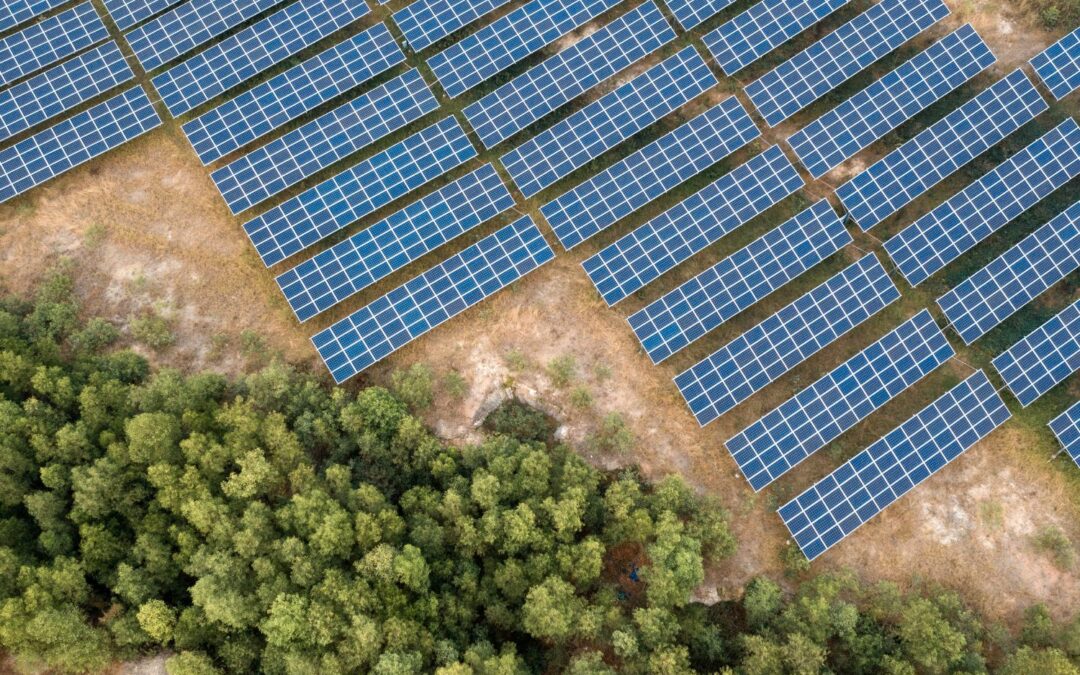
The solar complex would have capacity of 3,500 megawatts by 2013, Hamza said.

"You can have up to 500 MW in one place," he said. "Then you will need about seven sites because the total capacity needed at that time is 3,500 MW," he said adding that solar capacity could increase to 4,500 megawatts by 2036.

The government of Abu Dhabi is also planning to build a solar power plant as part of its $15 billion proposals to develop green energy.

Hamza said the solar complex was part of a wider plan that could include construction of a nuclear power plant.


UK plans 'too weak' to boost wind power

The UK's plans to ease the building of new wind farms will do little to encourage new turbines to be built to meet the government's exacting renewable energy targets, according to the renewable energy industry.

The bill currently before parliament is intended to streamline the process of granting planning permission to large wind farm sites by referring them to the UK's new Independent Planning Commission.

But the British Wind Energy Association told the Financial Times that the measure was "too late, too weak" and aimed at the wrong target.

"The irony is it will not help," said Gordon Edge, director of economics and markets at the BWEA. "The measures will not be implemented until 2009, it will take a while to get the Commission up and running, and it only applies to large wind farms over 50 megawatts."

Mr Edge said the combination of these factors would leave a large backlog of proposed wind farms still stuck in the planning system. The BWEA calculates that there are 2.4 gigawatts of wind power capacity in the UK at present, enough to power 1.3m homes. But there is more than 9GW of new capacity stuck in the planning process.

A Financial Times analysis of the wind market has found that large subsidies from the electricity consumer to wind farms were failing to encourage new construction because of planning system delays. Last year, according to the BWEA, just 427MW of generating capacity was built, down from 631MW in 2006.

Most new applications are likely to be for smaller windfarms, Mr Edge says, because so many of the best sites for large farms are already taken up by projects in planning. Proposals for small wind farms are handled by local authorities, however, meaning the government's proposed new planning commission is unlikely to speed up the planning process.

The UK must expand the proportion of its electricity supply coming from renewables eight-fold by 2020, under proposals by the European Commission, so that it derives 40 per cent of its electricity from renewable sources such as wind.

Wind has seen a surge of investment as one of the most mature and cheapest renewable technologies, but many investors have been frustrated by the planning system.


Climate

Scientists identify 'tipping points' of climate change

Nine ways in which the Earth could be tipped into a potentially dangerous state that could last for many centuries have been identified by scientists investigating how quickly global warming could run out of control.

<!--proximic_content_on-->

A major international investigation by dozens of leading climate scientists has found that the "tipping points" for all nine scenarios — such as the melting of the Arctic sea ice or the disappearance of the Amazon rainforest — could occur within the next 100 years.

The scientists warn that climate change is likely to result in sudden and dramatic changes to some of the major geophysical elements of the Earth if global average temperatures continue to rise as a result of the predicted increase in emissions of man-made greenhouse gases.

Most and probably all of the nine scenarios are likely to be irreversible on a human timescale once they pass a certain threshold of change, and the widespread effects of the transition to the new state will be felt for generations to come, the scientists said.

"Society may be lulled into a false sense of security by smooth projections of global change. Our synthesis of present knowledge suggests that a variety of tipping elements could reach their critical point within this century under anthropogenic [man-made] climate change," they report in the journal Proceedings of the National Academy of Sciences.

The study came out of a 2005 meeting of 36 leading climate scientists who drew on the expertise of a further 52 specialists. It is believed to be the first time that scientists have attempted to assess the risks of what they have termed "tipping elements" in the Earth's climate system.

The nine elements range from the melting of polar ice sheets to the collapse of the Indian and West African monsoons. The effects of the changes could be equally varied, from a dramatic rise in sea levels that flood coastal regions to widespread crop failures and famine. Some of the tipping points may be close at hand, such as the point at which the disappearance of the summer sea ice in the Arctic becomes inevitable, whereas others, such as the tipping point for the destruction of northern boreal forests, may take several more decades to be reached.

While scenarios such as the collapse of the Indian monsoon could occur within a few years, others, such as the melting of the Greenland ice cap or the West Antarctic ice sheet, may take several centuries to complete. "Our findings suggest that a variety of tipping elements could reach their critical point in this century under human-induced climate change," said Professor Timothy Lenton, of the University of East Anglia, who led the study.

A tipping point is defined as the point where a small increase in temperature or other change in the climate could trigger a disproportionately larger change in the future. Although there are many potential tipping points that could occur this century, it is still possible to avoid them with cuts in greenhouse gases, said Professor Lenton.

He added: "But we should be prepared to adapt ... and to design an early-warning system that alerts us to them in time."

Irreversible changes

* Arctic sea ice: some scientists believe that the tipping point for the total loss of summer sea ice is imminent.

* Greenland ice sheet: total melting could take 300 years or more but the tipping point that could see irreversible change might occur within 50 years.

* West Antarctic ice sheet: scientists believe it could unexpectedly collapse if it slips into the sea at its warming edges.

* Gulf Stream: few scientists believe it could be switched off completely this century but its collapse is a possibility.

* El Niño: the southern Pacific current may be affected by warmer seas, resulting in far-reaching climate change.

* Indian monsoon: relies on temperature difference between land and sea, which could be tipped off-balance by pollutants that cause localised cooling.

* West African monsoon: in the past it has changed, causing the greening of the Sahara, but in the future it could cause droughts.

* Amazon rainforest: a warmer world and further deforestation may cause a collapse of the rain supporting this ecosystem.

* Boreal forests: cold-adapted trees of Siberia and Canada are dying as temperatures rise.


Energy industry gears up for CO2 challenge

Coal-fired power stations are measuring the high cost of the European Union's new greenhouse gas emissions targets, just as the price of their fuel has rocketed.

Electricity utilities that are reliant on coal are expected to be among the biggest losers from the EU proposals to cut greenhouse gas emissions by 20 per cent and increase the proportion of energy coming from renewable sources to 20 per cent by 2020.

Coal-fired power stations were hit hard this week as coal prices reached a record high after production problems in South Africa, China and Australia. Coal prices may come down as the temporary production problems ease.

However, the higher cost of emitting carbon in Europe is a serious longer-term challenge to the industry. Coal-reliant companies will come off worst because the fuel produces large amounts of carbon dioxide.

Power utilities will have to bid in auctions for the permits they need for producing carbon dioxide from 2012, instead of receiving them free as they did from 2005. Companies in other sectors will continue to receive their permits free while auctioning is phased in.

Morgan Stanley, the investment bank, said companies with large numbers of coal-fired stations would suffer "a large decrease in post-2012 earnings" as the result of the EU's plans. It highlighted RWE of Germany and Drax of the UK as two companies likely to suffer most.

The EU's plans have stimulated more companies to examine carbon capture and storage (CCS), a way of cleaning up coal-fired power stations by siphoning off the carbon dioxide as it is produced and piping it underground. The Norwegian industrial group Aker said it would, with a partner, invest NKr875m ($162m, €109m, £81m) in a plant to capture and store carbon dioxide that could be one of the first of its kind.

Several companies are expected to unveil similar plans in the UK, and Enel is mulling a possible facility near Venice. There are no CCS facilities currently attached to power plants, though carbon dioxide has been stored successfully under the North Sea.

Companies pursuing CCS would save under the EU's emissions trading scheme, as carbon stored underground would not require an emissions permit. But emissions trading alone will not be enough to make CCS economic, as building capture and storage facilities are forecast to add 30-70 per cent to the cost of building a power plant.

The EU has pledged to invest €6bn (£4.5bn) on energy-related research over the next six years. Much would be devoted to CCS to build the 12 plants across Europe the Commission envisages.

Alstom, the generation equipment manufacturer, criticised the EU for its "lack of urgency" in aiming to set up these plants by 2015. Philippe Joubert, the head of its power division, said: "It's very frustrating. People have to understand this is urgent."


Economy

London shares slump on US recession fears

Property stocks were among the biggest fallers in a London market that closed sharply lower on US recession fears.

The sector came under renewed selling pressure after HSBC urged clients to sell into the recent rally.

"The UK commercial property market is in the midst of a 25-35 per cent correction, which we predict will be followed by an extended period of sub-inflation rental growth," said analyst John Fraser-Andrews.

Placing "underweight", or "sell", recommendations on every company he follows, Mr Fraser-Andrews said cash flow analysis suggested property stocks could fall by a third.

Unsettled by that call, Hammerson finished 6.8 per cent lower at £10.67. Liberty International lost 6.4 per cent to £10.09. British Land slipped 4.8 per cent to 951p.

In the wider market, leading shares slammed into reverse after a report showed a contraction in the vast US services sector. The FTSE 100 came to rest 158.2 points, or 2.6 per cent, lower at 5,868, while the FTSE 250 dropped 306.8 points, or 3 per cent, to 9,955.3.

Traders said yesterday's weakness had also been caused by a bank liquidating a portfolio of stocks across Europe.

Drug company Shire bucked the market trend, rising 0.9 per cent to 952p. Traders believe the company, the shares of which have fallen 17 per cent this year, could be vulnerable to a takeover. Barr Laboratories and AstraZeneca, 1.6 per cent cheaper at £20.65, could be interested.

Shire was also propped up by positive comments from Morgan Stanley. The broker expected data for Vyvanse, Shire's new hyperactivity treatment, to pick up in the US because of the start of the school term, new managed care contracts and the approval of an adult version.

Schroders dropped 7.1 per cent to £10.25 after Morgan Stanley downgraded it to "underweight". "Our in-depth analysis of Schroders' Luxembourg funds (45 per cent of retail assets under management) suggest it saw a 28 per cent annualised re-demption rate in 4Q," it said,

Next lost 7.2 per cent to £14.13 after Philip Dorgan at Panmure Gordon advised clients to "sell". Recovery in sales at the group's core high street retail business would take longer than expected, he said. "

Store visits lead us to believe that Next has not yet put the magic back into its ranges," Mr Dorgan said. Next shares, he added, deserved to trade at £13, or a 20 per cent discount to Marks and Spencer, 2.3 per cent lower at 422¼p.

Sports Direct International jumped 6.2 per cent to 112¼p after one of the re-tailer's biggest critics up-graded it to "buy". The business model was sound and the company could make more than 10p a share of earnings this year, Jonathan Pritchard at Oriel Securities said. "Any turnround in fortunes from here could leave forecasts looking low and, from the current multiple, the shares could run nicely," he added.

After the market closed, Sports Direct revealed it had repurchased nearly 3.8m shares for cancellation yesterday.

Northgate, the van hire group, faded 1.6 per cent to 7242½p on concerns about the performance of its Spanish division. On Monday figures had shown an increase of 132,000 in the number of registered Spanish jobless in January — the biggest monthly increase since 1984.

"Spain accounts for 38 per cent of our Northgate 2008 underlying earnings forecast and is expected to be the main driver of growth going forward, with management targeting 15 per cent fleet growth per annum,"ABN Amro said. "

This target looks increasingly challenging given the worsening economic backdrop."

The FKI engineering group, which has received a 70p a share offer from Melrose, faded 0.4 per cent to 652¾p. Traders noted that Blackstone, the US private equity group, would be free to bid for the company again this month.

Ferrexpo gained 2.3 per cent to 263p even though its biggest shareholder, the billionaire Kostyantyn Zhevago, pledged 443m shares as collateral for a loan with Deutsche Bank.


The move surprised traders as the stock pledged accounts for nearly all of Mr Zhevago's 72.2 per cent stake in the company, which listed at 140p a share in June.


China 'on course for growth slowdown'

The World Bank has cut its forecast for Chinese economic growth this year to 9.6 per cent — which would be nearly 2 percentage points lower than last year's outcome — adding to a firming consensus that the economy will slow because of decelerating exports and a weakening global outlook.

The bank says in its quarterly report on the Chinese economy, however, that China is well-placed to manage the knock-on effects of any global slowdown because of a strong domestic economy and the government's relatively buoyant financial position.

Indeed, the bank says a weaker global economy may dovetail with the aims of Chinese policymakers by relieving inflation pressures, their paramount concern, and restraining the contentious trade surplus.

The bank's new forecast of 9.6 per cent for 2008, down from the 10.8 per cent it released last September, is towards the lower end of predictions in recent weeks by China economists.

"The slowdown in the global economy should affect China's exports and investment in the tradable sector," said David Dollar, the World Bank's country director for China.

"However, the momentum of domestic demand should remain robust and a modest global slowdown could contribute to rebalancing of the economy."

China's economy grew by 11.4 per cent in 2007, the fifth consecutive year in which output has risen at double-digit rates.

Separately, on Monday, shares in mainland China soared more than 8 per cent after optimistic statements by government officials eased concerns about the damage done by the recent severe weather, which had fuelled fears of a slowdown in the economy.

Investors were also cheered by two new equity investment funds being approved, by the lifting of some restrictions on new bank credit and by indications that a huge planned fund-raising might be reduced.

In what appeared to be a co-ordinated effort by the government to try to boost investor confidence, several newspapers ran prominent articles citing upbeat government statements.

Zhu Hongren, a senior official at the main planning agency, said only part of the country had been affected by bad weather. "The impact on the entire economy is limited," he said.

Investors also reacted to a stinging rebuke in an official newspaper of Ping An Insurance's plans for a $22bn rights issue, which was announced last month and which contributed to the recent sharp decline in the market.

A commentary in the People's Daily, the mouthpiece of the Communist party, criticised the company for giving only a vague justification for the fund-raising.

The Shanghai composite index, which had been down 30 per cent from the high it reached in October, rose 8.1 per cent to close at 4671.6 points.


US consumer sales growth slumps

Consumer spending slowed sharply in the US, official figures showed yesterday, as the country's most powerful consumer products groups warned that a slowdown would crimp profits in the coming months.

Procter & Gamble — makers of a raft of household name brands, including Gillette, Ariel and Pringles — said it was already seeing a "modest" deceleration in the US and was finding most of its growth overseas.

The federal government's commerce department reported that consumer spending was up just 0.2 per cent in December, an abrupt decline from the 1 per cent rate of growth the previous month. It was the worst reading in six months and took growth for last year as a whole to 5.5 per cent, the slowest year since 2003.

The data was accompanied by news of a steeper-than-forecast rise in unemployment claims last week, which may presage even more pressure on spending.

Investors examined a slew of quarterly corporate earnings statements for clues as to the likely direction of consumer spending, which accounts for 70 per cent of the US economy and which has so far held up despite the woes in the housing market.

Robert Selander, chief executive of Mastercard, said that most of its forecast-busting growth in the past three months had come from overseas. "Over the past several months, consumers have moved away from discretionary items such as jewellery, full-service restaurants and home furnishings for everyday purchases including gasoline, grocery and personal health care items," he said.

Procter & Gamble lowered its earnings guidance for the first three months of this year, reflecting how high commodities prices are squeezing it from all sides. Rising raw materials costs and factory energy bills are making it difficult to improve margins, while high petrol prices are one reason for weaker consumer spending.

However, Colgate-Palmolive posted better than expected figures yesterday and signalled it saw little slowdown in the US. Burger King, too, contradicted McDonald's assertion earlier this week that consumers were more reluctant to splash out on fast food in December.


WASHINGTON (Reuters) - Research into producing electricity from low-emission coal and nuclear plants saw big funding boosts in the 2009 budget request submitted by the U.S. Energy Department on Monday, along with experiments in basic energy sciences.


The 2009 budget proposed by the White House -- which requires congressional approval -- includes $25 billion in discretionary budget authority for the Energy Department, up nearly 5 percent from 2008.

The lion's share of the funds -- about $9.1 billion -- goes to securing U.S. nuclear weapon stockpiles. Funding for energy resource initiatives fell 10 percent to $3.65 billion, while funding for science programs rose 19 percent to $4.7 billion.

The budget requests big funding boosts for research into high energy physics, nuclear physics and basic energy sciences, which saw funding rise 19 percent to $1.57 billion.

A separate low-income energy assistance program overseen by the Health and Human Services Department fell 22 percent to $2 billion.

Nuclear energy initiatives saw increases across the board, and research into clean coal initiatives rose 40 percent to $818 million. Building a long-delayed nuclear waste dump at Yucca Mountain in Nevada would get about $495 million in funds in 2009. The Energy Department plans to submit a license request for Yucca Mountain to the Nuclear Regulatory Commission later this year.

Capturing carbon emissions from coal plants and socking them away in underground reservoirs was at the top of the department's 2009 priority list. Carbon sequestration research got $400 million in funds, along with $241 million for demonstration projects.

Research initiatives at the DOE's office of energy efficiency and renewable energy saw cuts in research into hydrogen technology and weatherization programs and increases in biomass and biorefineries, with the aim of making cellulosic ethanol cost-competitive with conventional sources by 2012.

<!-- END:: Shared Module id=47291 -->


Business

Delta and Northwest close to merger

Delta Air Lines and Northwest Airlines are closing in on an agreement to merge the two US carriers, people familiar with the discussions said.

The airlines may clinch the landmark accord as early as the middle of this month, the people said, though they cautioned that negotiations could still stall or even collapse.

Delta and Northwest have made some progress in selecting the combined company's top managers. Richard Anderson, Delta chief executive, would keep that title following the proposed merger, while Doug Steenland, Northwest chief executive, would remain part of a senior team that would include executives from both airlines, the people said.

A deal between Delta and Northwest, two of the world's largest carriers, would help squeeze excess capacity from an industry beset by record fuel costs and intense competition for passengers.

It could also spark a wave of consolidation throughout the industry, as rivals scramble to strike deals that help them eliminate unprofitable routes and weather a looming economic downturn.

The two airlines and their advisers still need to find common ground on the deal's terms, including the ratio at which Northwest investors will exchange their shares for those in the new company.

There are also no assurances that any of the concessions either side have made will be part of a final agreement, should there be one, one person said.

Mindful of the scrutiny any airline merger will receive from regulators, politicians, organised labour and consumer advocates, both carriers are striving to structure a deal that would minimise job losses while still delivering the cost savings its shareholders crave.

It is a delicate balance and any agreement would merely mark the start of a lengthy process of winning the necessary approvals and then integrating complex operations into one company.

Northwest declined to comment on Wednesday. A Delta spokeswoman said: "Delta's board is working with management to analyse strategic options, including potential consolidation transactions, to ensure Delta maintains its leadership position."

Delta executives received approval from their board last month to pursue a merger with either Northwest or United Airlines, another legacy carrier. As January ended, and Delta's talks with Northwest gained momentum, United in turn weighed reigniting negotiations with yet another airline, Continental.


Ryanair warns high oil prices could slash its profits by 50% next year

Budget airline Ryanair warned today that profits could fall by up to 50% next year on the back of high oil prices, declining consumer spending and the weakening pound.

Chief executive Michael O'Leary said the European airline sector faces the possibility of a "perfect storm" of higher oil prices, poor consumer demand, weaker sterling and higher costs and there is now "a significant chance" that profits in 2008/09 will decline.

"At our most optimistic, a combination of flat yields and $75 oil would see profits grow by 6% to approximately €500m, but at our most conservative, if forward oil prices remain at $85, and consumer sentiment/sterling weakness leads to a 5% reduction in yields, then profits in the coming year could fall by as much as 50% to as low as €235m (£175m)," he said.

Shares in Ryanair tumbled more than 10% on the stark profits warning, falling to €3.21. Rival budget airlines were also hit, with easyJet down by 6%.

But the Ryanair boss later told journalists at a press conference in London that he would welcome a recession, as it would allow the airline to keep its prices low and would also depress fuel costs across the industry.

Asked if he was concerned about the chill that appears to be spreading across the sector, he said: "Not a lot. In many ways we would welcome a chill or something even colder.

"We would welcome a good, deep, bloody recession for 12 to 18 months.

"One, it would lead to lower fares and, two, it would expose the regulatory scam that is going on over here," a reference to the group's long-running argument with the Civil Aviation Authority over airport charges.

O'Leary also claimed that a recession would put an end to the "environmental bullshit among the chattering classes that has allowed Gordon Brown to double air passenger duty. We need a recession if we are going to see off some of this environmental nonsense."

He dismissed fears that an economic downturn would lead to lower passenger numbers for the group, saying he expects growth to continue at double digit rates. But profits will be hit as the airline slashes prices to maintain demand.

O'Leary's warning on profits came as the group, Europe's largest low-cost airline, reported a worse-than-expected 27% fall in third-quarter profits, to €35m (£25.54m).

The Ryanair boss described it as "creditable performance in very adverse market conditions", and said he still expects profits for the current year to be ahead by around 17.5% to €470m.


Fuel bill takes shine off BA results

British Airways will weather the threat of recession in the US and Europe, the airline's chief executive said today.

Willie Walsh was bullish in the face of pressure on BA's all-important business class traffic, pointing to the airline's strong track record during economic downturns. However, he admitted the economic slowdown across the Atlantic is affecting leisure bookings already, with declining economy class sales on UK-bound BA flights in January.

"If you look at it historically, traffic does not tend to be impacted to a significant degree by general recession issues. Where long haul traffic has been hit was post-9/11 and after the first Gulf war," he said. The BA boss added that business class bookings were not "recession proof" but support would also come from the growing Asian market, which economists are hoping will continue to grow despite the US downturn.

BA's strength in the UK to US market is a significant factor in investors' confidence in the business. Transatlantic travel accounts for about two-thirds of BA's earnings, according to analysts, with business cabins the most significant contributor to profits. BA said this morning that transatlantic premium traffic remained "strong".

Walsh added that economy class sales to European destinations such as Brussels, Paris and Amsterdam also fell in January, on top of weak premium bookings to those destinations, which emerged towards the end of last year. BA is blaming the fall on a combination of Eurostar's growing success and customer frustration over hand luggage restrictions, which were lifted at most major UK airports earlier this month.

"Where we have seen traffic reduce that's a clear indication that it is moving to the train on the back of hand baggage restrictions," Walsh said.

Shares in BA fell 4.6% to 316.75p as analysts expressed fears that the group will fail to reach its 10% margin target in the next financial year due to rising fuel costs.

In a trading update today BA said that mitigating the high oil price - which will take its fuel bill to more than £2bn in 2007 - will be "challenging" next year. The remark spooked analysts at Deutsche Bank, who said the warning was "another way of saying that margins will fall next year".

Walsh refused to reassure investors about the chances of achieving the margin target, saying the company will release 2008 guidance next month. He added that BA was "focused" on reaching 10% by the end of its financial year in March, having made a margin of 11.1% in the nine months to December 2007. The BA boss also dismissed concerns that there is little room left for cost cuts at the carrier as rising fuel prices threaten profits.

"We still think that there are areas of our cost base that we can continue to improve on," he said, citing a 6.9% reduction in employee costs to £1.6bn so far this year, largely due to a deal on closing BA's pensions deficit. He added: "I would not say that we have come anywhere close to finishing on costs."


Disclaimers

The items contained in this newsletter are distributed as submitted and are provided for general information purposes only. ODAC does not necessarily endorse the views expressed in these submissions, nor does it guarantee the accuracy or completeness of any information presented.

FAIR USE NOTICE: This newsletter contains copyrighted material the use of which has not always been specifically authorized by the copyright owner. We are making such material available in our efforts to advance understanding of issues of environmental and humanitarian significance. We believe this constitutes a 'fair use' of any such copyrighted material. If you wish to use copyrighted material from this newsletter for purposes of your own that go beyond 'fair use', you must obtain permission from the copyright owner.


Disclaimers

The items contained in this newsletter are distributed as submitted and are provided for general information purposes only. ODAC does not necessarily endorse the views expressed in these submissions, nor does it guarantee the accuracy or completeness of any information presented.

FAIR USE NOTICE: This newsletter contains copyrighted material the use of which has not always been specifically authorized by the copyright owner. We are making such material available in our efforts to advance understanding of issues of environmental and humanitarian significance. We believe this constitutes a 'fair use' of any such copyrighted material. If you wish to use copyrighted material from this newsletter for purposes of your own that go beyond 'fair use', you must obtain permission from the copyright owner.