ODAC Newsletter - 27 November 2007
Welcome to the ODAC Newsletter, a weekly roundup from the Oil Depletion Analysis Centre, the UK registered charity dedicated to raising awareness of peak oil.
The economic boat continued to sink alarmingly this week, prompting yet more desperate bailing out by policymakers around the world. In the UK Alastair Darling tried to keep Father Christmas in business by dropping the rate of VAT, while in the US another $800bn rescue package was released just in time for Thanksgiving.
Despite a brief rally early in the week, the slumping economy kept oil prices down. With OPEC due to meet at the weekend, Russian Energy Minister Sergei Shmatko said his country will coordinate with OPEC to protect its interests. As energy companies struggle to finance investment and the oil economies lose revenue, this week made unlikely bedfellows of Christophe de Margerie, CEO of Total and Hugo Chavez: both said oil prices need to be in the region of $80/barrel.
The threats to the global energy supply were highlighted this week in a new report Global Trends 2025: A Transformed World, by the US Intelligence Council . The report argued that “Unprecedented global economic growth—positive in so many other regards—will continue to put pressure on a number of highly strategic resources, including energy, food, and water, and demand is projected to outstrip easily available supplies over the next decade or so.” That analysis was brutally reinforced by the news that the S.Korean company Daewoo Logistics is close to a deal with Madagascar, in which it would take a 99 year lease on 50% of the country’s agricultural land, largely to grow maize & biofuels.
The impending UK energy crunch was highlighted in separate speeches this week by both Jeroen van der Veer of Shell & Alistair Buchanan, CEO of Ofgem. It is apparently becoming more widely accepted that energy supply and demand will have to be radically transformed if we are to face up to the challenges ahead. It is not at all clear that this will actually happen.
The ODAC newsletter will return to its regular Friday timeslot next week.
Join us! Become a member of the ODAC Newsgathering Network. Can you regularly commit to checking a news source for stories related to peak oil, energy depletion, their implications and responses to the issues? If you are checking either a daily or weekly news source and would have time to add articles to our database, please contact us for more details.
Disclaimers
Oil
Fall in oil price getting "dangerous" -Total CEO
PARIS - The sharp drop in the price of oil is worrying and could hinder investment in the industry, Total Chief Executive Christophe de Margerie said on Sunday.
"I think it is beginning to get dangerous. I think that ... we are getting to a level that will brake investment in a sector that is crucial," Margerie told LCI television.
He added that recent highs of $140 a barrel were excessive, but said oil should cost between $80-$90 a barrel to allow the industry to bring much-needed new fields on line.
The price of oil has fallen nearly $100 from a record high of more than $147 in July, with U.S. light crude for January delivery CLc1 trading around $50 on Friday.
Editing by James Mackenzie
Financial crisis? That's nothing
Why is anyone talking about anything apart from the looming power gap?
The news that we're about to return to the age of coal is no surprise to anyone who's been following energy developments in this country or even globally.
The simple truth is that we're in a pretty woeful position, thanks to government dithering: in the next couple of years some of the UK's aging nuclear and coal-fired plants are due to be shut down, and there is not really much - green or otherwise - lined up to replace them. Moreover we, like the rest of the world, are desperately in need of low-carbon energy sources, as CO2 levels in the atmosphere just rise and rise and rise.
Yes, in the government's happy daydreams we will be providing much of our power through off-shore wind by 2020. Other countries too are working as hard as possible to find solutions to the problem, but most of them are a long way from being realised. In the meantime the head of Shell, Jeroen van der Veer, warned the Confederation of British Industry on Monday that we "had better make speed, or else the lights would go out. A sense of urgency is needed".
Van der Veer pointed out that the financial crisis would be a problem for a couple of years, "but the energy challenge will be a problem for at least 50 years".
He told the audience to face three hard truths. First, the world's population will increase from 6 to 9 billion over the next couple of decades and these people will all want electricity and transport.
Second, oil and gas alone will not be able to provide this fuel: renewables in time will come into their own but we are a while away from that future at the moment.
And third, CO2 levels will go up in concentration higher than the levels recommended by the scientists.
This last idea is particularly depressing, given that scientists such as James Hansen of Nasa believe that these recommended levels are too high anyway. It is a grim little list, made even grimmer by the source: not a deep green thinker, but the head of one of the largest energy companies in the world.
At Shell they have painted two possible scenarios. The first is called Scramble, and assumes that every government will go all out for itself. The second is called Blueprint, and hopes that a good follow-up to Kyoto will come along, and that the world will work together to sort out the problem. They are working on a global CO2 abatement curve in order to work out where the best carbon savings can be made, but van der Veer, with his pragmatic Dutch manner, refuses to see easy solutions and reiterates that the future is going to be tough.
Is Shell making the problem sound worse than it is to distract us from its monster profits and withdrawal from certain key renewable projects in this country? Are they trying to justify their decision to begin extracting what van der Veer called "unconventional" oil — such as the tar sands of Canada? If only.
The energy crunch is coming, and it may make the financial crunch look like a small squall. Is Gordon Brown ready for this one?
Blowing away certainties
This depressing analysis of the future should change everything. But will it? What's striking about the National Intelligence Council's assessment of global trends is not just that it repudiates the fundamental tenets of George Bush's US foreign policy - it does so in such a matter-of-fact way.
Just four years ago the NIC declared globalisation irreversible and assumed ongoing American supremacy. Energy supplies were plentiful; climate change hardly mentioned. Terrorism was the main challenge the US faced.
Now these certainties have been blown away. Instead of unipolarity, multipolarity is explicitly recognised. Shocks, whether natural or manmade, are taken for granted.
Above all, the NIC identifies scarcity - of land, water, oil and food, and, especially, "airspace" for carbon emissions - as the hallmark of tomorrow's world. Where the Bush administration regarded the American way of life as non-negotiable, this report concedes that a fundamental economic, social and cultural shift is now required.
But can we pull this off? Read the report and you're left with persistent doubts that the world, and especially the US, is capable of changing fast enough. The NIC recognises that an energy transition away from oil and gas needs to be "completed" by 2025. But the US president-elect, Barack Obama, expects US emissions to be barely below 1990 levels by then, a target that is less than needed but which could prove stretching to achieve.
Ongoing turbulence will make it harder to focus on long-term changes. Recent weeks have seen much chatter about a second Bretton Woods, a gathering of states to rescue the world's economy from its woes. But what if we have not yet reached 1944? What if we're still in 1914, when the world's first period of globalisation was about to end to be replaced by 30 years of upheaval, depression and conflict?
This then is the challenge facing Obama. Can he help lead a period of renewal, even as the world continues to face massive stress?
The problem cannot be tackled incrementally. Multiple systems - financial, economic, energy, security and more - now need to be overhauled. Obama and other national leaders should use this report to challenge the fragmentation and incoherence at the heart of their governments.
Obama's greatest achievement so far has been his transformation of American political campaigning. Now, with the NIC's report at the top of his in-tray, he needs to bring the same energy to global issues. Only a truly integrated approach will do; one that combines long-term vision with the will to take radical action today.
Norway Slips On Scarcer Oil
The Norwegian economy contracted by a sharper than expected 0.7% in the third quarter, in part because North Sea crude is becoming harder to extract.
As if the global financial crisis were not tough enough to contend with, Norwegians are having to cope with the fact that their precious oil reserves are running dry. The latest economic figures for Norway showed that gross domestic product in the third quarter shrank by 0.7%, from the previous quarter, missing estimates for flat growth. The problem seems to be not just a drop in consumer spending, as fears about the international economic downturn compel Norwegians to hoard their cash, but a growing difficulty in extracting crude from the North Sea.
"We're investing more than ever to get oil out of the North Sea, but production is still flat or falling because the older fields are giving less oil," said Nordea Markets economist Erik Bruce, adding that mainland growth--which excludes offshore oil production--exhibited a 0.2% quarter-on-quarter uptick in growth. Still, oil production is critical to Norway's economy, accounting for 20.0% of the country's GDP in 2007. It is also the bedrock of the Norwegian government pension fund--known colloquially as the Oil Fund after its main source of income.
Norway has one of the highest benchmark interest rates in Europe, currently at 4.75%, but in October, the Norwegian central bank cut rates by 50 basis points. Economists expects it to cut again in December and further out into 2009. While that might help consumer spending, it would also spell further weakness for the Norwegian krone. The krone already been suffering in recent months as a consequence of the unwinding carry trade, in which foreign exchange traders would borrow money in the currencies of low-interest-rate countries, like the Japanese yen, and place it in securities denominated in currencies of countries where interest rates are higher, like the krone.
Foreign exchange investors are now loath to bet on small currencies with a higher risk profile, and the Norwegian krone has thus fallen by 28.7%, to 7.03 against the U.S. dollar on Tuesday, from 5.07 krone against the dollar on July 1.
Bruce expects the Norwegian government eventually to announce some sort of targeted fiscal stimulus package focused on the building and construction sector. "That's where we have the biggest impact at the moment due to falling housing prices," he said. Indeed, on Tuesday, Skanska (other-otc: SKSBF - news - people ), the Nordic region's biggest construction firm, said it would slash 3,400 jobs, including 600 in Norway, because of the weakened state of the building sector. Shares in the Swedish company fell by 4.1%, to 58.50 Swedish kronor ($7.26), in Stockholm.
Russia May Coordinate Oil Production Cut With OPEC
Russia may coordinate oil production cuts with OPEC as the world’s second-largest crude exporter reels from falling energy prices.
“Russia will coordinate with OPEC to defend its interests,” Energy Minister Sergei Shmatko said at a conference in New Delhi today. “We cannot rule out cutting production.”
The largest oil producer outside the Organization of Petroleum Exporting Countries, Russia made a formal proposal for closer cooperation in September. OPEC Secretary General Abdalla el-Badri met with Russian President Dmitry Medvedev in Moscow last month to discuss future coordination.
“Issues of coordination are actually much wider than just cutting production,” Shmatko said. “There will be an exchange of information on market developments and the finalization of investment programs.”
OPEC, which controls more than 40 percent of world oil supply, has already cut production as crude prices fell to a third of a July high of almost $150 a barrel. Oil ministers from the 13-nation group will next meet on Nov. 29 in Cairo and are due to hold another summit on Dec. 17 in Algeria to discuss production targets.
Venezuelan President Hugo Chavez said OPEC should return to a system of setting a price band for crude oil in order to guarantee market stability.
The country would consider a price of $80 to $100 a barrel to be “fair,” Chavez said yesterday in a televised press conference in Caracas. OPEC created price bands in the late 1990s to try to keep oil between $22 and $29 a barrel.
Russia, the largest crude exporter after Saudi Arabia, is struggling to keep production at current levels as older fields mature and credit for new projects dries up.
Russia May Agree Oil Accord With China By Year-End
Russia may strike a crude oil supply agreement with China by the end of the year, Energy Minister Sergei Shmatko said, in return for a multi-billion dollar loan for Russian oil companies.
Beijing-based magazine Caijing said Nov. 21 that the two countries may sign final agreements on loans and oil supplies by tomorrow. China may agree to provide $25 billion of loans to Russian oil companies and receive 300 million metric tons (2.2 billion barrels) of crude oil based on a memorandum of understanding signed Oct. 28, the magazine said.
In 2005, Moscow-based Rosneft committed to ship 48.4 million metric tons of crude to China National Petroleum Corp. through 2010 to help repay $6 billion of loans that part- financed the purchase of now bankrupt OAO Yukos Oil Co.’s largest production unit.
China may provide Russian oil companies with a “considerable” loan as the countries expand energy cooperation, Russian Deputy Prime Minister Igor Sechin told reporters after a meeting between Prime Minister Vladimir Putin and Chinese counterpart, Wen Jiabao, in Moscow Oct. 28.
Irina Yesipova, a spokeswoman for Russia’s energy ministry, said she had had no details about the talks.
From the Kremlin to Caracas, how oil collapse changes everything
Russia
Russia is lurching towards a major economic crisis, experts predicted yesterday, following news that the price of oil had slumped to under $50 (£33.72) a barrel. The collapse was likely to have catastrophic consequences including a possible devaluation of the rouble and a severe drop in living standards next year, they said.
With oil prices tumbling and his credibility at stake, Russia's prime minister, Vladimir Putin, yesterday insisted that the economy was still robust. The country would survive the global financial turmoil - which he blamed on the US - he told delegates from his United Russia party.
But the Kremlin is aware that any loss of confidence in the Russian economy could lead to a loss of confidence in Putin and his ally Dmitry Medvedev, who took over from Putin as president in May.
Putin said his administration would do everything it could to prevent a recurrence of the last oil-related crash in 1998, which saw the savings of many ordinary Russians wiped out. But the plummeting oil price leaves him little room for manoeuvre. Experts suggest Russia's economy is facing profound difficulties, despite two huge stabilisation funds accumulated during the booming oil years.
The fall in oil prices from $147 this July has blown a hole in the government's budget calculations. It is now facing a $150bn shortfall in its spending plans and will have to slash expenditure in 2009. Putin sought to assure hard-up Russians that their social benefits would not be affected. "We will do everything in our power ... so that the collapses of the past years should never be repeated," he said.
The oil slump, however, exacerbates Russia's already severe problems. Since May Russian markets have lost 70% of their value. Russia's central bank has spent $57.5bn trying to prop up the ailing currency. "If the trend continues, with the government supporting the rouble, oil prices falling and a slowing economy, we are going to have a major crisis," said Chris Weafer, of the Moscow brokerage Uralsib.
Luke Harding in Moscow
Iran
Iran is the second largest Opec oil producer and already feeling the pain of declining prices more than any other in the Middle East. Its "rainy day" oil stabilisation fund, used to release profits when revenues decline, is reportedly badly depleted as a result of mismanagement by Mahmoud Ahmadinejad's government. The precise figure is a state secret, but a member of parliament revealed recently it was $7bn - just enough to cover one year of imported petrol.
Ahmadinejad has seen two central bank governors resign and faces daily criticism of his policies. A strike by the powerful "bazaari" class over a new VAT tax - which would have aggravated inflation already at nearly 30% - was seen as a warning. Iran is especially vulnerable because 80% of its revenue comes from oil. The IMF calculated recently that for Iran to balance its budget, the price of crude oil must not fall below $95 a barrel. With prices now below $50 the shortfall could be staggering.
The effect of declining oil prices will be felt both domestically and internationally. Ahmadinejad is expected to stand for a second presidential term next June but the lack of cash will restrict his plans to replace subsidies with direct cash payments - widely seen as a vote-buying tactic. US and UN sanctions imposed over the nuclear issue are already limiting Iran's ability to issue letters of credit and thus increasing its cost of trade.
Saudi Arabia has been happy to use high Opec production levels and low prices to contain Tehran's plans for regional hegemony. US experts and lobbyists now talk openly of exploiting the drop in oil prices to make the sanctions more effective.
Ian Black, Middle East editor
Saudi Arabia
Saudi Arabia, the world's leading oil producer and exporter, is expected to cut back on current spending and also adjust ambitious long-term development plans in the light of the slump in prices.
But cautious fiscal policies will place the kingdom in a relatively strong position, with the current budget based on a price of around $45-50 a barrel. Expansion next year will require around $55-62.
The worry must be that in a country with no elections, parliament, political parties or taxes, the combination of slowing development projects and a widening gap between the wealthy elite and ordinary people could be destabilising.
Publicly, the message from the top has been that there is no need to panic, even as falling prices of crude oil and the global financial crisis were becoming inextricably linked and starting to wreak havoc in the Gulf economies.
By mid-November, the stock exchanges of Dubai, Saudi Arabia and Kuwait had declined by 62.5%, 50.4% and 29.5% respectively. Kuwait, which sits on 9% of world oil reserves, is expected to see its first budget deficit in 10 years if prices continue to fall. That will mean a long-term incentive to diversify away from oil.
In Kuwait, Qatar, and the United Arab Emirates, government-run investment funds have also suffered from heavy exposure to US and European stocks. But the UAE's Abu Dhabi Investment Authority has assets of $500bn to $1tn.
Dubai, the glitziest part of the UAE, which has seen an oil-fuelled boom in property but has little oil of its own, is starting to see a slowdown. But some welcome that as a way of reducing the number of foreign expatriates and re-establishing a disappearing sense of national identity.
Ian Black, Middle East editor
Venezuela
Hugo Chávez has reduced Venezuela's support for foreign allies and is poised to make deeper cuts at home and abroad as plunging oil revenues hit his socialist revolution. The government has warned of austerity measures after years of high spending on social programmes, nationalisations, arms and diplomacy. South America's energy giant relies on oil for half its exports and 95% of government revenue, leaving the president's ambitions vulnerable to a crunch.
"Oil revenues are the weapons he has been using to fight this war. He is going to have to make big changes," said Pietro Pitts, of Latin Petroleum magazine. "He will have to cut spending, or devalue the bolivar, or both."
Chávez recently said Venezuela would ride out any financial storm and that oil prices of $80 or $90 a barrel would be sufficient. This now looks optimistic. With next year's budget in tatters, and foreign investment slowing, the government made cuts even before the latest price fall. Last month it postponed construction of a $4bn refinery in Nicaragua, a key ally, and announced tougher terms for subsidising oil exports to some Caribbean countries.
The state oil company slashed spending on the social programmes which have underpinned Chávez's popularity. Aid to Bolivia and Ecuador, and subsidised oil to Cuba, may be hit next. The finance minister, Alí Rodríguez, said the 2009 budget "will have significant restrictions" compared with this year's $63.9bn and officials would have to cut back on luxuries.
Some analysts think Venezuela can weather the crisis with the help of rumoured $40bn reserves. But Venezuela is racked by 36% inflation, and previous governments crashed when oil crashed.
Rory Carroll in Caracas
Dialogue key to stabilising oil prices, says Miliband
Oil producers and consumers can stabilise the oil market if they pursue a dialogue they started in Saudi Arabia nearly five months ago, according to Britain's Secretary of State for Energy Edward Miliband.
He said the two sides would discuss the issue when they meet in London on December 19 to forge a new relationship against the backdrop of the current global financial crisis.
In an article published by Riyadh-based International Energy Forum, Miliband said the oil price volatility has been underscored in the past two months, when prices plunged by more than $100.
"Oil price volatility has an impact across all levels of society, often hitting the most vulnerable hardest. Clearly, a stable oil market is in our common interest and the current economic climate only reinforces this," he said. "This is why the phase of the producer-consumer dialogue that was started at the Jeddah Summit in June is so important. The medium to longer-term challenges facing energy markets that were identified at Jeddah still need to be addressed. If we can improve the way that the oil market functions, with supply and demand responding more efficiently to prices and investments based on shared understanding of future demand and supply conditions, we can reduce the likelihood of price volatility."
Miliband, also in charge of climate change, said demand for oil will remain strong in the long term despite conservation efforts to protect the environment, adding this would require more investments in the sector. But he stressed a concerted effort is needed by both producers and consumers to tackle climatic change, which he said could undermine growth and security. "This will include measures to diversify energy supply through increased energy efficiency and accelerating the use of low emission technologies. It is therefore vital that producers and consumers work more closely together to understand clearly the outlook for consumption to ensure supply and demand match in a timely manner and at sustainable prices," he said.
Miliband said the London meeting would produce what he called a progress report on all the long-term commitments agreed at the Jeddah conference, in which Britain, the US and scores of other consumers and producers participated.
"These commitments include removing barriers to upstream and downstream investment, a shared understanding of future supply and demand trend, improving the quality, completeness and timeliness of oil data, international progress on increased energy efficiency and global support to help developing countries alleviate the consequences of high oil prices," he said. "We will present analysis of the impact of the financial crisis on oil markets, looking particularly at the effect of the credit crunch on energy demand and investment and what this might mean for energy markets in the future."
He said this would help producers and consumers to better understand the effects of the current economic climate and what further work is necessary to achieve our longer-term shared ambitions for the oil market.
British Prime Minister Gordon Brown is expected to open the London conference, which will attract oil producers from the Middle East and other areas, along with consumers from the West, Asia and other regions.
During a visit to the UAE earlier this month, Brown said there was a need for a new stage of co-operation between oil producers and consumers, adding this would be discussed at the London conference.
"Among other things, long-term demand for oil exceeded its supply and clearly we need a new way forward for energy policy that moves beyond the traditional zero-sum game that assumes it is a question of oil and commodity producers versus consumers. That approach has left producers unable to plan or invest and consumers subject to volatile prices," Brown said.
Gulf's woes bode ill for the oil and gas we need
Alistair Darling's Pre-Budget Report on Monday contained at least one item that raised not a flicker of attention at Westminster but which will have been keenly noticed far away in the Gulf: he has decided that Islamic bonds will not form part of the Government's borrowing programme in the near future.
The scrapping of Britain's first sukuk (a loan instrument that complies with Islamic strictures on the immorality of interest) will be seen as a slap in the face, a cold shoulder at a time when Islamic financial institutions are being buffeted by a catastrophe of real estate, the seeds of which were planted in America and Europe.
Dubai is not bust, but government debt of $80 billion (£52 billion) casts as big a shadow over the economy as Burj Dubai, the nearly kilometre-high skyscraper under construction in the city-state. As with the tower, no one quite knows how high the debt will go and, in a carefully staged announcement on Monday, nervous property investors were told that the Government of the United Arab Emirates would stand behind Dubai's obligations. Meanwhile, a deal was done to bail out two struggling mortgage banks that dominate the city-state's overheated property market. Amlak Finance and Tamweel, an Islamic lender, were folded into a shadowy government institution out of which emerged a new entity, Emirates Development Bank.
These tiny statelets were supposed to be rich, floating on a magic carpet of hydrocarbons. The oil is still there, but everyone is learning that the Gulf's economies are as connected to the global financial system as are financial markets elsewhere. From Moscow to Shanghai, via Dubai and Bombay, the tall towers of new money are tottering. Markets are falling in nations awash with petrodollars. Russia's Government is being forced to drain coffers filled with oil earnings to prop up the shaky finances of favoured oligarchs. In an attempt to prop up its sagging stock market, the Saudi Arabian monetary agency reduced its interest rate from 4 per cent to 3 per cent on Sunday, the third cut since October, and sober Abu Dhabi has come to the rescue of skittish Dubai, like an elder brother forced to settle the credit card debts of a reckless sister.
Dubai's problem echoes the one that afflicted Northern Rock: a sudden withdrawal of liquidity from the banking market, compounded by novelty and the bizarre world of the Gulf's new property markets. Vacancy rates are low and there is still rental demand, but the problem is that the investment market has evaporated, according to Colliers International, the real estate consultant. Investors who bought from developers hoping to make a quick turn by selling on the property are now stuck with a flat they do not want. “The music has stopped, finance isn't available and the developer is asking for his money,” Ian Albert, of Colliers, said.
No one is lending. Lloyds TSB has cut the maximum loan-to-value ratio on mortgage terms to 50 per cent, effectively getting out of the market. Emirates NBD caused an uproar in Dubai recently when an internal e-mail revealed that the bank had barred lending to expatriate staff of foreign property companies, apparently fearing job cuts. The expatriate community is causing an unusual insolvency problem for Dubai. Local courts have never had to deal with a rash of embarrassing foreclosures, potentially harming the state's image of fun, frolics and finance. Even more problematic, the banks are unsure how to deal with bad debts owed by footloose expatriates. One Dubai banker said: “If I default on my mortgage and I decide to go back to Pakistan, what is HSBC going to do about it?”
There was something distinctly sub-prime about the Las Vegas-style launch of Dubai's Atlantis hotel last week, an explosion of fireworks even as the Emirates Government was rescuing the biggest mortgage lenders. Yet it would be wrong for Britons to feel smug about the financial quicksand in the Gulf. British money and expertise have been pumped into these emerging markets, which employ many Britons, but the main reason to worry is because of the oil and gas that ultimately underpins their wealth. We need that oil and gas and we need more of it and a financial meltdown does not help.
Opec's daily revenues from selling crude have fallen 53 per cent over three months. The benchmark Brent crude price is now two thirds below its July peak, but the Opec basket price is even lower, close to $40 a barrel, one third below what analysts at the Centre for Global Energy Studies believe is the comfort zone for Saudi Arabia. It is hardly surprising, therefore, that Dubai is looking a bit sickly. The state is a very minor oil producer, but it is dependent on its role as a financial and trading hub for the Gulf.
With $200 billion of reserves, the Saudis can survive low oil prices for some time without cutting investment. Other states have little room for manoeuvre; Kuwait's Finance Minister recently gave warning that government spending might be cut. In Russia, the downturn has already started, with oil exports shrinking because of lack of investment. Lukoil, one of the biggest exporters, said recently that it would halve its investment if oil fell to $45 a barrel. The Urals crude price is almost there.
The financial crash has dragged the oil price down with it, but it will not stay there long. Without a continuing injection of cash at ever-increasing pressure, these wells will run dry. There is no question that Saudi Arabia will soon take more drastic steps to reduce its daily exports to shore up the oil price, but the more alarming prospect is next year, when the financial drought begins to shrink the reservoirs of crude.
The mandarins in the Treasury may have bigger priorities at the moment than puzzling over Islamic bond issues, but in the longer term the financial health of the Gulf is critical to our future. The only good news for the Chancellor is the collapse in the oil price, but he should know that such good news is really very bad news, indeed.
Pirate Attacks Fail to Revive Tanker Rates as Oil Demand Slows
Oil shipping costs may extend this year's 76 percent rout as shrinking energy demand and a global recession eclipse disruptions caused by pirates off east Africa capturing their largest-ever freighter.
Tanker rates next month are about 7 percent lower than yesterday's level on the Persian Gulf to Japan route, according to derivative contracts called Forward Freight Agreements that trade privately among banks, brokers, hedge funds and shipping companies. Transport costs plunged this year as OPEC curtailed production, lowering demand for vessels.
Somalian pirates seized their biggest-ever prize on Nov. 15, a ship loaded with 2 million barrels of crude, worth a combined $250 million. The hijacking prompted Frontline Ltd., the world's biggest tanker operator, and owners controlling almost a quarter of the fleet to say they may avoid the region, lengthening journeys and effectively reducing ship supplies.
``It would be too strong to say it would become a huge constraint'' to vessel supply, Andreas Sohmen-Pao, chief executive officer of BW Shipping Managers Pte., which controls 17 supertankers, said from Singapore Nov. 20. ``It would reduce capacity, but not to an alarming level.''
Shipowners are already contending with recessions in the U.S., Japan and Europe that have sapped demand for energy. The 13 members of the Organization of Petroleum Exporting Countries curtailed production for three consecutive months. The group also agreed to reduce output this month and meets again Nov. 29. The International Energy Agency, an adviser to 28 nations, cut its global oil demand forecast the most in 12 years on Nov. 13.
Shipping Hedge Fund
The cost of shipping Middle East crude to Asia, the global benchmark, has fallen to 66 Worldscale points from almost 277 points at the end of last year. Worldscale points are a percentage of a nominal rate, or flat rate, for more than 320,000 specific routes. Freight derivatives for December settlement are trading at about 61.5 Worldscale.
Longer voyages around South Africa's Cape of Good Hope, avoiding Egypt's Suez Canal and the Gulf of Aden above Somalia, won't change much, said Andreas Vergottis, research director at Tufton Oceanic Ltd., the world's largest shipping hedge fund group. Expanding inventories and weakening demand would have prompted refineries to seek slower deliveries, he said.
``In a slack market, this is happening anyway,'' London- based Vergottis said by phone Nov. 20. ``It's just convenient for everybody.''
Sailing at 14 knots, it takes 33.2 days to ship Saudi Arabian crude oil to Rotterdam via the Cape of Good Hope, compared with 19.2 days going through the Suez Canal, according to the world-register.net Web site. When rates are higher, shipowners will seek to speed deliveries.
Economic Contractions
``There's an economic case for going through the Suez and that works better when the market is higher,'' Martin Stopford, London-based executive director at Clarkson Plc, the world's biggest shipbroker, said Nov. 20.
The International Monetary Fund on Nov. 6 predicted economic contractions in the U.S., Japan and euro region next year. The Organization for Economic Cooperation and Development on Nov. 20 said the economy of its 30-member nations shrank for the first time in seven years during the third quarter.
There have been about 97 supertankers booked to load at Middle East ports in November and there probably aren't any more cargoes, said Nikos Varvaropoulos, an official at Optima Shipbrokers in Athens. There are normally about 105 a month.
The drop in shipments has left the market with ``plenty of vessels'' and ``no cargoes,'' Varvaropoulos said Nov. 21.
Canal Pipeline
About 61 million metric tons of Middle East crude oil were shipped northward through the canal and an adjacent pipeline in the first half of 2008, according to data from Lloyd's Marine Intelligence Unit. That's about 2.45 million barrels a day, or 12 percent of Europe's daily oil consumption.
The five-member Bloomberg Tanker Index, led by Hamilton, Bermuda-based Frontline, plunged 63 percent since June.
The Somalian pirates demanded $25 million in ransom for the Saudi Arabian supertanker. Since January, at least 91 vessels have been attacked in the Gulf of Aden, an area flanked by Yemen and Somalia.
``My gut feeling is that this problem is going to subside,'' said Finn Engelsen, managing director of Oslo-based shipbroker Lorentzen & Stemoco A/S. ``It's going to be solved one way or another.''
The European Union last month joined the North Atlantic Treaty Organization, India, Malaysia and Russia in deploying vessels to combat piracy.
Gas
PetroChina Doubles LNG Purchases in Accord With Shell
PetroChina Co., the nation's largest oil company, doubled the volume of liquefied natural gas it will buy from Royal Dutch Shell Plc in an agreement to supply terminals being built along China's eastern coast.
The companies signed a final accord for two million metric tons of supplies a year from the Gorgon project in Western Australia and Shell's global portfolio, the China unit of Europe's largest oil company said in a faxed statement today. In an initial accord signed in September 2007, Beijing-based PetroChina had agreed to buy 1 million tons of the fuel.
The Chinese oil producer is building three LNG terminals as part of a government plan to double the use of cleaner-burning fuels by 2010 to cut reliance on coal and oil. China has an accord with Woodside Petroleum Ltd., 34 percent-owned by Shell, for supplies from Australia's North West Shelf for the nation's first LNG plant in Guangdong province.
The accord signed yesterday is a ``20-year sales and purchase agreement,'' Shell said in the statement, without indicating when deliveries may start.
The cargoes will add to supplies from Shell's 30 percent- owned Qatargas 4 Project under a deal signed in April. PetroChina will receive 3 million tons of LNG from the Qatari project starting 2011, Oil Minister Abdullah bin Hamad al- Attiyah said then.
PetroChina is building an LNG receiving terminal in the eastern province of Jiangsu and another in the northeastern city of Dalian. A third plant is planned in Tangshan city in Hebei province. The Jiangsu plant is scheduled to be completed by 2011.
Gorgon Delays
Shell has a 25 percent interest in the Gorgon project. Operator Chevron Corp. owns 50 percent while Exxon Mobil Corp. has the remaining 25 percent.
The financial crisis threatens to delay the project, which has already been postponed several years, analysts have said. It was first put on hold in 1998 when the Asian economic crisis hit. More recently, the venture scrapped a timeline for approving and building the plant as the partners seek to tackle a surge in construction costs.
Gorgon requires environmental approval after the partners expanded its proposed capacity.
In September 2007, PetroChina agreed to buy between 2 million and 3 million tons of LNG for 15 to 20 years from Woodside's proposed Browse project off the northwest coast of Australia.
LNG is natural gas that has been chilled to liquid form, reducing it to one-six-hundredth of its original volume, for transportation by ship to destinations not connected by pipeline. It's turned back into gas for distribution to power plants and other buyers.
Gas prices could be "very, very frightening" in future, MPs told
Consumers who were expecting significant falls in their energy bills over the next few years – which have risen by more than 40 per cent in 2008 – could be disappointed, Alistair Buchanan, the chief executive of Ofgem, told an influential group of MPs
Britain does not have enough storage capacity to buy and hoard gas when it is cheap, and the credit crisis has delayed projects which would have improved the situation.
To make matters worse, the financial turmoil means that gas and electricity wholesale companies are now demanding a higher deposit for energy because they are worried that their customers – the retail distributors – will not have enough money to honour their commitments in the future.
Mr Buchanan told the Business and Enterprise Select Committee on Energy that gas companies were being charged considerably more by their banks to borrow money.
"Companies are having to decide how much of this should be pushed through to consumers. This is very, very frightening," he said.
His comments will come as a severe blow to hard-pressed consumers, who have had to cope with a series of bills increasing this year. The average joint gas and electricity bill has jumped from £912 at the start of the year to £1,303.
While the cut in Value Added Tax, announced this week by Alistair Darling, will bring down some bills, it will not affect energy bills, which incur a VAT rate of just 5 per cent.
Most experts predicted that energy bills would start to come down in 2009 because of recent heavy falls in the gas wholesale market. However, Mr Buchanan warned that customers might fail to see much long-term reduction in their bills, because of gas companies escalating costs.
"Our British utility companies have significant refinancing to achieve in the next 18 months. They are very healthy companies but they have to refinance their debt," Mr Buchanan said.
Peter Luff, the Conservative chair of the Committee said afterwards: "This has to hit consumers. It has to. They will be puzzled to see oil prices tumbling and no reduction in their gas bills, but the forward gas market remains ahead [of the current price] throughout 2010 and 2011."
Most gas companies buy their energy on the 'forward market', which allows them to purchase contracts at a set price in the future.
According to energy consultants ICIS Heren, the price of wholesale gas in summer 2009 is 49.87p, but rises to 53.5p in summer 2010 and to 55.p in 2011.
Though this price has fallen very sharply since the peak they reached this summer, Ed Cox at the company said, "They remain very high in historical terms compared to a few years ago.
"The era of cheap energy is very much over."
Most experts agree that consumers will never see prices return to where they were five years ago, when the average gas and electricity bill for a family was nearly half its current level – at just £534 a year.
Mr Luff agreed that forward gas prices had calmed down since the summer – which could see suppliers trim their bills in the New Year. But, in the longer-term in the UK, the cost of energy was much more expensive than both Europe and America.
"In the past Europe set a ceiling for prices, now it sets a floor," he said.
According to figures submitted to the committee the forward price of gas in 2011 is lower in Europe by at least 5 pence a therm, and even lower in America.
He blamed the lack of storage capacity for imported gas. Britain can store between 10 and 12 days' worth of gas, compared with an average of 70 days' worth of storage in Europe.
Various projects to increase capacity in this country have run into trouble because of the credit crisis. Portland Gas, which was planning a major facility in Dorset, admitted earlier this month that it will be seriously delayed.
Not only will consumers need to get used to annual energy bills of well above £1,000, business users will be very heavily hit.
Jeremy Nicholson, the chief executive of the Energy Intensive Users Group, which represents glass, paper, chemical and brick factories, all of whom consume vast quantities of energy, said: "Britain is no longer competitive with Europe and the gap has widened in recent years, despite repeated protestations from Ofgem and ministers that the problem will sort itself out.
"Everyone will be hit by these high forward energy prices – consumers and businesses."
Mr Buchanan defended himself from accusations by Committee members that the regulator was a "toothless tiger".
"We are quite comfortable giving the industry a good kicking," he said. He also promised to investigate why so many customers, who pay their bills by direct debit, were in credit to their energy suppliers.
Russia Gazprom: no gas for Ukraine without contract
MOSCOW, Nov 22 (Reuters) - Russia's gas firm Gazprom wwould like to avoid supply cuts to Ukraine in 2009 but will not continue deliveries without a new contract, Gazprom's spokesman Sergei Kupriyanov said on Saturday.
Russia has often threatened to cut gas supplies during pricing disputes with Ukraine and has fulfilled the threat in early 2006, briefly halting supplies to Europe, 80 percent of which go via Ukrainian territory.
Gazprom said on Thursday Ukraine must repay a $2.4 billion gas debt before new supply contracts are signed, raising fears the two sides face another battle in their gas war.
"We would like to avoid such a scenario (this time). We have time to reach an agreement before the new year but as you understand we cannot supply gas without a contract," Kupriyanov told Vesti 24 television channel.
Ukraine's state energy firm Naftogaz said its debt to RosUkrEnergo, a Russian-Ukraine intermediary gas trader, co-owned by Gazprom, amounts to only $1.27 billion.
Kupriyanov said the Ukrainian side counted only Sept-Oct debt while Gazprom included November debt as well as penalties. He denied there were major differences in the overall debt estimates.
"Everybody understands pretty well who owes to whom and how much," Kupriyanov said.
Ukraine and Russia are engaged in talks on a 2009 price for gas, currently set at $179.50 per 1,000 cubic metres. Kupriyanov said a market price for 2009 gas deliveries was $400 per 1,000 cubic metres.
GAS BURNING IN FURNACES
A memorandum signed in October by Prime Ministers Vladimir Putin and Yulia Tymoshenko sees a gradual transition to market pricing and direct supplies without intermediaries such as RosUkrEnergo.
Kupriyanov said direct supplies as well as lower gas prices for Ukraine in 2009 were only possible if other conditions set out in the memorandum, such as debt redemption in full, were met. He said Russia would not discount for the global crisis.
"If Ukraine's consumption drops, our deliveries will fall as well but it is not happening. Gas is burning in furnaces of Ukraine's economy as it had been before, therefore the crisis has nothing to do with it," Kupriyanov said.
Gazprom supplies a quarter of Europe's gas needs and sends one fifth of its total exports via Belarus with the rest going via Ukraine, giving both countries extra leverage over the firm in pricing disputes.
Kupriyanov said Gazprom's financial standing was sound, debt portfolio "healthy" with the share of short term loans only 14 percent, while a revision of the capital investment plan will not concern priority projects such as the Nord Stream pipeline. "We can talk about not receiving some of expected profit (from domestic operations). The demand is falling, warm weather in November has also played a role," Kupriyanov said.
He said the firm was in intense talks with Belarus and Moldova to switch to rouble payments. Gazprom supplied 15.32 bcm of gas to Belarus at $128 per tcm in Jan-Sept 2008 and 1.9 bcm to Moldova.
With the Russian rouble under depreciation pressure as a result of falling prices for oil, Russia's main export commodity, Russia is seeking to boost international demand for roubles from its ex-Soviet neighbours.
"The rouble is the most reliable currency. Our expenditure is also in roubles. Matching our revenues and expenses is a reasonable thing," Kupriyanov said.
He added that the transition will require changes to contracts with Belarus and Moldova. He said Russia was not yet talking about switching to roubles with Ukraine but it was "theoretically possible".
Editing by Peter Blackburn
Renewables
Obama's green start
Barack Obama and congressional leaders are preparing rapid legislation to cut US emissions that cause global warming and to kick-start a clean energy revolution.
Two bills are to be introduced as soon as the President-elect takes office in January. One will provide $15bn (£10.1bn) a year to encourage innovation in renewable energies as part of a thorough overhaul of the highly polluting US energy system. The other will pave the way to setting up a system of tradable emissions permits to combat global warming. The moves, to be taken quicker than expected, will galvanise top-level international negotiations on a new climate treaty that reopens in Poznan, Poland, next week, and will greatly boost attempts to bring in a "green new deal" as the best way out of the financial crisis.
Yesterday – as exclusively predicted in The Independent on Sunday three weeks ago – Mr Obama took the first steps towards creating green jobs, a crucial element of the proposed deal, as a top priority for his forthcoming administration. In his weekly radio address, he announced that he has ordered his advisers to produce an economic recovery plan that will create 2.5 million new jobs in two years by building windfarms, making solar panels and fuel-efficient cars, as well as in modernising schools and re-building crumbling infrastructure.
Senior Democratic sources added that the President-elect had picked Timothy Geithner, head of the New york Federal Reserve Bank to be his Treasury Secretary. "We are facing a sea change," said Barbara Boxer, the Democratic head of the Senate Environment and Public Works Committee, of the two new bills. "Instead of denial we will have resolve; instead of procrastination we will have action. The time to start is now."
The energy bill is expected to pass rapidly through the houses of Congress – in both of which the Democrats will have increased majorities – with some experts expecting it to become law by the summer. Sources close to the rapidly forming Obama administration say that it will include tax breaks to encourage wind, solar and other renewable energies, and the creation of a grid to deliver their electricity effectively. There will also be incentives for consumers to buy fuel-efficient cars, and for householders and businesses to conserve energy.
There will be massive investment in developing carbon capture and storage, which removes carbon dioxide from power station emissions. And the bill may include a bid to set a nationwide target for the amount of energy to be obtained from renewable energy. Most controversially, there is likely to be an increase in drilling for oil more than 25 miles offshore, not least to provide revenues to finance the energy revolution.
The climate bill will instruct the US Environmental Protection Agency to introduce a national "cap and trade" system for regulating emissions of carbon dioxide. This gives the polluters limits on what they are allowed to emit, but leaves them able to trade them; so those that clean up fastest will be able to sell unwanted permits to pollute to laggards.
Mr Obama wants to return US emissions of carbon dioxide to 1990 levels by 2020, and cut them by a further 80 per cent by 2050. Last week in a video address to a global warming summit he promised to set "strong annual targets" to achieve this. He added: "My presidency will mark a new chapter in America's leadership on climate change that will strengthen our security and create millions of new jobs in the process."
Despite his commitment, some leading congressmen and even some environmentalists believe that a climate bill is unlikely to make it into law this year. Senator Jeff Bingaman, chairman of the upper house's Energy Committee, said last week that it might have to wait until 2010, adding: "The reality is that it may take more than the first year to get it all done." This would imperil the international effort to agree a new treaty to replace the Kyoto Protocol, which is scheduled to culminate in a massive conference in Copenhagen in a year's time.
But hopes of early action rose dramatically last week when Democratic congressmen overturned their hallowed seniority system and replaced John Dingell, the 82-year-old chairman of the House of Representatives' crucial Energy and Commerce Committee, with a so-called "young Turk" in the shape of 69-year-old Henry Waxman. Rep Dingell has long been an old-school supporter of car-makers and other big industries and has obstructed tough anti-pollution legislation. By contrast, Mr Waxman is an ardent environmentalist who represents Hollywood and Beverly Hills and promises to make passing climate change legislation a top priority.
'Go greener' call to schools, jails and hospitals
Ed Miliband has used his first speech as climate change and energy secretary to call on prisons, schools and hospitals to generate more renewable energy.
Speaking to the Environment Agency yesterday, Miliband said the public sector, which accounts for 10% of land in the UK, should be contributing more than the 1% of renewable energy it now generates.
Miliband also called on the environment movement to put more pressure on his department in the run-up to international climate change negotiations next year.
The government will be pushing prisons, hospitals and schools to follow the example of Coombe Dean school in Plymstock, which won a legal battle overturning a planning decision preventing it from erecting two wind turbines.
Miliband also promised to ensure the government considered environmental concerns before making any decision on the third runway at Heathrow. The former minister Lord Smith, now head of the Environment Agency, has warned the government against a third runway.
Miliband said the government would be producing a "low-carbon industrial strategy".
The House of Lords economic affairs committee yesterday published a report saying it was sceptical that the government could meet a proposed EU target of generating 15% of energy from renewable sources by 2020 if it relied too heavily on wind power.
Aims for wind energy faulted by peers
Meeting targets on renewable energy will add about £80 to households' annual fuel bills, peers said yesterday.
The planned expansion of wind energy would be "costly" and "risky", said the Lords economic affairs committee, favouring more nuclear power stations, which would be cheaper.
"The most reliable lowcarbon alternative to renewables is nuclear power," the peers said in a report.
They found there was little scope to increase the supply of any renewable energy source except wind, which was problematic because of its intermittency. They were "sceptical" that the UK could meet the European Union target of generating 15 per cent of energy from renewable sources by 2050.
The peers, including Lord Lawson and Lord Lamont, the former Conservative chancellors, said the effort to meet the targets, which would require generation from renewable sources to expand from 5 per cent of electricity to 30 or 40 per cent, could encourage adoption of "an unnecessarily costly and risky approach to reducing carbon emissions".
Wind generation should be seen largely as additional capacity rather than a substitute for the substantial number of old coal and nuclear plants which would have to be replaced by 2020, the committee said.
"The UK is most likely to adopt wind power as its main means of producing more renewable electricity," said Lord Vallance, the chairman. "This has an inherent weakness in that it cannot be relied upon to generate electricity at the time it is needed. Current policies would take the UK into uncharted territory, with a dependence on intermittent supply unprecedented elsewhere in Europe."
The Department of Energy and Climate Change said it would work to "minimise the impact on consumer bills and help maintain competitiveness".
"We are 100 per cent committed to meeting our share of the target. A massive expansion of renewables needs to form part of the UK's future energy mix, alongside new nuclear and cleaner fossil fuels, to provide secure reliable energy and to fight the damaging effects of climate change."
Power in the desert: solar towers will harness sunshine of southern Spain
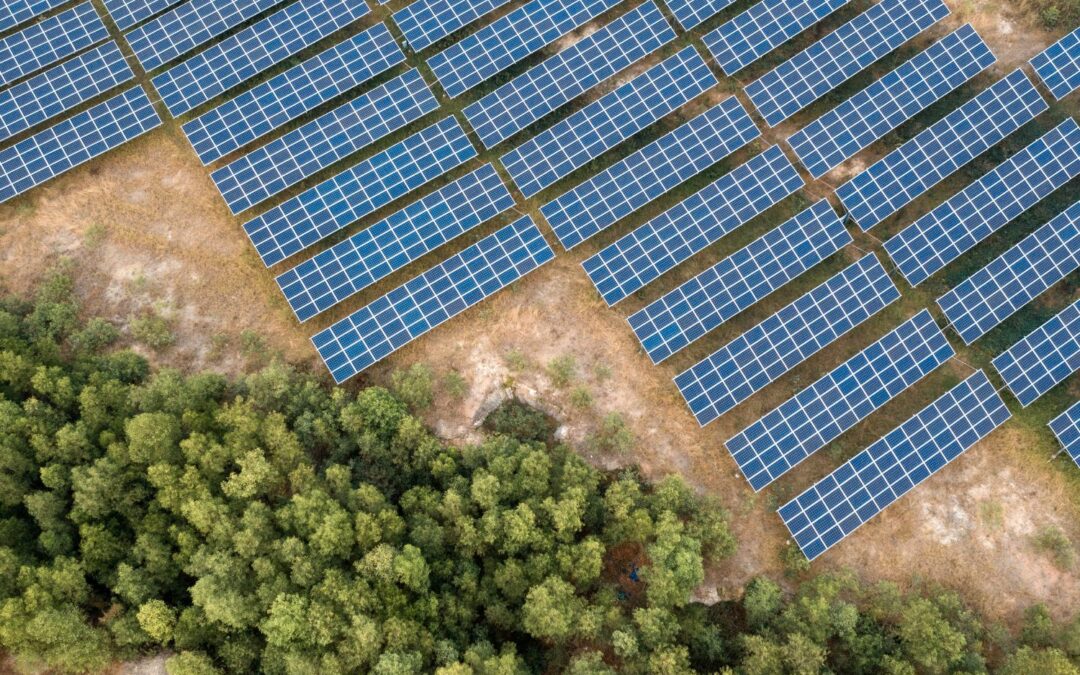
In the desert of southern Spain, 20 miles outside Seville, more than 1,000 mirrors are being carefully positioned. Each is about half the size of a tennis court, so the adjustments will take time. But when they are complete in a few weeks, it will mark a major moment in the quest for renewable energy.
The mirrors are part of the world's biggest solar tower plant, a technology that reflects sunlight to superheat water at a central tower. Once this €80m (£67m) plant is inaugurated in January, it will generate 20MW of electricity, enough to power 11,000 Spanish homes.
Concentrated solar power (CSP) technology, as it is known, is seen by many as a simpler, cheaper and more efficient way to harness the sun's energy than other methods such as photovoltaic (PV) panels. But CSP only works in places with clear skies and strong sunshine.
The Andalucian deserts are an ideal location, and Spain hopes the PS20 plant will enable it to take advantage of its huge solar resource and lead the field in CSP technology.
"The radiation hitting the earth is 10,000 times the consumption of energy," said José Domíngues Abascal, chief technology officer at Abengoa, the Spanish energy company behind the plant. "There is great potential in solar energy."
Abengoa has already built a smaller version of the tower technology to test that the idea works. The 11MW PS10 system has been generating electricity for almost two years. Its new design uses an area larger than 100 football pitches, with 1,255 mirrors, called heliostats, each with a collecting area of 120 sq m. These track the sun as it moves through the day and reflect the energy to the top of a 160-metre tower at the centre of the field. Here, the concentrated light is used to heat water to more than 1000C, producing steam that can turn an electricity generating turbine.
When switched on, the new plant will be the world's largest commercial CSP plant feeding electricity into a national grid. It will be also be a significant step for tower technology, seen as a candidate for the large-scale solar plants of the future.
Spanish firms are charging ahead with CSP: more than 50 solar projects around Spain have been approved for construction by the government and, by 2015, the country will generate more than 2GW of power from CSP, comfortably exceeding current national targets. The companies are also exporting their technology to Morocco, Algeria and the US.
"CSP is at the very beginning of a big boom," said José Luis García, at Greenpeace in Spain. "Spain is in a good position to develop and implement the technology. We have the sun so we are in the best position to lead in this field."
The country's clean energy targets are in line with the EU's plan to source 20% of primary energy from renewables by 2020, which means that 30% of electricity would have to come from carbon-free sources. A new EU renewables directive would increase that electricity target to 40%, but García said Spain could easily reach for more, up to 50%.
John Loughhead, executive director of the UK Energy Research Council, said that Abenoga's tower approach at the new plant was relatively efficient "because what you're doing is concentrating a very large area of sunlight on top of a very small area so you can get very high temperatures".
He added that, given the right environment, solar towers were a credible way to make clean power. "But can you make them cheap enough, will they be reliable enough, will they have the right lifetime?"
Another difficulty for potential developers is cost. In Spain, the generation costs of electricity from CSP are double those from more traditional methods. But Abascal said the price was falling as solar projects got bigger and it would match that of fossil fuel power within a decade.
For now, CSP projects across Spain are built with the promise that the government will pay a premium, known as a feed-in tariff, for any CSP electricity sent into the grid. The PS20 is part of a €1.2bn series of solar power plants based on CSP technologies including tower plants and trough-style collectors - where water is passed in tubes directly in front of parabolic mirrors that collect sunlight - and a few PV panels planned by Abengoa. The solar farm will eventually generate up to 300MW of power, enough for the 700,000 people of Seville, by 2013.
The 20MW solar tower is also a forerunner for an even more ambitious idea, one that Abascal hopes will become a standard for CSP plants in future - a 50MW version that could generate electricity around the clock. "During the day, you'd use 50% of your electricity to produce electricity and 50% to heat molten salt. During the night you use the molten salt to produce electricity."
Molten salt technology is in its early stages but Abengoa is testing the idea at a power plant in Granada. So far the company has demonstrated that it is possible to store up to eight hours of solar energy by heating tanks containing 28,000 tonnes of salt to more than 220C. "This will make it possible to have almost constant production or at least it will be able to produce energy for most of the day," said Abascal.
The European commission has identified CSP as part of its future clean energy technology plan. Earlier this year a representative from its joint research centre argued that CSP could even form a major part of a proposed EU supergrid that would transport electricity, generated in solar plants in southern Europe and northern Africa, across Europe.
The supergrid has received political support from Gordon Brown and France's president, Nicolas Sarkozy, who has commissioned a feasibility study on the project.
Graveyard generation
The Spanish town of Santa Coloma de Gramenet has placed more than 450 solar panels on top of mausoleums at its cemetery to generate power, it emerged yesterday. The crowded, working-class town outside Barcelona decided that flat, open, sun-drenched land was so scarce that the graveyard was the only viable spot to site the panels, which provide enough electricity to power 60 homes. They rest on mausoleums holding five layers of coffins. The idea was a tough sell, said Antoni Fogue, a city council member. But town hall and cemetery officials waged a campaign to explain the project and the panels were erected at a low angle, to be as unobtrusive as possible."This installation is compatible with respect for the deceased and for the families of the deceased," Fogue said.
Wind farms becalmed by turmoil
The Lynn and Inner Dowsing wind farms, off the east coast of England, are a flagship project for their operator Centrica, the UK energy group, and for Europe.
Its 54 Siemens turbines have a total capacity of 180 megawatts, making Centrica the leading company in Britain, and Britain the leading country in the world, for offshore wind power.
Offshore wind is a vital part of what José Manuel Barroso, the European Commission president, has described as the "third industrial revolution": the transformation of the energy industry to cut greenhouse gas emissions and the European Union's reliance on gas and oil. If the EU is to hit its target of deriving 20 per cent of its energy from renewable sources by 2020, offshore wind will play a crucial role.
Centrica has big plans to join that revolution, building a total of 1,600MW of offshore wind capacity.
Yet those plans are under threat. Centrica has said it is reviewing that programme, which would demand a further £4bn ($6bn) of investment, as the cost of building offshore wind farms has soared.
Similar stories are being played out across the EU. As the credit crunch bites, utilities are going over their investment plans to see whether they are still viable; not just for renewable energy but for all projects. Several, including Eon of Germany and Iberdrola of Spain, have warned they are likely to slow the rate at which they are investing.
The financial crisis has hit the outlook for investment in three ways: by raising the cost of funding, cutting the prices of gas and electricity, and scaling back
expectation of future demand.
European energy companies, many very large and often government-backed, have been less exposed to the financial turmoil than their US counterparts, but all have been affected.
In the spring of 2007, Enel of Italy raised the money it needed for its €42.5bn acquisition of Endesa of Spain in just two hours. Since then, the financial climate has been transformed.
This month, it has been reported that even EDF, 85 per cent-owned by the French government, has been making slow progress with the syndication of the loan for its £12.5bn acquisition of British Energy, the nuclear generator.
Unlike many companies, large secure utilities can still access the markets for fund-raising. Centrica last month announced a share issue to raise £2.2bn. Several energy groups, including EDF and GDF Suez of France, Eon, ENBW and RWE of Germany, and Iberdrola have raised bond finance recently.
Securing that funding is coming at a price. When credit was cheap, utilities could pay as little as 0.15 percentage points more than government bonds for their money. For Iberdrola, to take one example, that spread had rose to 3.5 percentage points this month.
As the cost of capital rises, expectations of future revenue are falling, as a result of weaker demand and the prospect of lower gas and electricity prices.
Some aspects of the credit crunch may help energy companies. Jürgen Grossmann, the chief executive of RWE, has argued the downturn is a reason for governments to support energy companies' investment plans so they can create jobs. For RWE, which relies heavily on coal-fired generation, that would include protection from the impact of phase three of the EU's emissions trading scheme, in which they are set to be forced to pay for all of their permits, penalising the use of coal.
Dieter Helm, energy expert at New College Oxford, argues that the crisis will also help to protect the big incumbent companies. "Quasi-national champions will be the bedrock of any investment strategy. In those circumstances, competition is bound to suffer," he said.
However, he raises a prospect that it ominous for all European energy companies. Another EU target is to raise energy efficiency by 20 per cent by 2020; a measure that would cut both costs and carbon dioxide emissions. If that is successful, much of the demand that is disappearing during this downturn will never return.
Additional reporting by Chris Bryant
Biofuels
South Korean company takes over part of Madagascar to grow biofuels
Daewoo Logistics is taking a 99-year lease on 3.2 million acres of land, half the size of Belgium, to grow maize and biofuels, building its own roads and other infrastructure to service the new farms that will be created on currently undeveloped open space.
The amount is almost half the currently farmed land in the country.
The deal is a sign of the concern of many countries, particularly the intensely populated nations of the far east, about ensuring the safety and reliability of food and other supplies in an increasingly competitive world.
Chinese companies have signed similar deals across a number of African nations in recent years, even sending its own workforce to join local residents in working their new estates.
The Madagascar deal is striking by its size and, according to some reports, its financing. Daewoo Logistics, one of a new breed of Korean companies born from the break-up of its traditional, huge conglomerates after the Asian financial crisis, says it may have to pay nothing for the land.
What the four Madagascar regional governments with which it has negotiated stand to gain are jobs, roads and experience of advanced agricultural techniques.
Shin Dong Hyun, the Daewoo manager in charge of the project, said it was hoping to form a consortium with a Korean animal feed company and Chinese firms to run the project.
It was hoping eventually to grow 5 million metric tons of maize a year and 500,000 tons of palm oil, a major form of biofuel. It will use local labour and some expertise from South Africa.
South Korea is one of the most densely populated nations on earth, with 49 million people squeezed on to space the size of Scotland and Wales. Its shortage of arable land makes it the world's third largest importer of maize.
The company is working within a government-set ambition of increasing the amount of grain it produces either at home or through its own ventures abroad to half its supplies, from just over a quarter at present.
"We plan to improve productivity to produce 10 metric tons of maize per hectare but it will take quite a long time to reach that level," Mr Shin said.
UK
MoT energy check for homes proposed
Householders and factory owners should face penalties if they fail to cut energy use in their properties, according to the Foresight Programme report.
It might mean an owner being denied property insurance or being unable to sell the building if it fails a compulsory energy inspection which would take place every 1-2 years.
To encourage a stronger take-up of green measures - such as better insulation and more efficient boilers - a package of grants and subsidies should be offered by the Government with the possibility of property tax rebates for those who carry out the work.
"To push households and firms into taking action on this issue it may be necessary to signal a strong intent to impose and enforce mandatory regulation at a given time in the future, say three to five years, if sufficient progress has not been made," the report says.
Foresight, part of the Government Office for Science, was commissioned to look at energy systems in the built environment and to examine the challenges over the next 50 years.
Energy use in homes, factories and offices is responsible for more than 50 per cent of CO2 emissions and the report concludes that this will have to change dramatically if the UK is to meet its legally-binding target of cutting greenhouse gas emissions by 80 per cent by 2050.
It says climate change and the need to cut emissions, energy security and tackling fuel poverty - where a household needs to spend more than 10 per cent of income to stay warm - will be the main drivers of energy systems in the future.
The report says that the UK is historically 'locked-in' to old centralised power systems and there needs to be a move towards a greater mix of alternative, sustainable energy - such as wind and solar - produced and managed locally.
Almost 70 per cent of the housing stock that will be used in 2050 has already been built and will need to be retrofitted at a cost-effective price with more energy efficient technologies. People needed to live in 'intelligent' homes filled with the latest energy saving technologies such as smart metering and paint-on insulation.
The report says buildings should be designed to stay cool in hot weather, harnessing water as a natural cooling system and through better use of solar energy while green and blue spaces - parks and stretches of water - could be used to reduce urban heat.
But one of the biggest challenges in shaping future energy systems will be bringing about a change in human behaviour and weaning people off high-energy consumption. People have not yet acted quickly enough in cutting energy use and the benefits and rewards available to them needed to be better explained.
Professor Yvonne Rydin of University College London, who helped compile the report, said: "The current economic situation presents a real opportunity for doing things differently, through different forms of building construction and development and new models for how they are built.
"Companies have to think of new ways to get through this situation. Reducing energy saves money and you have to invest now to get a payback later."
Boris Johnson to insulate Londoners' lofts
The scheme his advisers are looking at is based on that run by the borough of Kirklees in Yorkshire which aims to make tackling climate change extremely easy – to the extent that people come round and empty your attic so that the insulation can be installed.
Kirklees has also installed renewable energy, such as solar panels, solar roofs and ground source heat pumps for its council tax payers at no upfront cost. The scheme is paid for by an interest free loan on people's homes, paid back when they sell them.
Isabel Dedring, Mr Johnson's director of environmental policy, who is a New Yorker, said she was on her way to Kirklees next week to see how the scheme worked. She hopes the first homes could be insulated in this way within a year.
The mayor is looking to Kirklees after an audit of the green schemes put in place by his predecessor showed mixed results, with relatively few people taking up the offer of a £199 survey and concierge service to identify where homes could save energy.
Ms Dedring said: "It is difficult to get people to do the audit, then even more difficult to get them to do the actions. People are lazier than you think. If it is harder than extremely easy, people will not do it."
In Kirklees, unlike in London to date, the insulation scheme is offered on a street-by-street basis, so there is peer-group pressure to get involved, and the representatives of the council drop by in the evening and at weekends when people are more likely to be in.
In London, where schemes have had a fraction of the take-up expected, the help is only on offer nine to five.
The mayor cannot use the same financial mechanisms to pay for improvement as Kirklees, but Ms Dedring said London was looking at reclaiming the cost of insulation and energy measures through the council tax or through utility bills.
The mayor has taken on the same target as his predecessor, Ken Livingstone, of cutting London's carbon emissions by 60 per cent by 2025.
In his first keynote speech on the environment as mayor, Mr Johnson set out his priorities on cutting London's carbon emissions by 60 per cent by 2025 and making the city a 'greener', more civilised place to live and work.
He said London was ideally placed to turn environmental challenges into economic opportunities and could benefit through the creation of thousands of new ‘green collar' jobs.
Mr Johnson said: "Protecting our environment is one of the key issues we face today. Londoners deserve to live in an attractive, green, clean city, and we have a duty to see that we improve Londoners' overall quality of life.
"Climate change is a major threat, not least to London. But it also creates new opportunities for us as a city. Volatile oil prices and an economic downturn are coming together to make action on climate change a potential boom industry.
"I want to unleash the potential to create a thriving eco-economy in London providing new 'green collar' jobs, skills and businesses.
"This is a rapidly-growing, multi-billion pound global industry and we can and must take advantage of it.
"It includes opportunities to save on our energy bills in difficult economic times, opportunities for new jobs in rolling out low-carbon technologies and programmes such as building installed with measures to make them more energy efficient.
"London’s competitiveness with other global cities turns on what London is like not just to do business, but to live, work and play. Making London a more attractive place makes common sense in lean economic times."
Coal's return raises pollution threat
Britain is poised to expand its coal mining industry, despite fears that the move will lead to a rise in climate change emissions and harm communities and the environment.
Freedom of information requests and council records show that in the past 18 months 14 companies have applied to dig nearly 60 million tonnes of coal from 58 new or enlarged opencast mines. At least six coal-fired power stations are planned. If all the applications are approved, the fastest expansion of UK coal mining in 40 years could see southern Scotland and Northumberland become two of the most heavily mined regions in Europe.
The demand for new mines is being driven by dramatic increases in the price of coal. This has quadrupled in two years and has risen by 45 per cent since the start of this year. Opencast, or surface, mines are much cheaper than deep mines, but those living nearby can suffer years of pollution.
The increase in mining will embarrass the Energy and Climate Change Secretary, Ed Miliband, who is arguing that Britain must reduce carbon emissions. Ministers must soon decide whether to approve a controversial new coal-fired power station at Kingsnorth in Kent, the first in 30 years. 'Attention has been focused on the decision at Kingsnorth, but over the past 18 months local authorities have approved more than 24 new opencast mines and 16 expansions of existing mines,' said Richard Hawkins, of the Public Interest Research Centre (Pirc), which conducted the study.
'There is a clear contradiction between the government's 80 per cent target for climate change emissions cuts and investment in new coal. With industry and government saying carbon capture and storage is at least 20 years away, this shows that the 160m tonnes of carbon dioxide released by burning this coal would not be captured,' he said.
Research shows that Scotland will bear the brunt of the expansion. Currently 11 mines produce about 5m tonnes of coal a year. A further 27 mines could extract a total of 22m tonnes of coal over just a few years. Thirteen of the 27 have already been approved and the rest are awaiting planning decisions.
Northumberland is likely to become the centre of coal mining in England with plans to extract more than 20m tonnes of coal from some of the largest opencast mines in Europe. Wales, which has one of the biggest surface mines in Europe at Ffos-y-Fran, could have five large new mines. The research also suggests that power companies would like to build six new coal-fired power stations. These would replace existing power stations if given the go-ahead but could lock Britain into coal for the next 50 years at a time when it is trying to lead the world on reducing climate change emissions.
According to the research, based on information provided by energy companies, Scottish and Southern, Scottish Power, Eon and RWE npower all have plans at different stages of development. Feasibility studies have been carried out on new plants at Cockenzie and Longannet in Scotland, as well as new stations at Tilbury in Essex, Blyth in Northumberland and Ferrybridge in Yorkshire. Only one application to build, at Kingsnorth in Kent, has so far been put forward.
In the past six months 12 groups, made up of climate change activists and residents, have been set up to object to the plans. There have been big protests in Wales, Derbyshire and Yorkshire and a coal train heading for Britain's biggest power station at Drax in North Yorkshire was hijacked by protesters in June.
Nearly half of all British coal is mined using opencast methods against just 12 per cent 10 years ago, but this is expected to increase significantly. In 2005, total UK production was 20m tonnes, with 9.6m tonnes coming from deep-mined production and opencast accounting for 10.4m tonnes. Nearly 70 per cent of all the coal burnt in UK power stations is imported from Russia, South Africa, Colombia and Australia.
But coal prices have risen far above official projections. 'Part [of the increase in applications] is certainly due to the increase in the world coal price, which follows oil and gas,' said a spokesman for the Coal Authority, the body which regulates the licensing of UK coal mines.
Business
National Express job cuts strike note of fear for transport sector
Among the flurry of job cuts announced by UK companies last week, some raised more eyebrows than others. Not because of their size, or their importance to the economy, but because they came from sectors that until now seemed immune to the economic downturn.
The construction industry is in tatters, the financial sector is retrenching and advertising spending is in freefall. Job cuts from companies such as concrete supplier Ennstone, fund manager Fidelity International and the Independent newspaper came as little surprise.
But when a union said National Express had cut more than 300 jobs, the prospects for corporate Britain suddenly looked a little bleaker. National Express, the long-distance coach and rail operator, made the cuts in its East Anglia rail operations less than a month after reporting a strong first nine months of its financial year. Like-for-like revenue had risen 9 per cent on rail routes, 7 per cent on bus routes and 5 per cent on coach services.
The numbers seemed to confirm the widely held view, propounded by public transport companies themselves, that the sector would be one of the few beneficiaries of the downturn. People were switching to trains and buses to save money on petrol, the companies said.
So what has changed?
"I think that whole period was over-hyped," says Joe Thomas, analyst at Investec. "It's true that the backdrop for them was good . . . but the economic reality has become a lot clearer since September, so they're all dusting off their contingency plans."
The fear for these companies is that the number of rail commuters will drop as employment levels across the country decline. "It's blindingly obvious that as job losses mount commuter volumes should fall," says Damien Brewer, analyst at JPMorgan. In the most recent recession in the early 1990s, he says, rail passenger volumes for commuter traffic dropped more than 6 per cent.
Over the past fortnight almost 30,000 job cuts have been announced by companies in Britain, but National Express's move suggests it thinks the worst is yet to come.
"I don't think they are seeing many people cancel season tickets yet," says Mr Thomas at Investec. "It's a pre-emptive issue." National Express says it is on track to meet its full-year forecasts, but needs to "sensibly manage costs and realign the business to customers' changing needs".
National Express is unlikely to be the only rail operator to cut jobs and other costs in expectation of falling rail revenue. Stagecoach is seeking actively to slim down, as is Go Ahead.
"In the context of the UK rail industry you should expect more of this to come," says Mr Brewer. "Potentially every rail operator is exposed."
As one sweet spot in corporate Britain turns sour, what of another: pharmaceuticals? Drugmakers are traditionally seen as havens in downturns because they are cash-generative and their products are non-discretionary.
Yet last week AstraZeneca said it would cut 1,400 jobs and close plants in Spain, Belgium and Sweden, while GlaxoSmithKline said the week before it would shed 650.
In these cases, though, the rationale is less linked to worsening conditions in Britain. The industry is dealing with its own set of problems - most pressingly the fast--approaching dates when drugs come off patents.
Conscious of weak portfolios of experimental drugs to replace them, along with mounting competitive pressures, many of the big pharmaceutical companies are restructuring their businesses.
The rest of the week's job cuts, though, were firmly linked to tightening credit and worsening sentiment. Outside of construction, financial services and the media, the aerospace sector showed signs of further strain.
Rolls-Royce, the world's second-biggest manufacturers of aero engines, said it planned to cut up to 2,000 jobs next year as international markets slowed and major customers such as Boeing and Airbus faced delays and postponement of orders.
On the same day, Air France-KLM revealed it was postponing taking delivery of new fuel-efficient aircraft. Boeing has also warned of job cuts as it braces itself for possible order cancellations.
Cracks also began to appear among manufacturers of consumer goods, as confidence plunges on the high street.
It is not just makers of discretionary products that are suffering.
Last week, for example, union leaders called on ministers to save 300 jobs at Hoover's Merthyr Tydfil plant in south Wales.
Financial crisis sinks mining mega-merger
The worsening economic climate has forced BHP Billiton to ditch its bid to merge with fellow mining giant Rio Tinto.
Shares in Rio plunged by nearly 40% this morning, valuing it at around £15bn - just a fifth of BHP's £75bn offer in February. Had the deal gone through, it would have been one of the biggest takeovers ever and created a global powerhouse with £170bn of annual sales.
BHP first suggested an all-share merger with Rio in early November 2007, before going hostile in February this year. At that stage the deal valued each Rio share at almost £55 - compared with just £15 this morning. But with BHP's share price having also fallen over the last year, the value of the deal had slipped to around £43bn last night.
BHP said that the deteriorating world economy, allied with recent sharp falls in the cost of raw materials, meant that the deal was now no longer in its shareholders' interests.
"Recent global events and associated falls in commodity prices have altered risk dimensions," said BHP's chief executive, Marius Kloppers, who had fought hard to take control of Rio.
Kloppers added that the decision was "tough", and insisted that BHP was still in a strong position to ride out the current challenging markets.
Rio's board had repeatedly rejected Kloppers' advances. If the 46-year-old South African had pulled off the deal, then the combined company would have held huge positions in aluminium, copper, uranium and coal. It would also have controlled 40% of China's iron ore imports – something that concerned the Chinese government.
But since the deal was proposed, the circumstances have changed dramatically. Iron ore prices have slipped as steel-makers cut back on production. Having cost almost $200 a tonne in March, iron is now changing hands for $60 a tonne.
Demand for raw materials is expected to keep falling as the economies of developed countries such as the UK and the US continue to shrink, while China's economic growth is also slowing.
Disclaimers
The items contained in this newsletter are distributed as submitted and are provided for general information purposes only. ODAC does not necessarily endorse the views expressed in these submissions, nor does it guarantee the accuracy or completeness of any information presented.
FAIR USE NOTICE: This newsletter contains copyrighted material the use of which has not always been specifically authorized by the copyright owner. We are making such material available in our efforts to advance understanding of issues of environmental and humanitarian significance. We believe this constitutes a 'fair use' of any such copyrighted material. If you wish to use copyrighted material from this newsletter for purposes of your own that go beyond 'fair use', you must obtain permission from the copyright owner.