ODAC Newsletter - 18 July 2008
Welcome to the ODAC Newsletter, a weekly roundup from the Oil Depletion Analysis Centre, the UK registered charity dedicated to raising awareness of peak oil.
Increasingly gloomy economic news in Europe and the US this week brought oil prices back down below $135 from a new record of $147, but also increased pressure on politicians.
In the UK, the government gave into long running pressure to drop the scheduled increase in fuel tax. In the US George Bush lifted the presidential ban on off-shore drilling. Bush’s statement was clearly aimed at putting pressure on the Democratic Congress to lift their ban and prompted Leader of the House Nancy Pelosi to fire back with a statement of her own urging the President to release some oil from the Strategic Reserves. Both leaders are promoting the idea that supply can be increased and prices brought back down as a result. Matt Simmons clearly shocked his host and fellow panelists when appearing on CNBCs Fast Money this week by stating that oil is still too cheap.
The view that global peak oil is imminent was strengthened this week with ‘insider’ news that Saudi Arabia’s production will peak at 12mbd before scaling back. For excellent commentary on the importance of this story read ‘Peak Oil is a Done Deal’ by David Cohen of ASPO USA.
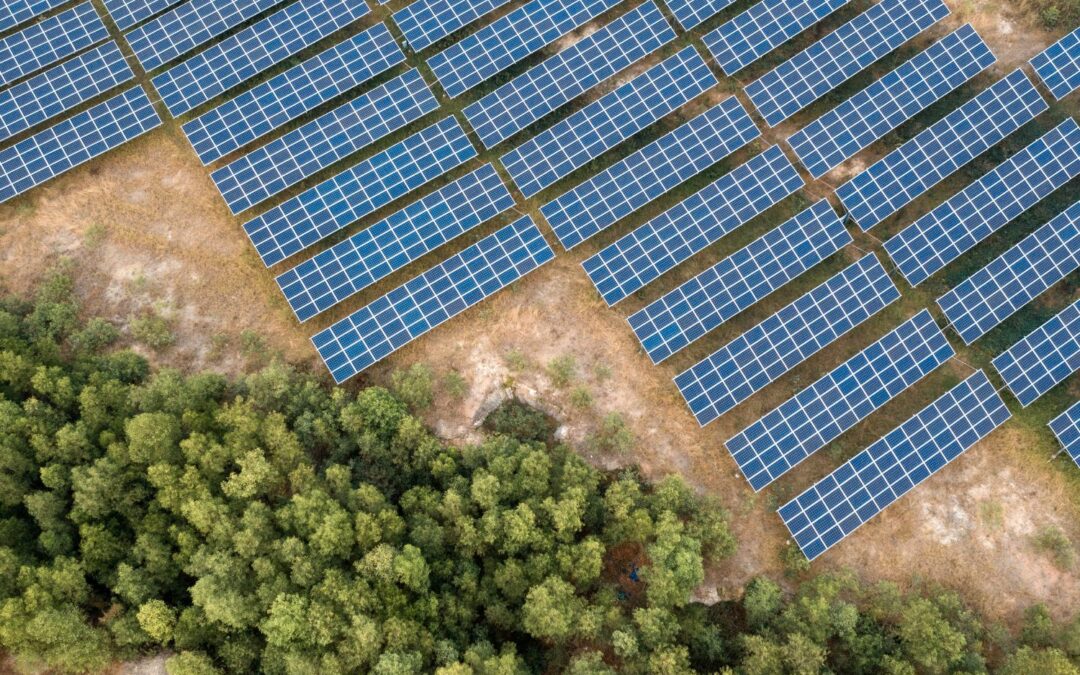
In a speech to the Union for the Mediterranean summit, Gordon Brown referred this week to the ‘post oil economy’ as recognition of the impending energy crisis appears to be growing in Whitehall. The speech painted a picture of a future of renewable and nuclear energy, hybrid and electric cars and efficient appliances. Given the response to his remarks about cutting food waste it would perhaps be churlish to expect the Prime Minister to suggest that more drastic energy consumption reduction might be necessary in order to make this transition.
Join us! Become a member of the ODAC Newsgathering Network. Can you regularly commit to checking a news source for stories related to peak oil, energy depletion, their implications and responses to the issues? If you are checking either a daily or weekly news source and would have time to add articles to our database, please contact us for more details.
Disclaimers
Oil
Oil Falls Below $134 After Plunging on Unexpected Supply Gain
Crude oil fell for a third day to less than $134 a barrel in New York after tumbling almost 3 percent yesterday as U.S. inventories increased unexpectedly.
Crude supplies rose 2.95 million barrels to 296.9 million barrels last week, an U.S. Energy Department report showed yesterday, while the forecast in a Bloomberg News survey was for a drop of 2.2 million barrels. U.S. fuel demand averaged 20.3 million barrels a day in the past four weeks, down 2 percent from 2007 as surging U.S. consumer prices curbed spending.
"Sentiment is getting more bearish now," said Tetsu Emori, fund manager at Astmax Ltd. in Tokyo. "Investors were focusing on bullish factors last week, but now the market is beholden by bearish factors of weak demand, slowing economy and rising inventories."
Crude oil for August delivery fell as much as $1.20, or 0.9 percent, to $133.40 a barrel in electronic trading on the New York Mercantile Exchange. The contract traded at $134.10 at 8:36 a.m. London time. Futures are up 81 percent from a year ago.
Yesterday, oil fell $4.14, or 3 percent, to settle at $134.60 a barrel. Prices dropped 7.3 percent in the past two days, the biggest two-day decline since January 2007.
Oil fell as low as $132 a barrel yesterday, more than 10 percent below the record $147.27 reached on July 11. A drop of that magnitude is commonly referred to as a correction.
"U.S. drivers continue to curb travel whenever possible with retail gasoline prices above $4 a gallon," Harry Tchilinguirian, a senior oil market analyst at BNP Paribas SA in London, said in a report. "Prospects for the U.S. economy and gasoline demand go hand in hand."
Gasoline Supplies
Gasoline stockpiles rose 2.47 million barrels to 214.2 million barrels, the report showed. An 800,000-barrel decline was forecast. Inventories of distillate fuel, including heating oil and diesel, gained 3.19 million barrels to 125.7 million, the department said. A 2 million barrel increase was forecast.
Gasoline for August delivery was at $3.2516 a gallon in New York, down 2.78 cents, at 8:19 a.m. London time. Futures reached $3.631 a gallon on July 11, an all-time high.
Consumption of gasoline averaged 9.3 million barrels a day over the past four weeks, down 2.1 percent from the same period last year, the Energy Department supply report showed.
Confidence in the global economy deteriorated this month from Asia to the U.S. as oil prices rose to a record and the financial crisis deepened, a survey of Bloomberg users on six continents showed.
Lowest Reading
The Bloomberg Professional Global Confidence Index fell to 10.3 from 21 in June, the lowest reading since the survey began in November.
China's economic expansion cooled to the slowest pace since 2005, as gross domestic product grew 10.1 percent in the second quarter from a year earlier, down from 10.6 percent in the first, the statistics bureau said today in Beijing.
"Mounting concerns about the U.S. and global economies combined with fresh evidence of loosening oil fundamentals are jolting oil bears out of hibernation," Antoine Halff, head of commodities research at NewEdge USA LLC, said in a report.
Saudi Arabia, the biggest producer of the Organization of Petroleum Exporting Countries that supplies about 40 percent of the world's oil, has said it would pump an extra 300,000 barrels a day in June and another 200,000 barrels a day in July.
Chevron Corp. resumed contracted deliveries of oil produced onshore Nigeria that were stopped after a militant attack on a pipeline last month. Nigeria is an OPEC member.
`Price Retreat'
"Poor consumer demand and recovering OPEC supply are setting the stage for an extended price retreat," Halff said.
The 4.4 percent drop in New York crude oil futures on July 15 was the largest since March, as Federal Reserve Chairman Ben S. Bernanke said that risks to U.S. economic expansion and inflation have risen.
Plans by a high-ranking American diplomat to take part in nuclear negotiations with Iran have tempered speculation that the U.S. or Israel may attack OPEC's second-biggest oil producer in a dispute over its nuclear plans. Concern about a possible attack helped push oil prices to a record last week.
Undersecretary of State William Burns will participate in the European Union-Iran talks this weekend in Geneva, State Department spokesman Sean McCormack said yesterday without giving details. This is a shift in the U.S. position on talks with a government it has shunned since 1980.
Brent crude oil for September delivery traded at $134.85 a barrel, down $1.34, on London's ICE Futures Europe exchange at 8:22 a.m. local time. Yesterday it declined $4.05, or 2.9 percent, to $135.81 a barrel. The less-active contract for August settlement expired yesterday after declining $2.56, or 1.9 percent, to $136.19 a barrel. Prices climbed to a record $147.50 on July 11.
Oil Slick: Why Are Crude Prices Falling?
After crude oil’s biggest one-day drop in 18 years, there’s been no bounce—not even a dead-cat bounce. Crude kept falling in early Wednesday trading, even as the dollar rattled around at record lows against the euro.
What’s behind oil’s fall? There are suspects for all tastes—demand, supply, and the market itself. Let’s see.
Demand-side theorists point to bearish remarks Tuesday by Federal Reserve Chairman Ben Bernanke, who painted a gloomy picture for the U.S. economy. High energy prices and economic pain should mean less demand—and it is certainly holding true for gasoline, as demand fell last week by 5%. OPEC itself revised downward its own demand growth forecasts Tuesday. Many analysts figure “demand destruction” has finally arrived to kneecap runaway oil prices.
But the problem with that is that demand outside the U.S. and other rich countries continues to grow. While the U.S. is the single-biggest oil consumer, developing countries in tandem have a bigger—and growing—appetite. Even OPEC’s revision was only a 100,000 barrel-per-day downtick, or about 0.1% of global oil consumption.
And domestic demand growth shows no signs of slowing in oil-producing countries, either, which leaves even less oil for export. After the run-up in crude prices was largely blamed on ravenous demand in the developing world, is it plausible that the prospect of weaker demand in the U.S. would be enough to reverse the tide?
For plenty of folks, President Bush’s pledge to goose U.S. oil production through more offshore drilling did the trick, even without producing an extra drop of oil. The idea, as Mr. Bush said Tuesday, is that markets expecting more oil will also expect lower prices in the future.
But if production promises (or hopes, in the case of the White House) could move markets, why did even rosier promises by Saudi Arabia, the world’s biggest oil producer, do nothing to stem crude’s rise? Saudi King Abdullah—who blames speculators for high oil prices—said today the market seems to shrug off supply-side news:
“Despite the implementation by the kingdom and a number of producing nations of production capacity increases, we did not feel a response from the global oil market,” the monarch said.
Of course, it could just be that the market takes Saudi promises to boost production at aging oil fields to record levels with a grain of salt. Inside information on the state of Saudi oil fields published last week points to a much gloomier output picture.
But if it’s not supply or demand, then what’s pushing oil prices down? A lot of traders say technical factors, from electronic trading programs that pull the trigger at certain price points, to a slew of options set to expire tomorrow. At the same time, cash-strapped banks that invested heavily in commodities could be unwinding positions to get their dough. That is—oil’s recent slide doesn’t herald a return to $60 barrels, but is just the market hitching up its pants a la Arnold Palmer before another charge at the peak.
Bush will end executive ban on offshore drilling
President Bush on Monday repealed an executive order banning offshore drilling for oil in the U.S. Outer Continental Shelf, increasing pressure on the Democratic-controlled Congress to follow suit and remove their own moratorium.
"With this action, the executive branch's restrictions on this exploration have been cleared away. This means that the only thing standing between the American people and these vast oil resources is action from the U.S. Congress," Mr. Bush said, in a statement to reporters at the White House.
Almost a month ago, Mr. Bush called on Congress to lift their ban on offshore drilling and said he would lift the presidential prohibition, instituted by his father in 1990, whenever Democrats did the same.
On Monday he did what many said he should have done last month, acting unilaterally to put maximum stress on Democrats' opposition to offshore drilling, which he said could yield enough oil to supply the U.S. for 10 years.
"The time for action is now. This is a difficult period for millions of American families They are rightly angered by Congress' failure to enact common sense solutions," Mr. Bush said.
The Bush administration's political calculation is that with gas heading toward $5 a gallon for car drivers, public demand for some meaningful action has grown so intense that Democrats will be forced to capitulate or suffer the consequences.
The upcoming presidential election only maximizes the potential negative political effect for Democrats.
"We wanted to work with Congress on it. The Democratic leaders in Congress have not shown a willingness to move forward," said White House press secretary Dana Perino Monday morning.
"Were going to move forward. Hopefully that will spur action by Congress. The ball is now squarely in their court. I'm sure Americans will be watching what they do," she said.
The presumptive Democratic presidential nominee, Sen. Barack Obama, of Illinois, quickly criticized Mr. Bush's move.
"If offshore drilling would provide short-term relief at the pump or a long-term strategy for energy independence, it would be worthy of our consideration, regardless of the risks. But most experts, even within the Bush Administration, concede it would do neither," said Obama spokesman Bill Burton.
"It would merely prolong the failed energy policies we have seen from Washington for thirty years. Senator Obama believes Americans need real short-term relief, which is why he has proposed a second round of stimulus with energy rebates for working families," Mr. Burton said.
The White House, and many oil market experts, say that opening up the OCS along U.S. coasts, along with the Arctic National Wildlife Reserve, will send a meaningful signal to the market and bring down costs, despite the fact that no oil would actually come on line for several years.
They also contend that until the U.S. transportation and manufacturing sectors are able to diversify their energy away from oil and toward other fuels, the U.S. must increase their domestic output.
Democrats have largely already been forced to agree with that conclusion, but continue to oppose drilling in the OCS and ANWR.
The Institute for Energy Research, an advocacy group considered by some to be too closely allied with energy companies, estimates that the OCS contains about 86 billion barrels of oil, citing a report by the U.S. Minerals Management Service.
The U.S. consumes about 7.5 billion barrels of oil a year, according to IER.
Democratic leaders and are calling on the president to release a "small portion" of oil from the Strategic Petroleum Reserve. They have already passed a law to temporarily stop the administration from continuing to fill the SPR, which is currently at 700 million barrels of oil.
"Taking oil out of the Strategic Petroleum Reserve in a careful, responsible way is the fastest way to bring down the price at the pump," said House Speaker Nancy Pelosi, California Democrat, last week.
Democrats also say that oil companies are sitting on about 70 million acres of leased oil fields off of U.S. coasts that are open for drilling, but are declining to do so to drive up prices and maximize profits.
The White House rejected that idea.
"It doesnt make economic sense to think that anyone is sitting on any extra oil that they could be selling," Mrs. Perino said.
IER President Thomas Pyle, who last month criticized Mr. Bush for not taking this step then, applauded the move.
"Fortunately, we appear to be nearing the end of nearly three decades of short-sighted, one-size-fits-all policies that restrict access to domestic supplies despite explosive global demand," Mr. Pyle said.
Pelosi Statement on Today's Record Drop in Oil Prices
12mn barrels per day 'is Saudi Arabia's oil limit'
Saudi Arabia won't be able to pump more than 12 million barrels per day (bpd) by 2010, and its sustainable production level will be only 10.4 million bpd, it was reported on Monday.
BusinessWeek magazine cited a field-by-field breakdown of output it obtained from an oil industry executive.
Saudi, the world's biggest exporter, says it is on track to boost capacity to 12.5 million bpd by the end of next year and said last month it was ready to add another 2.5 million bpd in the coming years in a bid to tame roaring prices fuelled in part by growing fears over limited global supplies.
"The detailed document, obtained from a person with access to Saudi oil officials, suggests that Saudi Aramco will be limited to sustained production of just 12 million barrels a day in 2010, and will be able to maintain that volume only for short, temporary periods such as emergencies," BusinessWeek reported.
"Then it will scale back to a sustainable production level of about 10.4 million barrels a day," it said in an online article.
Speculation over Saudi Arabia's ability to increase output, and to keep output at higher levels, has grown in recent years as the kingdom's mammoth decades-old fields begin to age, although the Saudis maintain they have plenty of crude in the ground.
The increased capacity is part of the kingdom's policy to maintain idle capacity of around 1.5 to 2 million bpd to ensure it can quickly meet any emergency shortages and is not necessarily intended to be used on a long-term basis.
Saudi Arabia has said it will pump 9.7 million bpd this month, its highest rate in over three decades and 550,000 bpd more than in May, and pledged to keep pumping at that level for the rest of the year if customers demand the extra oil.
Reuters
China Boosts Fuel Imports to Highest in Five Years
China, the world's second-largest energy consumer, increased diesel and gasoline imports last month to meet rising demand from next month's Olympics Games and reconstruction after the May earthquake.
Diesel imports rose to 960,000 metric tons, the highest in at least five years, the Customs General Administration of China said in an e-mailed statement today. Gasoline purchases surged to 282,996 tons, with exports at 150,000 tons, the country remaining a net importer of the fuel for the second time.
China is increasing fuel imports for relief efforts after a 7.9-magnitude temblor struck the nation's southwestern Sichuan province on May 12. The August Games in the capital city Beijing increases the nation's need to build up stockpiles before the event, said Li Yujing, an oil analyst with China International Chemical Consulting Corp.
"State oil companies have been increasing overseas purchases for months to avoid shortages during the most important event," Li said by telephone from Beijing, referring to the Aug. 8-24 Olympics.
Diesel imports jumped more than 12-fold to 3.85 million tons in the first six months, today's figures show. Gasoline imports soared 31-fold to 837,322 tons.
China, traditionally a supplier of gasoline to Asian countries, became a net importer of the fuel for the first time in May after overseas purchases of the fuel more than doubled from April to 338,527 tons.
China was a net coal exporter in June as a bigger gap between international selling prices and domestic levels spurred overseas sales. Imports fell 32 percent to 2.78 million tons while exports jumped 83 percent to 6.99 million tons.
China's government on June 19 imposed "temporary caps" on domestic prices of coal used in power stations to help ease an electricity shortage, widening the gap with regional benchmarks.
Only the U.S. consumes more energy than China.
Following is a table of China's preliminary oil exports and imports in June from the Beijing-based Customs General Administration.
Russian oil at 'critical juncture'
Russian Prime Minister Vladimir Putin has expressed concern over the country's declining oil production, saying the sector is at a "critical juncture".
Putin also said, however, that Russia will not engage in "economic egoism" and will continue to fulfil export contracts even as it meets the energy needs of its own growing economy.
"The prospects are good but some tendencies worry us. The rate of growth of production has gone down ... In the first quarter of this year, production even declined 0.3 per cent," Putin told ministers and oil executives.
"The oil sector has reached a critical juncture," Putin said after visiting the Sevmash shipyard in Severodvinsk where Russia's first Arctic oil rig is under construction.
He said tax cuts approved this year have already given oil companies more money to spend on development and added that the government is considering additional tax breaks for companies operating in oil-rich regions of Siberia.
The government will also ease bureaucracy for companies opening new oil fields and develop infrastructure in remote areas to encourage investment.
"Our energy policy will be clear, transparent, liberal. We do not plan any economic egoism. We will take into account the legitimate interests of our partners but we will also defend our national interests," he added.
"We have no doubt that now, in the medium-term and in the long-term, we will completely cover the growing demand of the Russian economy and fulfil our obligations to our foreign partners," he continued.
Russia is the world's second largest producer of oil after Saudi Arabia, but the country has struggled to boost production to meet growing global demand despite record-high oil prices.
Gas
Europe told to expect doubled gas price
The price of natural gas in continental Europe is to double in the space of a year as a result of the rise in oil prices, according to a leading consultancy.
Such an increase would put a further squeeze on hard-pressed European consumers and businesses, and add to the upward pressure on inflation in the eurozone, which has been estimated at 4 per cent in June.
It would also stoke concerns about the prevalence in continental Europe of long-term contracts for gas supply, which link the price to the cost of oil products such as heating oil.
European gas prices typically follow the price of oil with a lag of about nine months, so if the price of crude oil remains at record levels, the future price of gas can be calculated with a reasonable degree of confidence.
According to Cambridge Energy Research Associates (Cera), a US-based consultancy, the rise in the oil price from about $70 a barrel a year ago to about $145 today will result in the gas price rising from about $350 per thousand cubic metres at the start of the year to about $730 by April 2009.
Any rise in the price of gas would also push up the cost of electricity because gas is generally the marginal fuel for power generation.
Household energy bills, including for electricity, gas and heating oil, make up about 5 per cent of consumers’ expenditure in the eurozone. In Germany – the bloc’s biggest economy – the average is 7 per cent. Energy bills and food costs have been the main factor behind the rise in inflation this year across the European Union.
“As the eurozone’s exports slowed, people thought it would be compensated for by a consumer spending spree. But what’s happened has been a sharp rise in inflation that has hurt consumers’ spending power, hit their confidence and limited their spending,” said Howard Archer of Global Insight, another consultancy.
The higher gas price in continental Europe has driven up prices in the UK. Britain has a more liberalised gas market that is not formally linked to the oil price but it has become increasingly tied to the rest of Europe as North Sea gas production has declined.
Consumer groups argue that the link between gas and oil prices should be broken because it supports co-operation between large gas producers and utilities.
Jonathan Stern, of the Oxford Institute for Energy Studies, said that there was “no reason why gas prices should be so high”.
“When oil was at $25-$30 we could live with that. At $60 oil we started thinking the gas price was a bit high. At $140 oil this is craziness: there is no way anyone can argue this reflects the balance of supply and demand for gas,” he said.
Demand for gas in the EU fell in 2006 and again in 2007.
Prof Stern said the justification for the price linkage – that gas was a substitute for fuel oil in power stations and heating oil in homes – had weakened as the use of oil in power generation in Europe had waned.
However, Shankari Srinivasan, of Cera, suggested the price link to oil was likely to persist. “An oil-linked price is not necessarily a higher price, but it is more predictable and can show less volatility than a pure gas market price,” she said.
The growth in liquefied natural gas (LNG) shipped in tankers is expected to strengthen the links between regional gas markets and potentially bring supplies to the EU that are not linked to oil prices.
But the ability to deliver LNG to where suppliers achieve the best returns has, generally, seen it shipped to Asia rather than the US or Europe. Japanese demand has been particularly strong since nuclear reactors were shut down following an earthquake a year ago.
The volumes of LNG shipped from the Atlantic basin and from countries such as Egypt, Nigeria and Trinidad to Asia have risen from nothing in 2005 to 9bn cubic metres last year, according to Wood Mackenzie, another consultancy.
India May Pay Twice as Much for Gas by 2010 on Demand
India, Asia's third-largest energy consumer, may pay as much as $12 per million British thermal units for natural gas in 2010, U.S. consultant Facts Global Energy said in a report.
Consumers may pay twice as much for the cleaner-burning fuel because gas demand may grow at 5.1 percent a year between 2007 and 2015, and amid record crude prices, Facts said in a report e-mailed today. The price of delivered gas to consumers from Reliance Industries Ltd.'s gas discovery on the east coast is about $6 per million British thermal units, half of the U.S. benchmark gas price at Henry Hub.
"The general appetite for gas and the ability to pay amongst Indian gas consumers has gone up significantly," analysts Vijay Mukherji and Praveen Kumar said in the report. "Industrial users as well as regional state-owned utilities have expanded their gas usage and are willing to pay higher prices."
India is facing a shortage of natural gas with half of the 7.86 billion cubic feet a day of demand not met by domestic supplies as output is insufficient to meet surging demand. Reliance, Oil & Natural Gas Corp. and BG Group Plc are investing billions of dollars to explore in India.
The country may secure additional supplies via pipeline from Iran and by importing the fuel in liquefied form, the report said. Iran may supply as much as 1.1 billion cubic feet a day of gas by 2016, or about 28 percent of India's gas consumption today, for $12.5 per million Btu including transportation and margins, the report said.
Prices Rise
"Even the prices at which government-controlled companies sell gas have risen by as much as 25 percent to more than $5 per million British thermal units in the last two or three years," said Vinay Nair, Mumbai-based analyst at Khandwala Securities Ltd. "Power and fertilizer companies in India will be willing to pay more for gas as long as prices are below those of naphtha and other comparable fuels."
Supplies of LNG to India may rise by 46 percent to 12.3 million metric tons a year by 2010 and to 15.5 million tons by 2015 if the delivered price of the fuel is $12 per million Btu, according to the report. Petronet LNG Ltd., India's biggest buyer of liquefied natural gas, and Royal Dutch Shell Plc operate Dahej and Hazira LNG import terminals respectively on the country's west coast.
India must lift controls on domestic gas prices to attract investment and prevent shortages, the report said. The country's gas demand may reach 14.1 billion cubic feet a day by 2020.
Transport
Spiralling fuel costs force British Airways to raise fares
The chief executive of British Airways said yesterday that fares were likely to increase by at least 4 per cent because the airline would have to spend an extra £1 billion on fuel this year.
Willie Walsh, the BA chief executive, said that fare increases were inevitable because soaring fuel costs were contributing to the toughest environment the airline had faced. BA's fuel bill this year will exceed £3 billion.
“Fares will have to go up. We can't save a billion pounds from non-fuel costs,” Mr Walsh said. Fuel surcharges, which BA and other airlines levy, would be applied to increased fares, and Mr Walsh feared that the higher cost of flying could stifle demand.
Martin Broughton, the chairman, told shareholders at the airline's annual meeting that higher costs and the economic downturn meant that it would be an achievement if BA broke even in the current financial year. He said that BA and its peers were “up to our necks in the biggest crisis the aviation industry has ever known”.
The airline plans to cut up to 5per cent of its winter capacity. Mr Walsh indicated that BA would slow recruitment or even freeze it. Last year the company hired 3,000 staff.
Much of BA's AGM focused on the chaos of the airline's move to Heathrow Terminal 5, for which both Mr Walsh and Mr Broughton apologised.
Some small shareholders asked why they should re-elect Mr Walsh to the board. Institutional shareholders were more supportive but noted that BA was not in control of its destiny. “The big danger is that it is not in their hands - it's all in the oil price,” one City fund manager and BA shareholder said.
Meanwhile, higher costs were behind Ryanair's announcement that it would cut weekly flights at its Dublin base by 12per cent this winter. It plans to reveal cuts at Stansted on Thursday
UK tour operators must axe thousands of jobs
UK tour operators need to axe more than 8,300 jobs over the next 12 months as they struggle to cope with soaring fuel costs and the consumer downturn.
The cuts, which would represent about 6pc of the industry's workforce, are necessary if Britain's travel companies want to remain profitable, claims industry analyst Plimsoll Publishing.
Plimsoll said jobs would have to be shed at three-quarters of the UK's top 1,000 tour operators, with consolidation certain as companies struggle to bring costs into line with sales.
The forecast comes amid signs that travel operators are feeling the effect of higher oil prices and a downturn in consumer spending.
A Populus survey released last week showed 58pc of people are changing their summer holiday plans because of the higher cost of living.
David Pattison, an analyst at Plimsoll, claimed 25pc of the industry's players are already running at a loss.
He said 210 companies should look at sales or mergers, with a further 307 under considerable pressure to cut costs.
"The 210 companies... need to act now if they are to survive," said Mr Pattison.
"While job losses are undoubtedly bad news for any company, such decisive action may be called for - even if this means the business is 30pc or 50pc smaller than it was."
Listed tour operators have seen their share prices slump in recent months.
Thomas Cook is down 45pc since the end of February, with TUI Travel down 39pc over the same period.
Eurostar sales up as travellers dump planes in favour of trains
Eurostar has reported a near-25pc rise in ticket sales in the first six months of 2008, boosted by a big increase in travellers from UK regions, but warned that second-half growth rates were likely to slow.
The operator of the fast train service through the Channel Tunnel said sales rose 24.7pc to £369m, with passenger numbers up 18.3pc year-on-year to 4.63m.
Richard Brown, Eurostar's chief executive, said: "The impact of rising oil prices on air fares, combined with growing awareness of the much greater environmental impact of flying, are causing more and more travellers to switch from plane to train."
He added that last November's relocation of services from London Waterloo to St Pancras International station – coupled with the opening of the high-speed line cutting journey times to Paris and Brussels – had given Eurostar far greater geographical reach within the UK.
Travellers from Derby rose 190pc, with Nottingham up 131pc, Sheffield 128pc higher, York 127pc ahead and Leicester increasing by 113pc.
Return fares to Paris and Brussels at £79, coupled with St Pancras' better connections to the West Coast Main Line and other key rail routes north, had encouraged many more passengers from the UK regions to try the Eurostar service.
Cutting journey times to Brussels to under two hours has also doubled day-trip traffic to the Belgian capital, with many business travellers now opting to return in a single day rather than pay hotel bills.
Eurostar said it was yet to see any drop-off in bookings caused by the economic slowdown, but Mr Brown warned: "Whilst we expect traveller numbers and ticket revenues to continue to rise, it is clear that the wider environment is deteriorating and we expect that the rate of growth will slow in the second half of the year".
Gasoline Demand Falls a 12th Consecutive Week, MasterCard Says
U.S. gasoline demand fell 5.2 percent last week, the 12th consecutive decline, a sign record pump prices are changing driving habits, a masterCard Inc. report today showed.
Motorists bought an average 9.43 million barrels of gasoline a day in the week ended July 11, down from 9.9 million a year earlier, MasterCard, the second-biggest credit-card company, said in its weekly SpendingPulse report.
"This year pumping is flat-lining at around 9.4 million to 9.5 million whereas last year we saw pumping ramp up to 10 million barrels per day at the end of July and the week ending Aug. 17," Michael McNamara, vice president of research and analysis for MasterCard Advisors who wrote the report, said in an interview.
The last time demand increased was the week ended April 18.
"The last couple of weeks, the cutbacks in driving have been occurring uniformly throughout the week and not just cutbacks in weekend pumping," McNamara said.
Demand last week, which included one of the biggest holiday weekends of the year, was unchanged from the previous week.
The national average pump price for regular gasoline rose 1 cent to a record $4.09 a gallon last week, up 38 percent from a year earlier, the report showed. Prices have risen $1.03 a gallon since the beginning of the year, compared with a 66 cent increase over the first half of 2007.
The report from Purchase, New York-based MasterCard was assembled by MasterCard Advisors, the company's consulting arm, and is based on credit card swipes and cash and check payments at about 140,000 U.S. gasoline stations.
UK
Brown calls for eight new nuclear plants
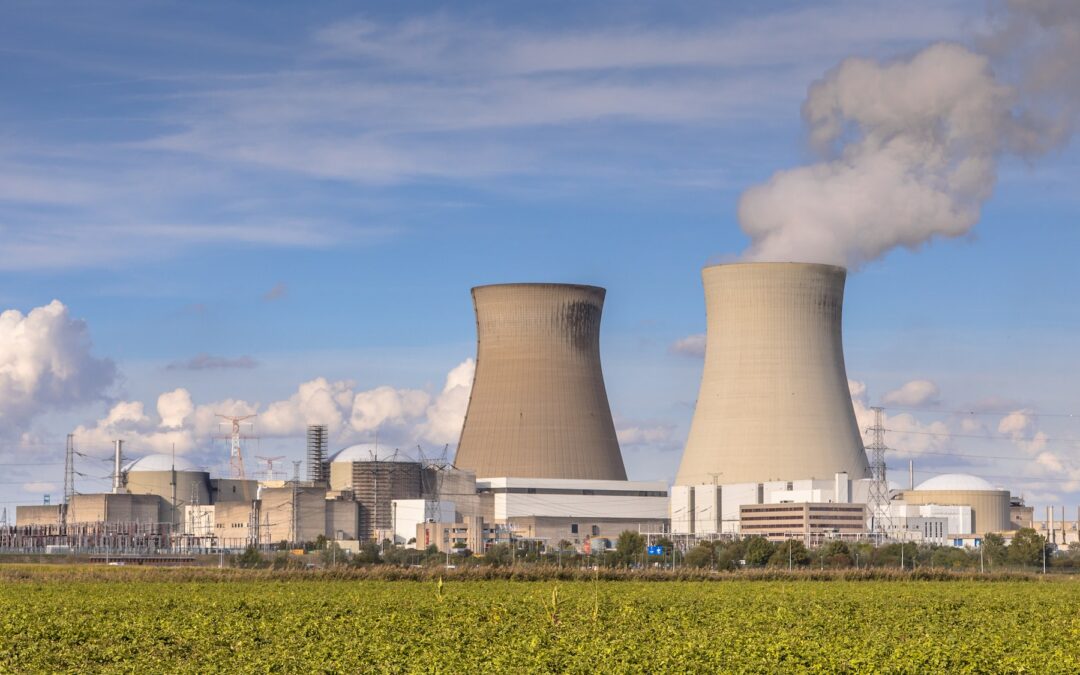
Britain must build "at least" eight new nuclear power stations during the next 15 years to replace its ageing plants and contribute to a "post-oil economy" that is cleaner and much more efficient than in the era of "cheap energy and careless pollution", Gordon Brown signalled last night. The first new reactors could feed electricity into the national grid by 2017.
Ministers want the private sector to make the running, but fear that the parallel contraction of the UK's coal and oil-fired generating capacity, on environmental grounds, will trigger a serious energy gap unless the government moves decisively.
The prime minister called for "a renaissance of nuclear power" more than 20 years after major power station crises at Three Mile Island in the US and the Soviet plant at Chernobyl put a brake on nuclear stations as a growing energy source. In doing so, he pushed the government's explicit commitment to a nuclear agenda further than he has previously done - amid growing concern about global oil prices and the need to find alternatives.
Brown said: "Britain is moving quickly to replace its ageing fleet of nuclear power stations. All around the world I see renewed interest in this technology, as countries contemplate the alternative - continued oil dependence and unchecked climate change."
Critics of nuclear power will be dismayed, but the industry may welcome an end to what some have regarded as foot-dragging since the 2003 energy white paper. Prominent figures in the climate change debate, including the government's former chief scientist, Sir David King, have endorsed the nuclear path.
Brown used a speech to President Nicolas Sarkozy's "Club Med" conference of EU and Mediterranean states in Paris to set out a five-point plan for an oil replacement strategy, involving action at personal, local, national and international level and a range of energy options, from solar and wave power to clean coal and nuclear.
The prime minister did not directly mention the need for at least eight medium-sized power stations, each generating about 1.2 gigawatts of electricity, enough to replace the 10 gigawatts supplied by nine existing plants, all but one of which are due to become obsolete by 2023. But aides say that is the figure he has in mind. It caught some MPs by surprise: "We don't normally do numbers," said one. Brown believes that this year's reform of planning procedures for big projects - passing "strategic need" decisions to an independent commission - will prove crucial to a rapid return to nuclear.
A Downing Street official explained: "The industry will not make the long-term investment required to build a new nuclear power station if they think the government is not totally committed to nuclear energy. That is why the Tory vote against the planning bill was so dangerous." Brown is irritated by David Cameron's green point-scoring which, he believes, lacks substance.
Sizewell B, in Suffolk, the only plant not yet set to close, opened in 1995, 12 years after the start of a two-year public inquiry and a go-ahead in 1987, the year after Chernobyl. Until Finland recently resumed its programme, no nuclear station had been built in the US or Europe since then.
It is widely expected that the existing nuclear sites, at Hinkley Point, Sizewell, Dungeness and Bradwell will be used for new plants - possibly more than one per site. Ministers intend to confirm the government's preferred sites by 2010.
Government relents and scraps fuel duty rise
Gordon Brown and Alistair Darling finally scrapped a planned 2p rise in fuel duty yesterday as they bowed to pressure to ease financial stress on badly squeezed families and businesses.
In a long-expected move that cost the Treasury £550 million in lost revenue, the Prime Minister and Chancellor acted to soothe households, hauliers and companies.
The decision followed months of pressure on ministers as the surging price of oil has fed through into soaring prices at the pumps for motorists. The cost of filling a family car has leapt by more than £20 over the past year as petrol prices have climbed to a typical 120p a litre, reaching as high as 132p in some parts of Britain.
Mr Darling announced the planned 2p fuel duty rise in his April Budget but said that he would defer it until October. Yesterday's announcement means that the increase will be put off until April 2009, when a 1.84p rise is being pencilled in. Scrapping that would cost the Chancellor another £1billion a year. The delay is the latest in a series of policy retreats over tax by the Chancellor, including a compensation package to mitigate the scrapping of the 10p income tax band, and U-turns over capital gains tax proposals and so-called non-domiciled residents.
Yesterday's action was hailed by motorists' groups, the haulage industry and business leaders. However, Mr Brown came under heavy fire from opposition parties, who accused him of playing politics with petrol prices and denouncing the decision as a political fix made with an eye on next week's Glasgow East by-election. Alex Salmond, Scotland's First Minister, whose Scottish National Party threatens to unseat Labour in the by-election, said the concession showed that Mr Brown was a worried man.
The Prime Minister insisted that the move had nothing to do with the poll. The Government would “continue to help hard-pressed families who are facing high fuel bills and high food prices”, he said.
Many Tory MPs still sceptical on climate change
David Cameron has failed to convince many of his MPs that man-made global warming is a serious problem, according to a poll that finds widespread sceptisicm across parliament about the issue.
A third of Tory MPs who responded to the survey questioned the existence of climate change and its link to human activity. Two-thirds said tackling climate change should not be a priority for local councils.
A significant number of MPs from other parties also told the survey they had doubts on the issue. Overall, the results suggest that up to a fifth of the MPs who have been debating the UK's climate change bill do not understand, or choose to ignore, the science on which it is based. (Download a PDF of the full poll of MPs attitudes to climate change.)
In 2007, the Intergovernmental Panel on Climate Change, comprised of experts from around the world, concluded that recent temperature rise was "very likely" down to human emissions of greenhouse gases. They warned that average global temperatures could rise by 4C this century if emissions continue to grow. Britain's climate change bill proposes a mandatory 60% cut in carbon dioxide emissions by 2050, though scientists and campaigners have called for the target to be raised to 80%.
The survey was carried out by the polling organisation ComRes for the Local Government Association (LGA). It wrote to MPs and asked: "Do you believe that climate change is happening and can be directly attributed to greenhouse gas emissions resulting from human activity?"
Of the 55 Conservative MPs who replied, 10 said no, while eight that they didn't know. Some 80 of the 91 Labour MPs who responded said yes, together with 15 of the 17 Liberal Democrats. Overall, 168 MPs replied to the poll, 32 of whom answered no or don't know.
Tony Juniper, head of Friends of the Earth, said the survey results were "disturbing". He said: "That a fifth of MPs say they either don't know or reject the science of climate change is a serious cause for alarm and suggests that many of them are seriously out of touch, because the science is very clear.
"For them to be making policy without a proper grasp of the science is a major oversight."
He added: "David Cameron's emphasis on the environment has been one of the most important forces in green politics recently, but he has had some difficulty convincing some of his party that it is the right thing to do. This poll shows he has not won that battle yet."
Poll experts said the results could be subject to bias, but that it was difficult to say which way it could skew the results. MPs who were committed climate skeptics, as well as those passionate about the severity of the problem, could both be more likely to respond.
The LGA called for local authorities to be given greater powers to tackle climate change, by forcing electricity and water companies to cooperate in local schemes on flooding and energy efficiency, and to boost the uptake of community scale power generation.
The poll found that 65% of MPs agreed that "councils should introduce financial incentives to encourage people to reduce greenhouse gas emissions", and 54% agreed that councils should force residents to take action on climate change. More than a third (35%) said councils should impose penalties on people who did not reduce their pollution.
Paul Bettison, chair of the LGA environment board, said: "With councils being on the front line against climate change and a large minority of MPs still unconvinced by the evidence that global warming is due to human activity, ministers should give more powers to local authorities so they can help businesses and residents cut down their carbon footprints and their fuel bills."
City watchdog rejects oil markets loophole
Accusations that Britain’s oil markets operate under a “London loophole” of lax regulation were dismissed on Tuesday by the City watchdog.
Alexander Justham, director in the Financial Services Authority’s markets division, insisted the agency was overseeing London’s oil markets just as strictly as its US counterpart was handling markets across the Atlantic.
“There’s not huge evidence of market abuse,” he told a Commons Treasury select committee session on the regulation of oil markets – the first such hearing in Britain.
Washington lawmakers, eager to demonstrate to voters that they are addressing record oil prices, have held hearings into whether futures traders could be engaged in “excessive speculation” or outright manipulation that might be driving up prices.
Tuesday’s hearing was a sign that MPs also feel they should address the issue amid growing unease over high energy prices.
The US lawmakers focused their attention on London’s vast oil markets, where trading in crude oil futures contracts are done on ICE Futures Europe, a subsidiary of Atlanta-based InterContinental Exchange.
Some of them say traders could be manipulating prices because of a lack of position limits and accountability levels at ICE – technical measures aimed at limiting excessively large positions. ICE says it has adequate mechanisms to spot potential market manipulation.
Mr Justham said the FSA could monitor traders’ positions effectively without such formal measures.
“The London loophole is a slightly pejorative term [referring to] a difference of approach. We apply a more flexible and appropriate standard but we have exactly the same philosophy [as US regulators].
“We have exactly the same – if not a tougher – regime around the obligations of an exchange to monitor and manage positions and monitor trading activity.
“We’ve always had insight as to what’s going on, there has never been any issue around us having access to available information around the positions people hold,” Mr Justham said.
Hackles were raised in the City when the US futures watchdog, the Commodity Futures Trading Commission, recently insisted on the imposition in London of position limits and accountability levels common at US exchanges. ICE has agreed to the demand, which has to be approved by the FSA.
The move was seen by critics as a US regulator reaching beyond its borders to impose its standards on London.
Mr Justham was grilled five times by Michael Fallon, Conservative MP for Sevenoaks, on whether the FSA had given prior approval before the CFTC announced the position limits requirement.
Mr Justham said: “The CFTC fully informed us of what they would like to do with ICE. We were informed about the announcement.”
Chris Cook, a consultant and former director of compliance and markets supervision at the International Petroleum Exchange – which was bought by ICE in 2001 – said that if a regulatory gap existed, it was not in the futures markets but in the physical oil and over-the-counter markets, where deals are negotiated privately between traders.
“I do think there is potentially a loophole but it’s a ‘global loophole’.
“There is no global mechanism for transparency, never mind of the futures market but in the OTC market where all the action is happening. In my view one is required.”
.....................................................
A difference of approach
US lawmakers like to talk of making sure “the cop is on the beat” in the energy markets – meaning that regulators are using lawyers and market surveillance staff to seek out possible price manipulation.
The Commodity Futures Trading Commission, the US futures watchdog, has about 130 lawyers looking at the US oil and oil futures markets. Its UK counterpart, the Financial Services Authority, relies on dialogue and the threat of legal enforcement – a threat on which the FSA has yet to act since it was established in 1997.
The FSA on Tuesday was at pains to convince MPs the CFTC’s list of enforcement actions – 39 cases since 2002 involving fines of $500m (£250m) – was not quite what it seemed. Alexander Justham, director of its markets division, said the CFTC had only had four oil market cases, and not one involved manipulation. But he did not mention that defendants tended to settle manipulation cases before they went to court.
Economy
UK consumer inflation hits 16-year peak
Unions on Tuesday night dismissed calls from the chancellor to curb pay demands as inflation hit its highest level for 16 years, leaving little prospect of near-term cuts in interest rates.
The annual rate of consumer price inflation shot up faster than expected from 3.3 per cent in May to 3.8 per cent in June, the Office for National Statistics said – the highest since 1992 and nearly double the Bank of England’s 2 per cent target.
Food prices are now more than 10 per cent higher than a year ago, and the average price of petrol has risen 5.3p a litre in the past month to 117.6p.
Policymakers’ biggest fear is that the speed of the pick-up in prices – much faster than the Bank forecast in May – will lead people to expect continued high inflation, and stoke it by demanding wage increases.
Dave Prentis, general secretary of Unison, speaking on the eve of a 48-hour pay strike by more than 600,000 local government workers, said: “The pounds in local government workers’ pockets are turning to pennies. The cost of everyday essentials ... are going through the roof – our members cannot afford to take another cut in their pay.”
The strike is expected to close schools, libraries and sports centres and halt refuse collections.
Tony Woodley, joint general secretary of Unite, the largest union, said: “Our determination is that our members should not pay the price for the economic difficulties caused by the casino capitalists in the City.”
But other senior union officials warned that a worsening jobs market could make workers less willing to pursue big pay claims. One said: “We are seeing a lot of pressure at the moment from private sector employers seeking to cut areas like overtime.”
Chancellor Alistair Darling responded to the data by warning again against inflationary pay deals. But the price rises will put the government under pressure to respond to fears about job security and rising living costs.
George Osborne, shadow chancellor, said inflation was “now more than double the rate that Gordon Brown inherited from the last Conservative government”.
Andrew Sentance, a Bank monetary policy committee member, on Tuesday said getting inflation under control would “require a squeeze on spending and incomes in the UK and other economies, with consequences for economic growth and employment in the short term”.
President upbeat, but nothing else is
WASHINGTON - President Bush sought to calm the contagion of fear in financial markets Tuesday, but his effort was virtually swept aside by a sobering new assessment from Federal Reserve Chairman Ben Bernanke, a jump in the prices manufacturers pay for raw materials and other unsettling economic portents.
The stock market tumbled again. The dollar dropped. And some key members of Congress indicated that they would try to slow down approval of the plan to bolster mortgage giants Fannie Mae and Freddie Mac. Even a substantial drop in oil prices was seen as a sign of declining confidence in the U.S. economy.
Bush spoke out on the economy for the first time since investors accelerated their selloff of Fannie Mae and Freddie Mac shares last week. He insisted Americans "can have confidence in the long-term foundation of our economy."
"We will come through this challenge stronger than ever before," the president declared at a White House news conference. "Our economy has continued growing, consumers are spending, businesses are investing, exports continue increasing, and American productivity remains strong."
But the upbeat tone of Bush's remarks was strikingly at odds with the picture Bernanke painted in his semi-annual appearance before the Senate Banking Committee. The economy is caught in cross-currents of weak growth and strengthening inflation, he said, and the combination will present a stern challenge for policy-makers in the months ahead.
No reassurance
"The effects of the housing contraction and of the financial headwinds on spending and economic activity have been compounded by rapid increases in the prices of energy and other commodities, which have sapped household purchasing power even as they have boosted inflation," Bernanke said. "Against this backdrop, economic activity has advanced at a sluggish pace during the first half of this year, while inflation has remained elevated."
China's economy slows but still expands at double-digit pace
BEIJING - China's economic juggernaut slowed but still maintained double-digit growth in the first half of the year as it battled inflation and absorbed global setbacks, official data showed Thursday.
The world's fourth biggest economy expanded by 10.4 percent in the first half and 10.1 percent in the second quarter, the National Bureau of Statistics said, down from the sizzling pace of 11.9 percent recorded for all of 2007.
Bureau spokesman Li Xiaochao said domestic inflation, problems with food supplies and global economic woes were among the chief concerns for China.
"Pressure for rapid price increases remains high, there are factors constraining steady agricultural production," Li said.
"The international financial situation is severe and there are uncertainties in world economic development."
Nevertheless, he said China's economy remained strong and that the slowdown was under control.
"The national economy maintains the momentum of steady and fast growth," he said. "This slowdown is in line with our expectations."
NBS chief economist Yao Jingyuan said the economy would likely grow at 10 percent for the full year, although this was still above the target set by Premier Wen Jiabao of 8.0 percent.
China's consumer price index -- the main gauge of inflation -- rose 7.9 percent in the first half of 2008, with food prices soaring 20.4 percent, according to the bureau.
However, inflation has come off 12-year highs seen earlier in the year, when it peaked at 8.7 percent in February, with economists saying the fall was due to a raft of economic tightening measures, including interest rate hikes.
For June alone, inflation was 7.1 percent, the bureau said.
Nevertheless, there were few expectations inflation would fall steeply enough to achieve the government's full-year target of 4.8 percent.
"Certainly, the expectation for inflation is fairly strong ... due to price rises on the international market," Li said.
China had already released data last week showing the nation's trade surplus had fallen nearly 12 percent in the first half, as exporters struggled with the global economic slowdown, particularly problems in the United States.
The appreciation of the yuan against the dollar, as well as curbs such as tariffs on exports imposed by the government to rein in the surplus, also contributed to the decline.
Jing Ulrich, chairman of China Equities for JPMorgan Securities, said that although the economy was slowing down and exporters were feeling the heat, the government had the tools to maintain control.
"Despite the multiple challenges of a global slowdown, high inflation and natural disasters, the Chinese authorities have a range of options for addressing the key domestic policy challenges," Ulrich said.
Zhang Xinfa, an economist with Galaxy Securities, agreed with the official assessment that the slowdown was steady and controlled, although he said the government had to ensure its tightening policies did not bite too deeply.
"The government must strike a balance between maintaining economic growth and fighting inflation," he said.
Economists said the earthquake that devastated large areas of southwest China in May, leaving 88,000 people dead or missing, did not have a big impact on the economic growth numbers in the second quarter.
However, a huge post-quake reconstruction effort could lift the growth numbers in the short term, according to Moody's Economy.com expert Sherman Chan.
"Rapid and large-scale reconstruction works in the next couple of years will provide a boost to economic activity," he said.
Industrial output, a key measure of activities in the nation's factories, expanded by 16.3 percent in the first half and 16.0 percent for June alone, according to the bureau.
China's fixed asset investments rose 26.3 percent in the first half of 2008 from a year earlier, the bureau said.
Cooperation between producers and consumers needed to be strengthened, he said.
While the G8 summit in Japan called for dialogue between producing and consuming countries, Saudi Arabia had already created the Riyadh-based World Energy Forum to promote that dialogue, he added.
"We'd like the G8 to support existing initiatives instead of duplicating efforts with similar projects." Reuters
Clouds darken Europe’s growth prospects
Dark clouds are gathering over European economies, with soaring inflation rates rapidly overtaking financial market turmoil as a threat to growth.
Recent economic data has shown industrial production plunged across Europe in May, while the UK, Spain and Ireland have been hit by collapsing housing markets.
Adding to the sense of rapidly slowing economic growth, European car sales in June were 7.9 per cent lower than the same month a year before, according to ACEA, the carmakers’ association. Spain, Italy and Ireland reported some of the sharpest falls. Meanwhile, the UK on Wednesday reported the number of people claiming unemployment benefit had jumped by 15,500 last month, the worst figures since the early 1990s.
In several countries, there is now a real threat of technical recession – two consecutive quarters of negative growth.
How fast things have changed in Europe can be seen from the Financial Times’ European “economic weather” map. Three months ago the outlook looked brighter, as it seemed the continent’s economies would be less badly hit by market turmoil than the US.
But the latest map shows steep and sudden surges in energy costs are having pronounced effects, compounded by the euro’s record strength affecting eurozone exports.
“The credit crunch is something that gives colour to all this but the main problem that we have to deal with is high oil prices, high food prices, inflation and falling purchasing power,” said Gilles Moec at Bank of America. Eurozone inflation hit a 16-year high of 4.0 per cent in June, according to data on Wednesday. On Tuesday the UK reported the highest inflation rate for 16 years.
Germans have become used to falling real wages, but year-on-year real wage growth has recently turned negative in France – a new phenomenon for French consumers – and in Italy.
The French economy has been driven largely by consumer spending but is also vulnerable to downward pressures created by slowing housing markets. Germany, meanwhile, saw an exceptional growth spurt at the start of the year but has appeared at risk more recently of a substantial slowdown in exports to fast-growing emerging market economies.
This week’s ZEW index of German investor confidence might have exaggerated the extent of the slowdown in Europe’s biggest economy. The Munich-based Ifo Institute’s business climate index and purchasing managers’ indices for Europe’s largest economy have not painted as gloomy a picture.
But for many, the European economy is at the start of what is likely to prove a painful and pronounced slowdown. “Right now, inflation is one big shock that is hitting an economy that was anyway at the later stage of a business cycle. So it is difficult to see it recovering by itself in the short term,” said Marco Valli at Unicredit in Milan.
Developments in oil prices are crucial. Allianz, the German insurer, last week said it expected oil prices to fall in the second half of the year on the back of declining demand. On this “base scenario” the group expected eurozone growth to slow from 1.7 per cent this year to 1.5 per cent in 2009.
But on its “risk scenario” – under which oil prices continued to rise and exceeded $160 a barrel by the year-end – eurozone growth would slump from 1.3 per cent this year to zero in 2009.
Disclaimers
The items contained in this newsletter are distributed as submitted and are provided for general information purposes only. ODAC does not necessarily endorse the views expressed in these submissions, nor does it guarantee the accuracy or completeness of any information presented.
FAIR USE NOTICE: This newsletter contains copyrighted material the use of which has not always been specifically authorized by the copyright owner. We are making such material available in our efforts to advance understanding of issues of environmental and humanitarian significance. We believe this constitutes a 'fair use' of any such copyrighted material. If you wish to use copyrighted material from this newsletter for purposes of your own that go beyond 'fair use', you must obtain permission from the copyright owner.